
Key Takeaways:
- Canada is emerging as a strong nearshore outsourcing destination due to time-zone alignment, cultural compatibility, native English talent, and reliable infrastructure.
- Outsourcing to Canada works best for higher-value, quality-sensitive roles rather than cost-driven, high-volume work.
- Canadian outsourcing offers better service consistency, legal clarity, and data protection compared to many offshore markets.
- Labour costs in Canada are significantly higher than offshore destinations, making cost planning and role selection critical.
- Employment, tax, and labour laws vary by province, adding complexity to compliance and workforce management.
- Businesses remain accountable for data privacy and PIPEDA compliance even when work is handled by a Canadian vendor.
- Choosing the right outsourcing model (BPO vendor, contractors, or subsidiary) directly affects risk, control, and compliance.
- Active performance management and capacity planning prevent common outsourcing failures.
- Tools like Flowace help maintain control by providing real-time insights into performance, team health, and compliance.
When people think about outsourcing, India and the Philippines are often the first countries that come to mind. These markets dominate the conversation largely because of their low labor costs. However, the landscape is shifting. More companies are now turning to Canada as a nearshore outsourcing destination.
Canada offers advantages that traditional offshore locations often can’t match. With teams located near North America, cultural compatibility with US and UK markets, fluent English communication, strong legal protections, and modern infrastructure, Canada offers a reliable outsourcing environment.
What Does Outsourcing to Canada Mean to Your Business?

Outsourcing to Canada means hiring a third-party service provider (or contracting individual contractors) based in Canada to handle work that your company traditionally did in-house. This might include:
- IT and software development.
- Customer support and call centers.
- Back-office services.
- Sales and business development.
- Content creation and marketing.
Canadian call centers and BPO providers offer a strong balance between cost efficiency and operational reliability, making them an attractive nearshore option for North American and UK businesses.
With close time-zone alignment, cultural compatibility, and native English-speaking talent, Canadian call centers enable smoother communication and faster collaboration.
Businesses also benefit from Canada’s stable legal environment, strong data protection standards, and modern infrastructure, which reduces compliance risks while maintaining service quality.
9 Reasons Companies Choose Canada for Outsourcing
Outsourcing to Canada delivers a mix of operational, legal, and cultural advantages:
1. Nearshore Proximity
Canada’s geographic closeness to the U.S. allows teams to operate in overlapping or identical time zones. This enables real-time collaboration, quicker issue resolution, and smoother daily communication compared to offshore call centers and BPOs, where delays are common.
2. Cultural Alignment
Canadian professionals share similar workplace expectations, communication styles, and business ethics with U.S. and UK companies. This alignment reduces misunderstandings, shortens onboarding time, and leads to more productive working relationships.
3. Native English (and Bilingual) Talent
Canada offers a large pool of native English speakers, with many professionals also fluent in French or other languages. This is especially valuable for BPO and call center operations where clear communication directly impacts customer satisfaction and brand perception.
4. Higher Service Quality
Canadian outsourcing providers tend to deliver more consistent and reliable service due to strong education standards, professional training, and mature service delivery models. This often translates into fewer errors, better customer interactions, and improved performance metrics.
5. Stable Legal And Regulatory Environment
Canada has a well-established legal system with clear contract enforcement and regulatory transparency. This provides businesses with predictability, reduces legal risk, and makes long-term outsourcing partnerships more secure.
6. Stronger Data Protection And Privacy Practices
Canadian privacy laws and data-handling standards are robust and closely aligned with international regulations. This makes Canada a strong choice for handling sensitive customer information, financial data, and regulated processes.
7. Reliable Infrastructure
Canada’s modern telecommunications networks, stable power supply, and advanced office facilities support uninterrupted operations. This reliability is critical for call centers and digital BPO services that depend on uptime and connectivity.
8. Competitive Cost Savings Versus Domestic Hiring
While Canada is not the lowest-cost outsourcing destination, it offers meaningful savings compared to hiring in the U.S. Companies can access comparable talent at a lower cost without sacrificing quality or increasing risk.
9. Faster Scaling And Hiring
Established Canadian BPO providers have ready-to-deploy teams and streamlined hiring processes. This allows businesses to scale operations quickly without the long recruitment cycles associated with building in-house teams.
Common Challenges Businesses Face When Outsourcing to Canada
Outsourcing to Canada brings many advantages, but it also has trade-offs you should plan for:
1. Cost Structure and Economic Factors
The average Canadian labour costs are several times higher when compared to outsourcing to India, Vietnam or other offshore countries. Average annual labor costs in Canada can exceed $67,000, compared to approximately $4,186 in India. Canadian compensation typically includes higher base pay plus employer-paid benefits, payroll taxes, and other overheads. But offshore markets deliver dramatic per-seat cost savings.
Given the higher base pay, it is advisable to outsource to Canada on higher-value functions where the work quality and reliability justify the higher cost (specialized BPO services, technical support, customer experience, or compliance-heavy roles). Many companies also use blended delivery models that combine Canadian nearshore teams with offshore capacity to optimize overall spend.
2. Regional Labor Market Variability
Regional labor markets in Canada differ widely. Talent availability, wage levels, and competitive pressure can vary substantially between major hubs like Toronto and smaller cities. That variability makes hiring timelines, costs, and workforce stability less predictable. It also complicates workforce planning and budgeting.
To manage this risk, source candidates from multiple provinces of Canada. Set location-based compensation bands that reflect local market conditions, and partner with providers who can flex delivery across sites to shift capacity and balance cost, speed, and quality.
3. Regulatory And Employment Law Complexity
Employment, tax, and labor regulations in Canada vary by province and can be complex to manage. Getting them wrong creates compliance risks, unexpected liabilities, and added contractual complexity.
To reduce that risk, organizations should work with local legal, HR, and payroll experts who understand the employee monitoring laws and provincial nuances. Partner with experienced Canadian BPO providers, and embed strong compliance controls into vendor governance.
Standardized contracts, regular audits, and clear reporting mechanisms ensure your compliance obligations are met and issues are identified early.
4. Scalability Constraints For Rapid Volume Changes
Scaling hundreds or thousands of roles quickly is often more difficult in Canada than in large offshore markets. This can lead to slower ramp-up times during sudden demand spikes, potentially affecting service levels and customer experience.
To mitigate this limitation, companies should take a proactive approach to capacity planning. Multi-vendor strategies help spread risk and increase access to available talent across different providers and regions.
Pairing Canadian nearshore teams with offshore partners further enhances scalability by combining the quality, alignment, and compliance strengths of Canada with the large-scale hiring capacity of offshore markets.
5. Data Privacy and PIPEDA Compliance
Canada’s Personal Information Protection and Electronic Documents Act (PIPEDA) governs how personal data is collected, used, and shared. While broadly comparable to GDPR, PIPEDA has its own requirements.
When outsourcing customer data processing to Canada, your organization remains accountable for how personal data is handled by the vendor. You are responsible for ensuring proper consent for data sharing, adequate security safeguards, and compliance with breach notification obligations. Although PIPEDA is generally less burdensome than GDPR, it is not a free pass. Companies must put clear, well-defined data processing agreements in place with Canadian vendors to ensure responsibilities are understood and compliance is maintained.
6. Union and Collective Agreement Considerations
Union and collective agreement considerations are a frequently overlooked risk in Canadian outsourcing arrangements. If outsourcing involves shifting work from unionized Canadian employees to non-unionized contractors, it can trigger labor disputes or legal challenges. In some provinces, labor laws may treat this as a “sale of business,” which can require offering employment to affected unionized workers.
For organizations operating in unionized sectors, such as healthcare, education, or the public sector, outsourcing can therefore become legally complex and may face significant union resistance if not carefully planned.
outsourcing partners that have experience operating in unionized environments and can accommodate collective agreement obligations if required.
What are the Canadian Employment Laws You Must Know
Beyond cost savings and talent access, outsourcing to Canada carries legal responsibilities. Employment laws at both the federal and provincial levels directly affect how outsourced workers are classified, managed, and terminated.
The must-know legal areas are:
Federal vs. Provincial Jurisdiction
Most employment relationships in Canada are governed at the provincial level, not the federal level. This means employment laws are set by the province where the work is performed — such as Ontario, British Columbia, Quebec, or Alberta.
However, some industries are federally regulated, including:
- Banking and financial institutions
- Telecommunications and broadcasting
- Airlines, railways, and interprovincial transportation
These employers fall under the Canada Labour Code, not provincial employment standards.
Federal employment standards are generally more employee-friendly, especially when it comes to termination, leaves, and workplace protections. If your outsourcing partner operates in a federally regulated industry, you’ll need to meet federal requirements instead of provincial ones.
Employment Equity Act
This is a federal law that requires certain employers to actively promote workplace diversity and report on representation across designated groups. It mainly applies to federally regulated employers, but it can also extend to contractors and suppliers working on large federal projects.
If you’re outsourcing work to a federally regulated company or bidding on federal contracts, you may be expected to support employment-equity goals or provide workforce data. This can influence which suppliers you choose, how you structure reporting, and how you approach diversity and inclusion commitments in your outsourcing strategy.
Income Tax Act & CRA Payroll Rules (Federal)
Income Tax rules set out how employment income must be taxed in Canada. It describes how much tax to withhold, when to remit it to the Canada Revenue Agency (CRA), and what reporting is required. They also include Regulation 105, which applies when you pay non-residents for services performed in Canada.
If you employ Canadians (either directly or through a payroll provider or EOR), you must register with the CRA and withhold income tax at source. If you pay non-residents for services delivered in Canada, Regulation 105 withholding may apply. Getting this right early helps avoid costly tax surprises later.
Common-law Wrongful Dismissal
Even though employment standards laws set minimum notice or severance requirements, Canadian courts can require employers to provide longer “reasonable notice” under common law. The amount depends on factors like the employee’s role, age, and length of service, and this is especially relevant in provinces like Ontario.
If you end an employment relationship, whether with a direct hire or someone who was incorrectly treated as a contractor, the financial exposure can be much higher than the statutory minimums. This is particularly true for senior or long-tenured workers, so it’s important to plan for potential common-law notice or severance costs when outsourcing to Canada.
Minimum Wage & Overtime
Minimum wages and overtime rules vary by province and sometimes by sector. Many provinces require overtime pay at 1.5× the regular rate once daily/weekly thresholds are exceeded.
But the exact daily/weekly trigger (and exemptions) differ by jurisdiction. Federally regulated workplaces have their own overtime threshold. Always check the provincial employment-standards page for the worker’s location before budgeting labour costs.
Vacation & Statutory Holidays
Employees in Canada are entitled to paid vacation (usually 2–4 weeks a year, depending on the province and how long they’ve worked) and a set number of paid public holidays (generally 8–11).
These are statutory minimums. You can offer more generous terms, but you can’t contract below the legal floor. If you’re outsourcing across provinces, expect different vacation accruals and holiday calendars.
Best Practices for Successfully Outsourcing to Canada
1. Choose The Right Outsourcing Model
Start by deciding how much control, risk, and administrative work you’re willing to take on. There’s no one-size-fits-all option.
Option A: Work with a BPO or outsourcing vendor
The vendor hires the staff, runs payroll, manages HR, and handles most compliance requirements. Your administrative burden is low, but so is your day-to-day control. The vendor typically carries the employment risk.
Best for: Companies that want speed, simplicity, and compliance certainty.
Option B: Hire direct contractors
You work directly with Canadian contractors or freelancers. This usually costs less and gives you more control over the work, but you are responsible for tax compliance and getting worker classification right. The legal risk is higher if the relationship looks like employment.
Best for: Small teams, niche skills, or long-term working relationships where flexibility matters.
Option C: Set up a Canadian subsidiary
You create your own legal entity in Canada and employ staff directly. This gives you full operational control but comes with higher setup costs, ongoing compliance, payroll obligations, and corporate tax exposure.
Best for: Large organizations with long-term, strategic outsourcing plans in Canada.
2. Plan For Tax Compliance Early
Tax issues are one of the most common surprises when outsourcing to Canada. Before work begins, speak with a Canadian accountant or tax advisor to understand your exposure.
Make sure you:
- Assess permanent establishment (PE) risk if you’ll have a physical presence or local management.
- Understand GST/HST obligations on services.
- Get clear guidance on employee vs. contractor classification
- Know which provinces your workers are based in and the local tax rules that apply
3. Put Everything In Writing
Canadian employment law focuses heavily on the reality of the working relationship. Clear documentation helps align expectations and protect you if disputes arise.
At a minimum, ensure you have:
- Well-drafted service or contractor agreements (scope of work, compensation, termination, IP ownership, confidentiality)
- Written policies and procedures covering hours, communication, performance standards, and discipline
- Defined performance metrics so success and underperformance are measurable
If it isn’t documented, it’s much harder to defend.
4. Navigate Employment Law With Care
Employment rules vary by jurisdiction, and assumptions from other countries don’t always translate well to Canada.
Key points to cover:
- Confirm whether federal or provincial law applies
- Know local rules on minimum wage, overtime, vacation, holidays, and termination
- If operating in Québec, consider local legal advice due to its civil-law system
- If outsourcing work that was previously unionized, consult labour counsel before making changes
5. Set Up Strong Performance Management
Many outsourcing relationships fail because performance isn’t actively managed — especially when teams are remote or employed by another company.
Build structure early:
- Clear SLAs with defined deliverables and quality standards
- Regular check-ins (weekly or bi-weekly) to review progress
- Objective performance tracking instead of informal feedback
- A clear escalation process for addressing issues quickly
6. Use Systems And Tools That Give You Real Visibility
Managing outsourced teams requires more than time tracking. Use tools that show actual outcomes and team health.
Focus on tools that help you track:
- Work output and task completion, so you can see progress and results, not just activity.
- Quality indicators, such as defects, rework, or customer satisfaction scores.
- Timeliness, including adherence to SLAs and delivery deadlines.
- Team health, like workload balance, burnout risk, and retention trends.
The right systems help you stay in control, address issues early, and build a more sustainable outsourcing relationship.
How Flowace Supports Outsourcing to Canada
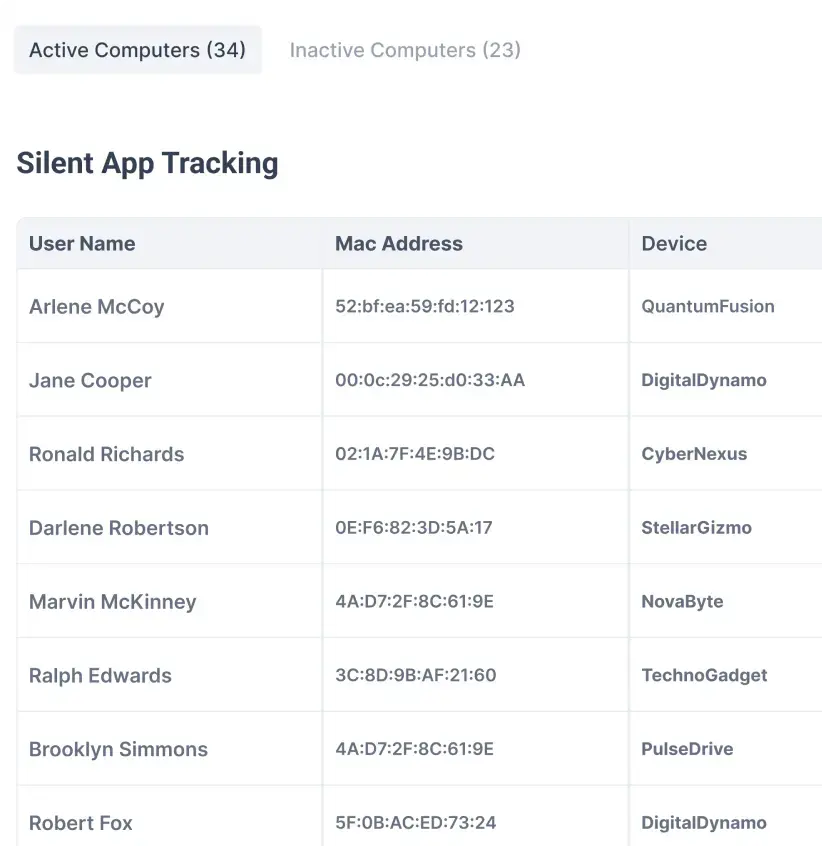
One of the biggest challenges with outsourcing to Canada (or anywhere) is work visibility. When work happens in someone else’s office, you can’t easily see what’s being done, how productive the team really is, or whether you’re getting the value you expect. Flowace can bring that clarity to your outsourcing operations.
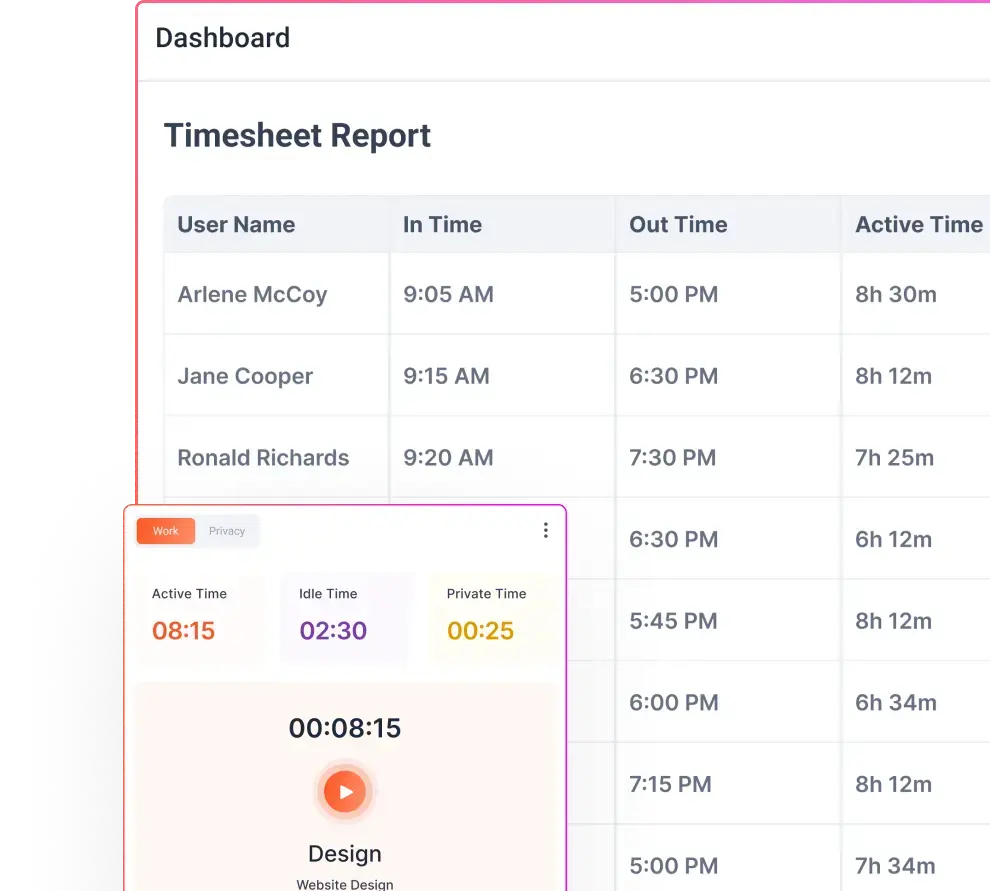
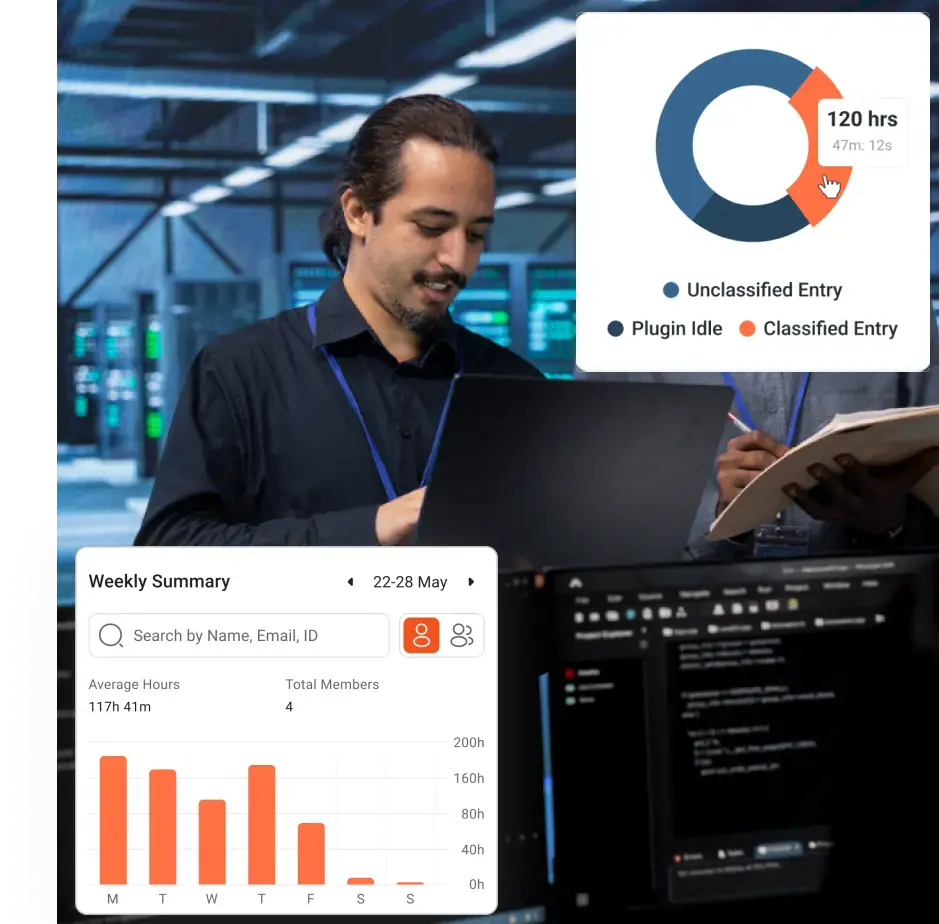
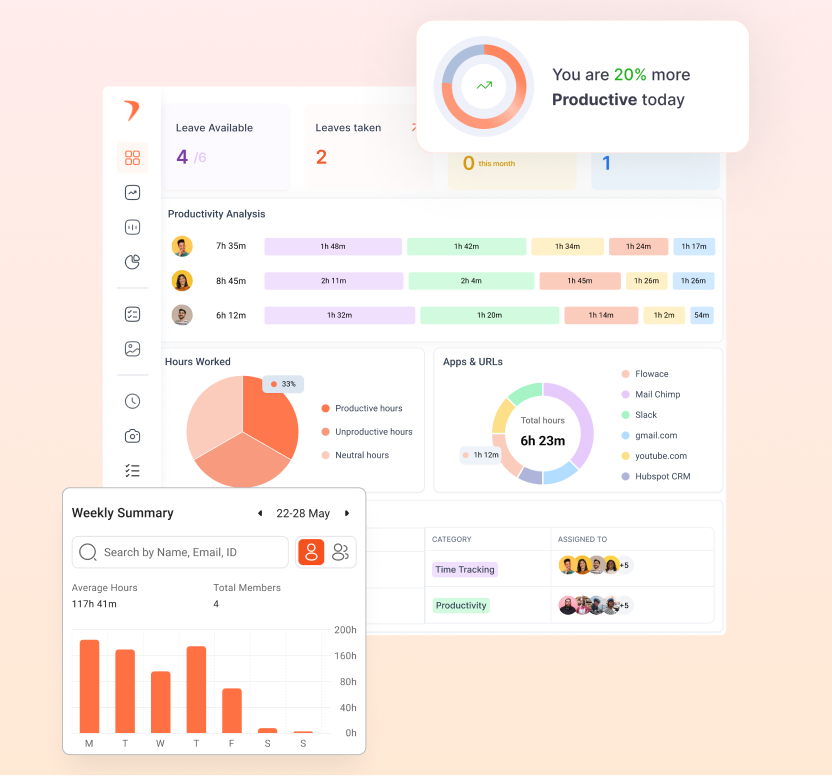
Flowace is an AI-powered time tracking and workforce analytics platform. Flowace help organizations understand how work is actually getting done without relying on manual timesheets or intrusive surveillance. It gives managers clear, data-driven insight into activity, productivity, and team health across remote, hybrid, and outsourced teams.
Its core features include:
Automatic Activity Visibility Across Distributed Teams
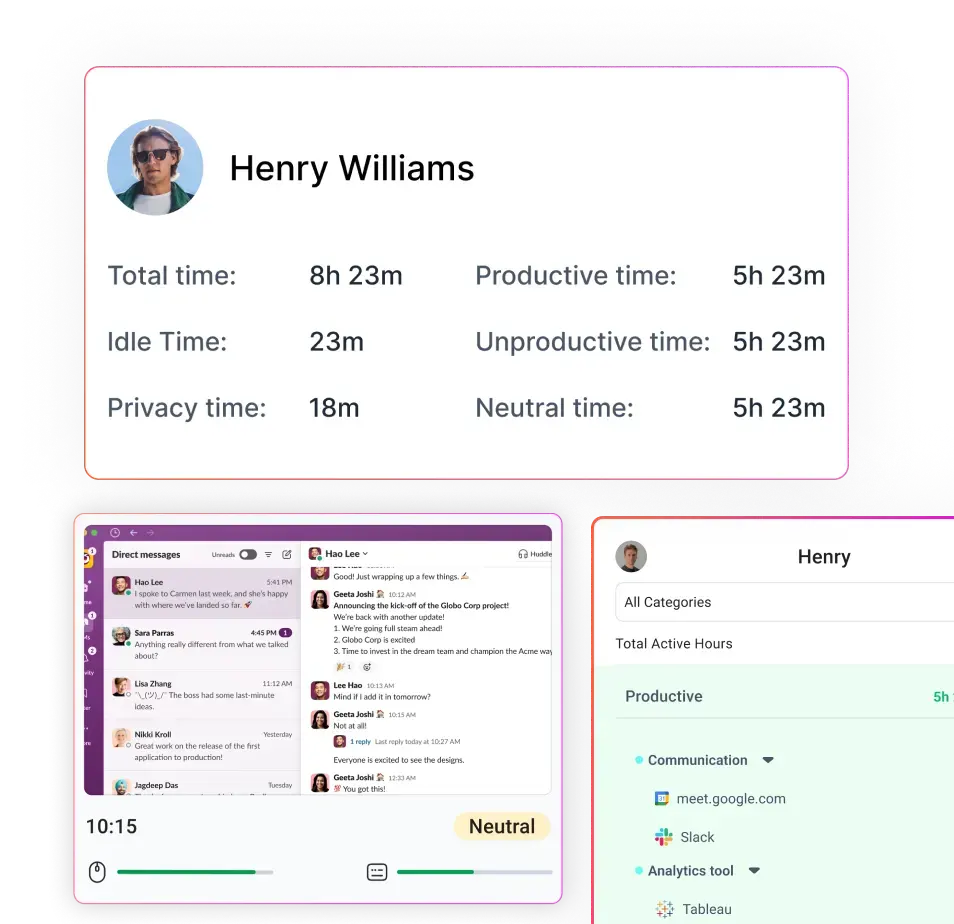
Flowace gives you a clear picture of what your Canadian outsourced team is actually working on.
You can see:
- Actual working hours, including active time, idle time, and breaks
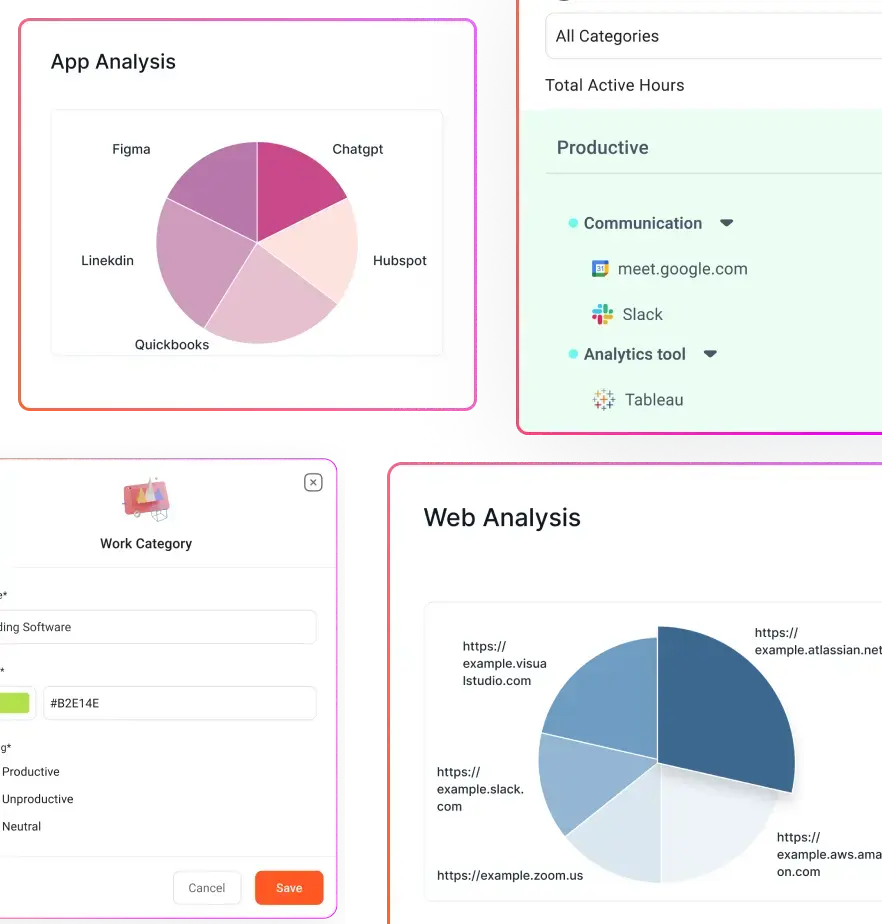
- Task-level activity, such as which applications and systems are being used and which projects are being worked on
- Productivity patterns, showing focused work versus distractions
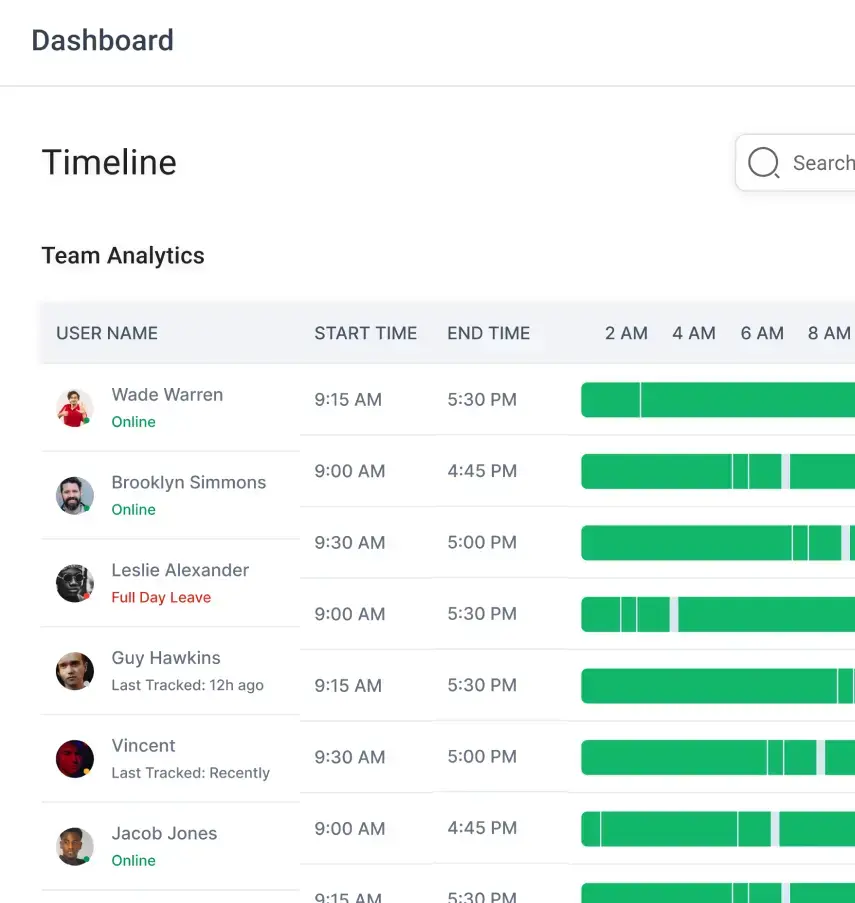
- Team availability, so you know who’s online, productive, or blocked
Performance Dashboards Built For Outsourcing Teams
Flowace turns activity data into easy-to-read dashboards that show the overall health of your Canadian outsourcing operation.
You get insight into:
- Team-level performance, including hours worked, tasks completed, and quality indicators
- Individual performance, showing output and efficiency by role or person
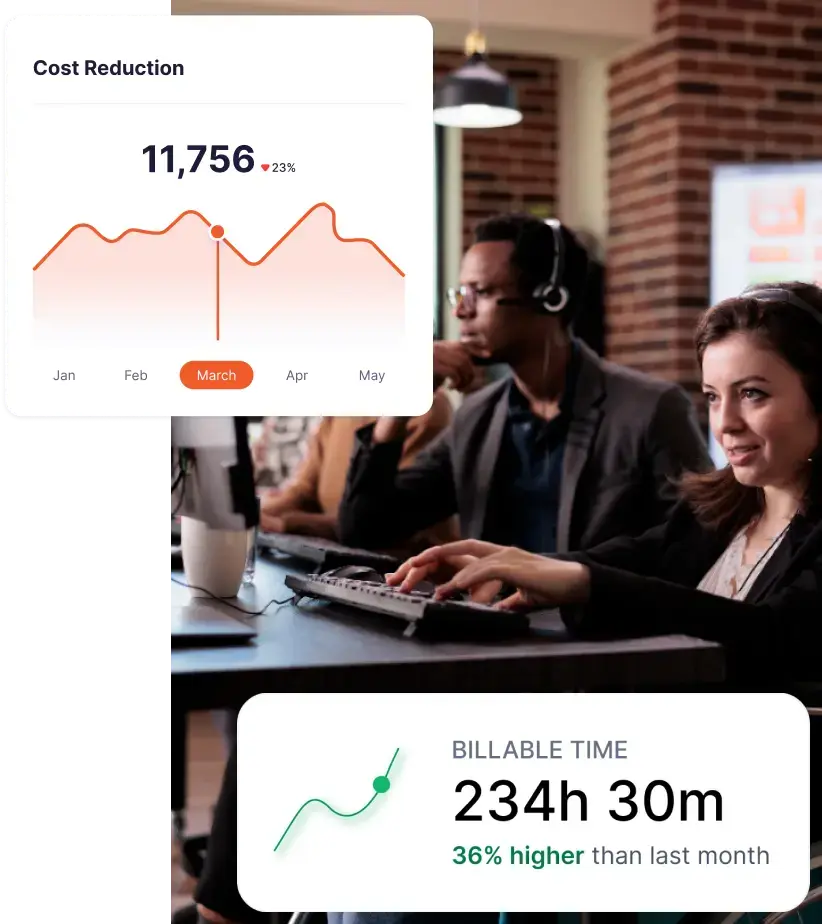
- Cost per task or output, helping you understand the true ROI of your outsourcing investment.
- Trends over time, so you can spot improvement or decline early
Work-Life Balance And Burnout Awareness
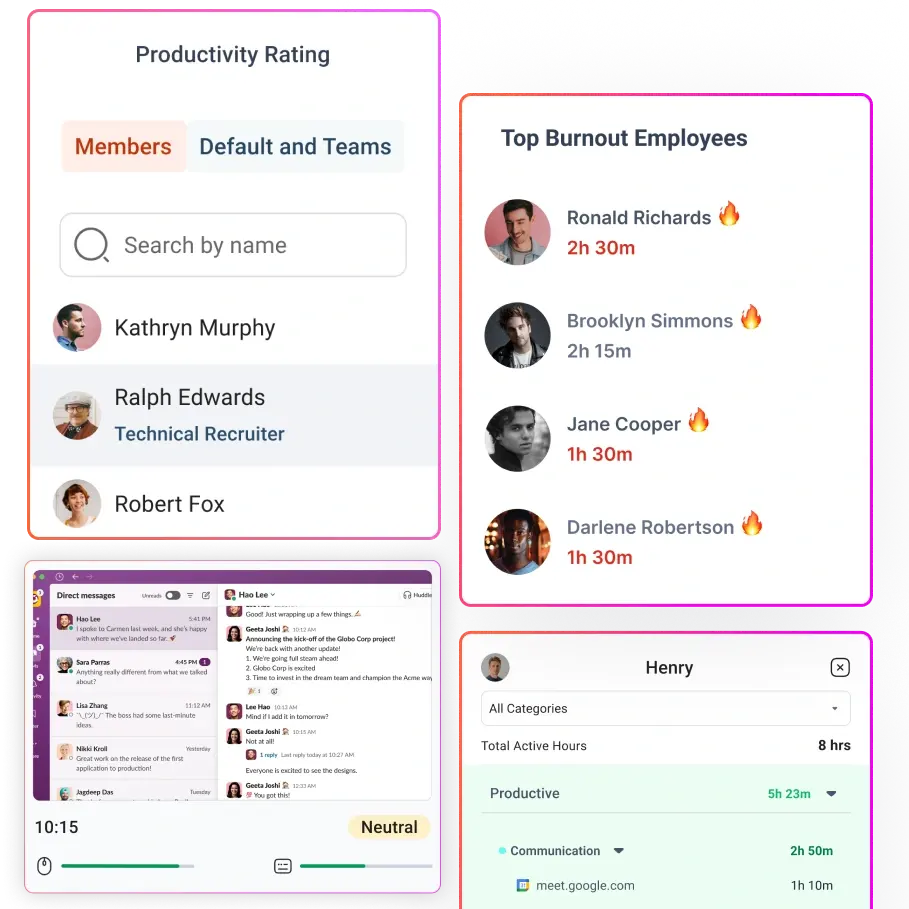
A common but often hidden risk in outsourcing is overwork. Teams may push themselves too hard to prove their value, which can lead to burnout and high turnover.
Flowace helps you spot warning signs, such as:
- Regularly working beyond scheduled hours
- Skipping breaks or working long, uninterrupted stretches
- Drops in productivity paired with more idle time
- Little or no time off
By catching overtime patterns early, you can support healthier workloads and improve long-term retention.
Compliance And Record-Keeping Support
When outsourcing to Canada, good records matter. Employment and contractor disputes often come down to documented evidence.
Flowace helps you maintain clear records of:
- Hours worked, supporting minimum wage and overtime compliance
- Break patterns, where applicable
- Task completion and output, useful in contractor classification discussions
- Performance history, if corrective action or termination becomes necessary
Conclusion
Outsourcing to Canada gives you the best of both worlds: closer time zones, strong cultural fit, and higher service quality. But it also brings higher costs and more legal complexity. Once work is handed off to an external team, the real risk isn’t location, it’s losing visibility into how work is actually getting done.
Flowace fixes that problem. With automatic time tracking, clear performance dashboards, task-level tracking, and record-keeping that supports compliance, Flowace helps you see real outcomes. It also surfaces burnout risks and workload issues early, so you can protect your people and your service levels.
Start your free trial today and get instant visibility into your Canadian outsourced teams. Or book a free demo now to see exactly how Flowace supports productivity, compliance, and ROI.
FAQs:
Is outsourcing to Canada legal?
Yes. Outsourcing to Canada is completely legal. Canadian law does not restrict outsourcing, but companies must comply with applicable employment laws, tax rules, and contractor classification requirements. If you are transitioning work previously done by unionized employees, it’s strongly recommended to consult labour counsel due to additional legal obligations.
How does the cost of outsourcing to Canada compare to offshore locations?
Canadian salaries are typically 15–30% lower than the U.S., but 50–60% higher than offshore locations like India or the Philippines. The tradeoff is quality and ease of management. Canada offers strong time-zone overlap, native English fluency, cultural alignment, and fewer communication challenges.
Do I need to worry about Permanent Establishment (PE) tax risk?
PE risk generally arises only if you maintain a fixed place of business in Canada, such as an office, facility, or significant local management presence. If you work with a Canadian vendor or hire independent contractors, PE risk is usually low. That said, PE rules are fact-specific, so it’s best to confirm your situation with a Canadian tax advisor.
What’s the difference between hiring a contractor and an employee in Canada?
Employees require payroll processing, income tax withholding, CPP and EI contributions, and compliance with termination rules. Contractors manage their own taxes and do not receive statutory employment benefits. However, the Canada Revenue Agency applies an “intent and control” test—if you control how the work is done, the worker may legally be an employee. Misclassification can lead to tax penalties and back payments.
What if I need to terminate my Canadian outsourced team?
Termination rules depend on worker classification. Employees typically require notice or severance (often 2–8 weeks, depending on province and tenure) unless there is a well-documented cause. Contractors can usually be terminated according to the contract terms. Improper termination of employees or misclassification of contractors can result in lawsuits and financial liability.
How do I stay compliant with data privacy laws?
Canada’s main private-sector privacy law is PIPEDA. You must obtain appropriate consent before sharing personal data, ensure vendors use reasonable security safeguards, and sign clear data-processing agreements. Even when outsourcing, your organization remains responsible for how personal data is handled.
Can I outsource work that was previously done by unionized employees?
Yes, but it can be legally complex. You may be required to consult or negotiate with the union, offer work to existing employees first, or comply with collective agreement terms such as severance or recall rights. This is a common area of unexpected liability, so labour counsel should be involved early.