
Do I actually know how work is getting done, and why results look the way they do?
For most operational leaders, that question lands harder than it should.
Because on the surface, everything looks fine. Yet deadlines slip, priorities blur, and outcomes arrive later, or weaker, than planned.
Work is happening everywhere, all the time, and still, execution feels fragile. Leaders are forced to make high-stakes decisions with partial visibility and too many assumptions. It’s a visibility gap at the heart of execution.
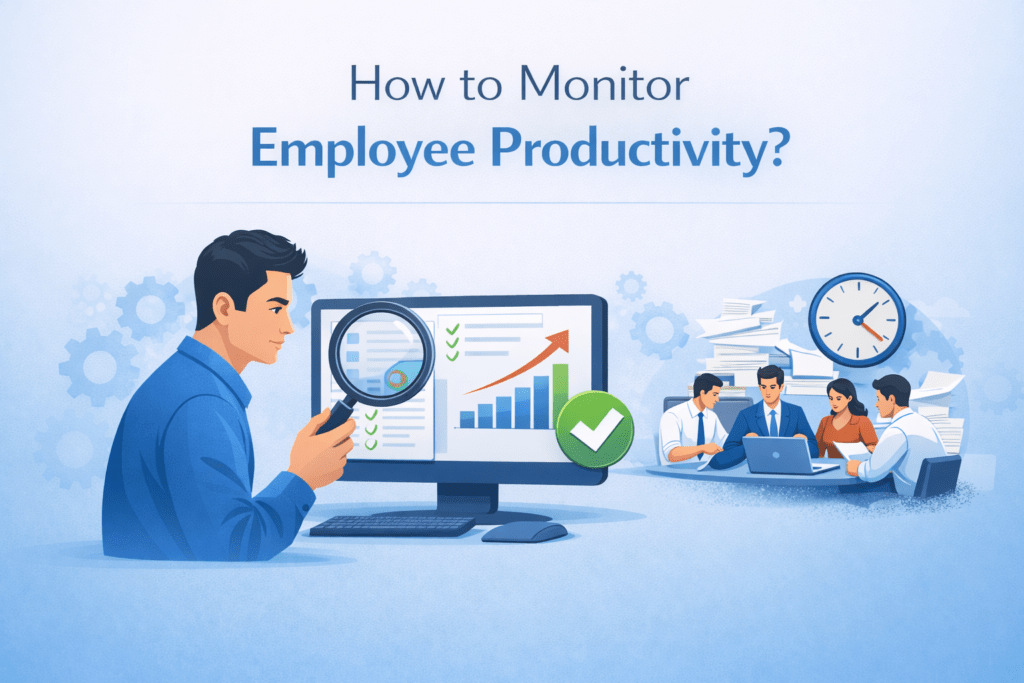
This guide exists for leaders who are done managing by instinct and post-mortem. It shows how to monitor employee productivity in a way that reveals how work actually flows.
Who is This Guide For?
- Operational leaders and founders who are responsible for delivery, efficiency, and scale
- People managers leading hybrid or remote teams who want to support performance, protect focus, and have fair, evidence-based conversations
- HR, Ops, and Finance leaders who need productivity insight they can trust to balance workload, prevent burnout, and forecast capacity
Key takeaways
- Without intentional tracking, leaders are left managing outcomes with incomplete signals and delayed feedback
- Sustainable productivity comes from optimizing for delivered value and consistency
- Bottlenecks, idle time, and tool overload explain far more about missed outcomes than motivation or performance ever will
- When data is used to remove friction, protect focus, and align priorities, tracking becomes a support mechanism
- Visibility turns productivity from a reactive, post-mortem exercise into a proactive leadership advantage
Employee Productivity Today: Why It’s Harder Than It Looks
There was a time when productivity felt tangible.
You could walk the floor, glance at desks, hear conversations, and sense momentum. If people were in their seats, meetings were happening, and emails were flowing, work felt like it was getting done. For operational leaders, visibility equaled control.
Today’s workplace is quieter and infinitely more complex. Productivity hasn’t disappeared, but our ability to see it clearly has.
In a hybrid or remote-first environment, presence has lost its meaning.
An employee can be:
- Online all day
- Active in Slack
- Attending back-to-back meetings
- Responding instantly to messages
…and still make little meaningful progress on the work that actually moves the business forward.
For operations leaders, this creates a dangerous illusion. Activity looks like productivity, but output tells a different story. The uncomfortable truth is this: You can no longer infer productivity from visibility. Time logged is not value created.
One big reason why you can’t deduce productivity from availability is that, beyond the infinite distractions, people are actually drowning in a multitude of apps and websites and overlapping priorities.
A typical day might include:
- Project management software
- Time tracking tools
- Chat platforms
- Video calls
- Docs, dashboards, CRMs, and internal portals
Each tool promises efficiency. Together, they create cognitive fragmentation. Work no longer flows in a straight line.
From an operational standpoint, this fragmentation makes productivity incredibly hard to diagnose:
- Is a task delayed because it’s complex—or because it’s buried?
- Is a team overloaded—or just poorly sequenced?
- Is time being wasted—or simply misaligned with priorities?
What Employee Productivity Really Means in Practice
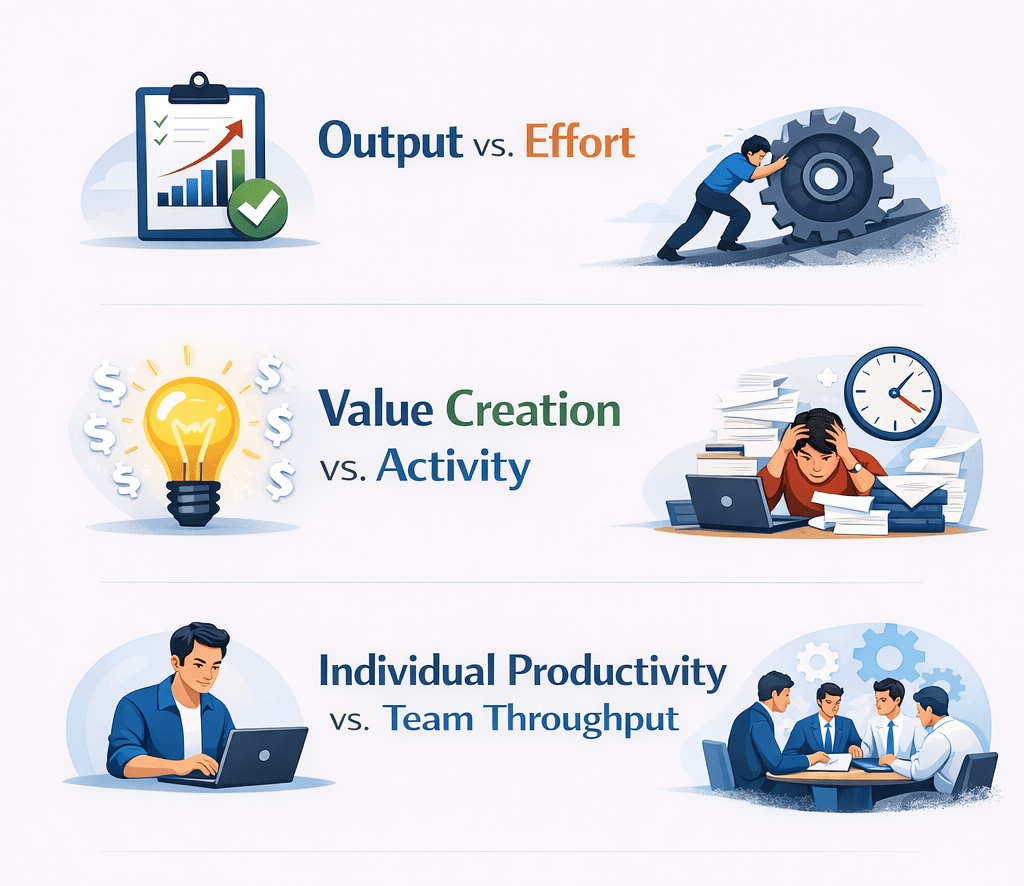
To understand productivity in the modern workplace, leaders like you have to unlearn some deeply ingrained assumptions and replace them with sharper, more operational definitions.
Output vs. Effort
Effort shows up as long days, full calendars, and constant availability. It feels reassuring to see a team pushing hard—especially when deadlines are tight or expectations are high. But effort, on its own, is a cost. Output is the return.
Operationally mature organizations draw a clear line between the two. They don’t reward how hard something felt to complete; they reward what was actually delivered. A task that took eight hours but produced no usable result is not more productive than one that took two hours and unlocked the next phase of a project.
This distinction matters because effort scales linearly, while output compounds. When leaders optimize for effort, they get burnout. When they optimize for output, they get momentum.
Value Creation vs. Activity
Not all work creates value, even if it consumes time.
A status meeting can take an hour and add nothing. A well-timed decision can take ten minutes and remove weeks of friction. Yet many organizations treat these moments as equivalent because both count as “work.”
This is where productivity quietly breaks down.
Employees fill their days with activity because activity is measurable and defensible. It’s easy to explain a busy schedule. It’s harder to explain why something didn’t need to be done at all.
Operational leaders who understand real productivity ask different questions:
- Which activities move the needle for customers, revenue, or delivery?
- Which ones merely maintain the illusion of progress?
- Where is time being spent that doesn’t translate into business value?
In practice, productivity is about value density, how much meaningful impact is created per unit of time.
Individual Productivity vs. Team Throughput
Many managers focus on increasing individual performance. While important, this view misses the bigger operational truth: work moves through teams, not people.
If one person finishes early but waits days for approvals, handoffs, or dependencies, the system remains slow. If teams aren’t aligned, individual speed creates friction instead of flow.
High-performing organizations measure productivity at the level where work actually accumulates, team throughput:
- How quickly does work move from idea to delivery?
- Where does it stall?
- How often does rework occur?
True productivity emerges when individuals are effective, and the system around them is designed to support smooth execution.
| The most dangerous form of productivity is misaligned productivity.
Teams can execute flawlessly on the wrong priorities. They can hit every internal metric and still fail to move the business forward. This happens when productivity is defined locally, by tasks, tools, or roles, rather than globally, by outcomes. Operational leaders must ensure that productivity answers a single, critical question: “Does this work materially advance our business goals?” |
Why Leaders Need Productivity Tracking (Beyond Oversight)
Operational leadership is fundamentally about timing.
The difference between a small course correction and a major failure is often not effort or intent; it’s how early the signal was seen. When leaders lack visibility into how work is actually unfolding day to day, decisions are made too late, with too little context.
In reality, the warning signs would have been there weeks earlier—work slowing at a specific stage, excessive time lost to interruptions, or priorities constantly shifting mid-execution.
Without tracking, these patterns remain invisible until outcomes suffer. Productivity tracking—monitoring everything from deep-work blocks to time spent in video conferencing applications—reveals problems before they harden into failures.”
Why this works
-
Contextual Relevance: It positions video conferencing as one of the specific metrics being tracked.
-
Flow: By using an em-dash, the keyword acts as a supporting example without disrupting the punchy rhythm of your original sentences.
-
Clarity: It highlights a common modern workplace “time sink,” making the need for tracking feel more urgent.
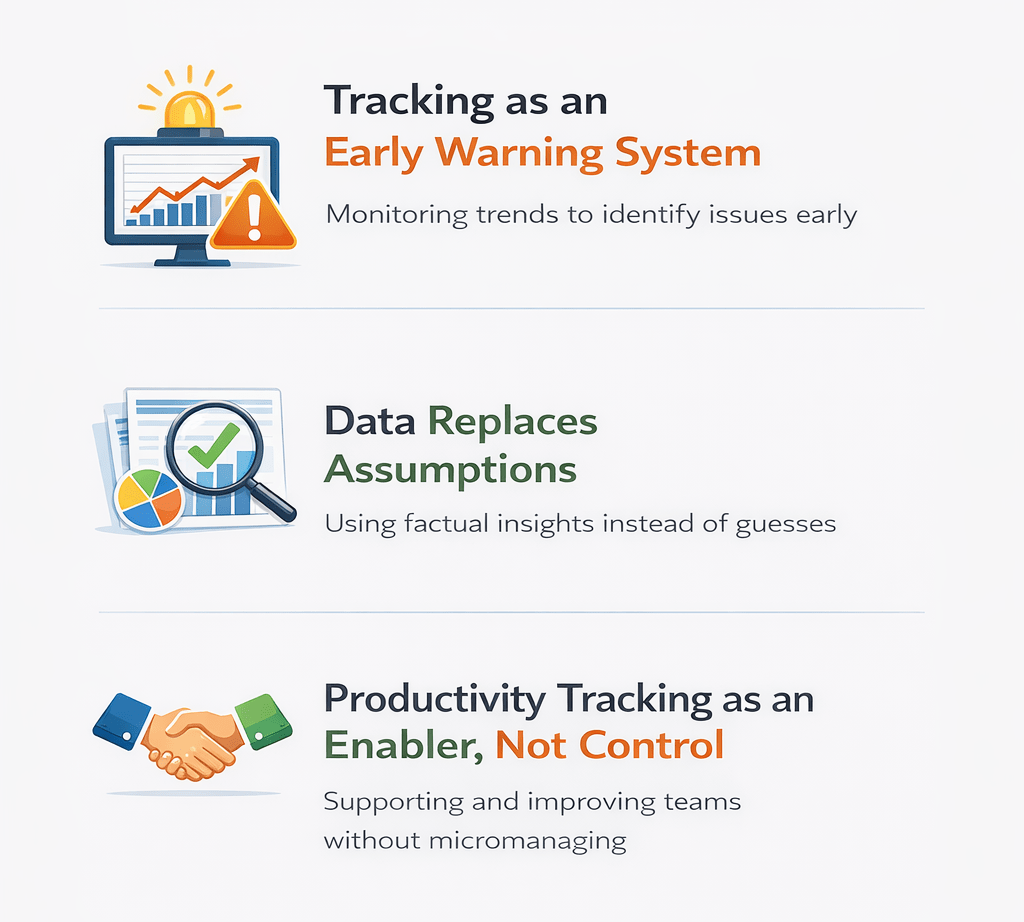
Tracking as an Early Warning System
The most effective leaders don’t wait for post-mortems. They build systems that surface risk while there’s still time to act.
Productivity data functions like an early warning system for execution:
- When focused work time drops, burnout or overload may be approaching
- When task durations creep upward, complexity or unclear scope may be the cause
- When collaboration time spikes, decision bottlenecks often follow
These signals don’t tell leaders who is failing. They tell leaders where the system is straining.
That distinction matters. Instead of reacting emotionally to missed outcomes, leaders can respond structurally.
Data Replaces Assumptions
Leaders assume teams are overwhelmed, managers assume individuals are inefficient, and employees assume leadership doesn’t understand their reality.
Productivity tracking replaces this guesswork with shared facts.
When everyone can see how time and effort are actually distributed, conversations change. Discussions shift from defensiveness to diagnosis. It allows leaders to ask better questions, make fairer decisions, and intervene with precision rather than pressure.
For people managers, this is transformative.
Productivity Tracking as an Enabler, Not Control
The most misunderstood aspect of productivity tracking is its purpose.
Its value isn’t in watching people more closely; it’s in freeing them from friction.
When tracking is designed well and communicated clearly, it becomes an enabler:
- It protects focused work by exposing constant interruptions
- It validates workload concerns with evidence
- It helps teams push back on low-impact work
- It gives managers the confidence to trust outcomes, not hours
In this model, tracking shifts power away from constant supervision and toward self-correcting systems. Employees gain clarity on how they work best. Managers gain confidence in how work is progressing.
What to Measure (and What Not to) in Productivity
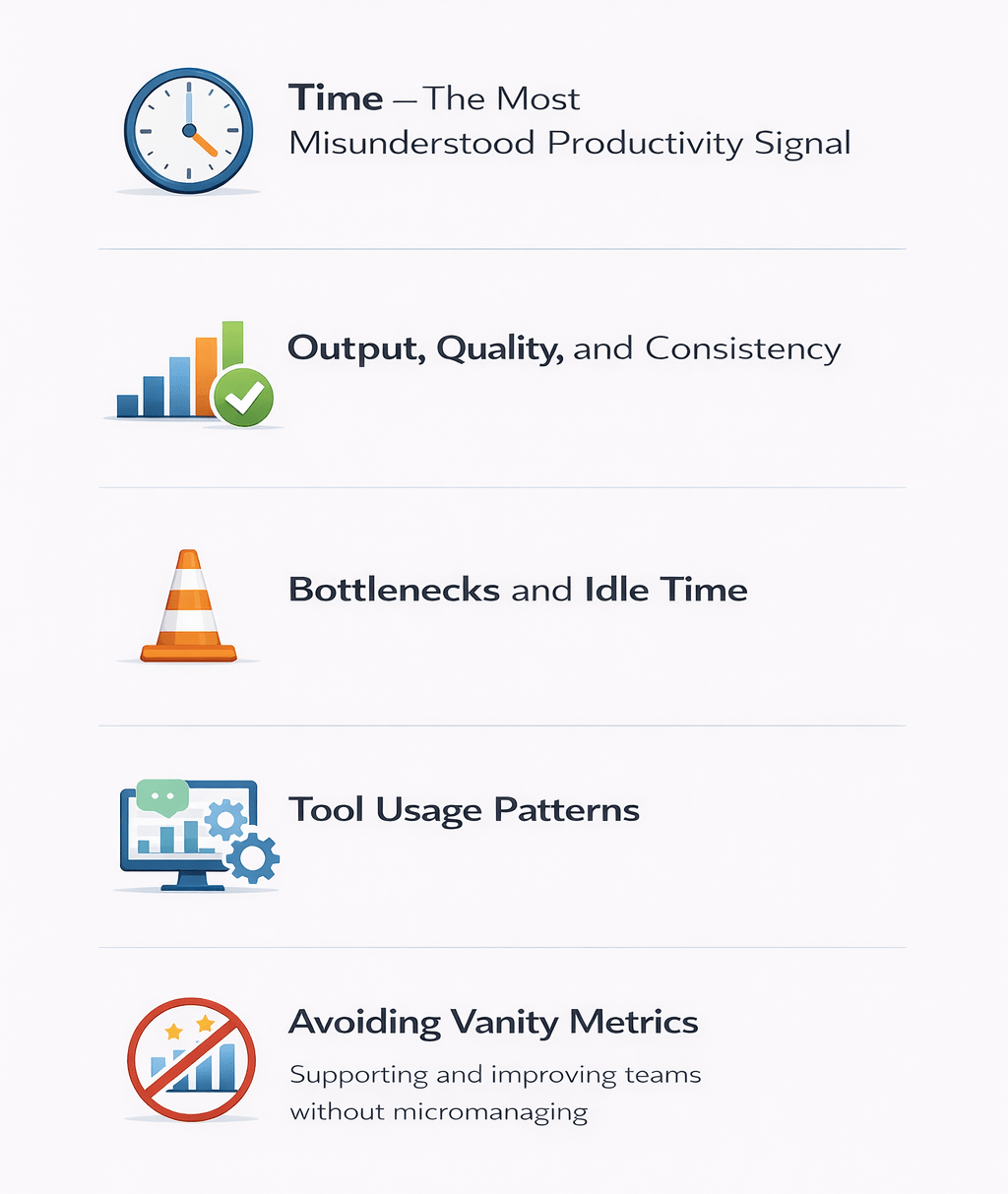
Not everything measurable is meaningful. In fact, some of the most common productivity metrics actively distort behavior, create anxiety, and push teams toward performative busyness rather than real execution.
For operational leaders and people managers, this section is where productivity tracking either becomes a strategic advantage or an expensive distraction.
Time – The Most Misunderstood Productivity Signal
Measured poorly, it becomes a blunt instrument, used to judge commitment, compare employees, or reward long hours. Used correctly, time is context. It explains how work happens, not how hard someone tries.
When leaders look at time data as context, they begin to see:
- Where work requires deep, uninterrupted focus with time blocking
- Where constant switching erodes momentum
- Where meetings and admin quietly consume execution hours
Time doesn’t tell you who is productive. It tells you what the system is asking people to do.
For people managers, this reframing is critical. Time data should never start a disciplinary conversation. It should start a design conversation: Why does this work take this long? What’s getting in the way? What can we remove?
Output, Quality, and Consistency
What matters operationally is not how many tasks are touched, but how many are completed, and whether they meet the standard required to move work forward. Output should always be assessed alongside quality and consistency, not in isolation.
One rushed deliverable that creates rework is not productive. Ten inconsistent outcomes create chaos downstream. Sustainable productivity shows up as:
- Work completed to expectation
- Minimal rework or escalation
- Predictable delivery over time
For leaders, consistency is often the most valuable signal. It allows for planning, forecasting, and trust.
Bottlenecks and Idle Time
Some of the most powerful productivity insights don’t come from how busy people are, but from where work stops.
Bottlenecks reveal structural problems: approval delays, unclear ownership, overdependence on specific individuals, or overloaded roles. Idle time, on the other hand, often signals waiting for decisions, inputs, or clarity, not disengagement.
When leaders measure bottlenecks and idle time, they stop asking:
“Why isn’t this person moving faster?”
And start asking:
“Why can’t the work move forward?”
This shift changes everything. Instead of pushing harder, leaders remove friction. Instead of blaming individuals, they redesign the flow.
Tool Usage Patterns
They shape how work gets done.
Tracking tool usage patterns isn’t about policing software habits, it’s about understanding how digital environments influence focus and collaboration. Leaders gain insight into:
- Whether teams are over-collaborating at the expense of deep work
- Which tools fragment attention or duplicate effort
- Where critical work is happening outside official systems
These patterns often explain why work feels heavier than it should. A team drowning in messages may not lack discipline; they may lack clear norms. A project scattered across tools may not lack ownership; it may lack structure.
Avoiding Vanity Metrics
Vanity metrics are seductive because they look impressive and are easy to track.
These metrics create motion without insight. Worse, they encourage people to optimize for appearances rather than outcomes. Operationally strong organizations avoid this trap. They choose fewer metrics, tied directly to execution and outcomes. They measure what helps leaders decide faster.
Building a Productivity Tracking System That Scales
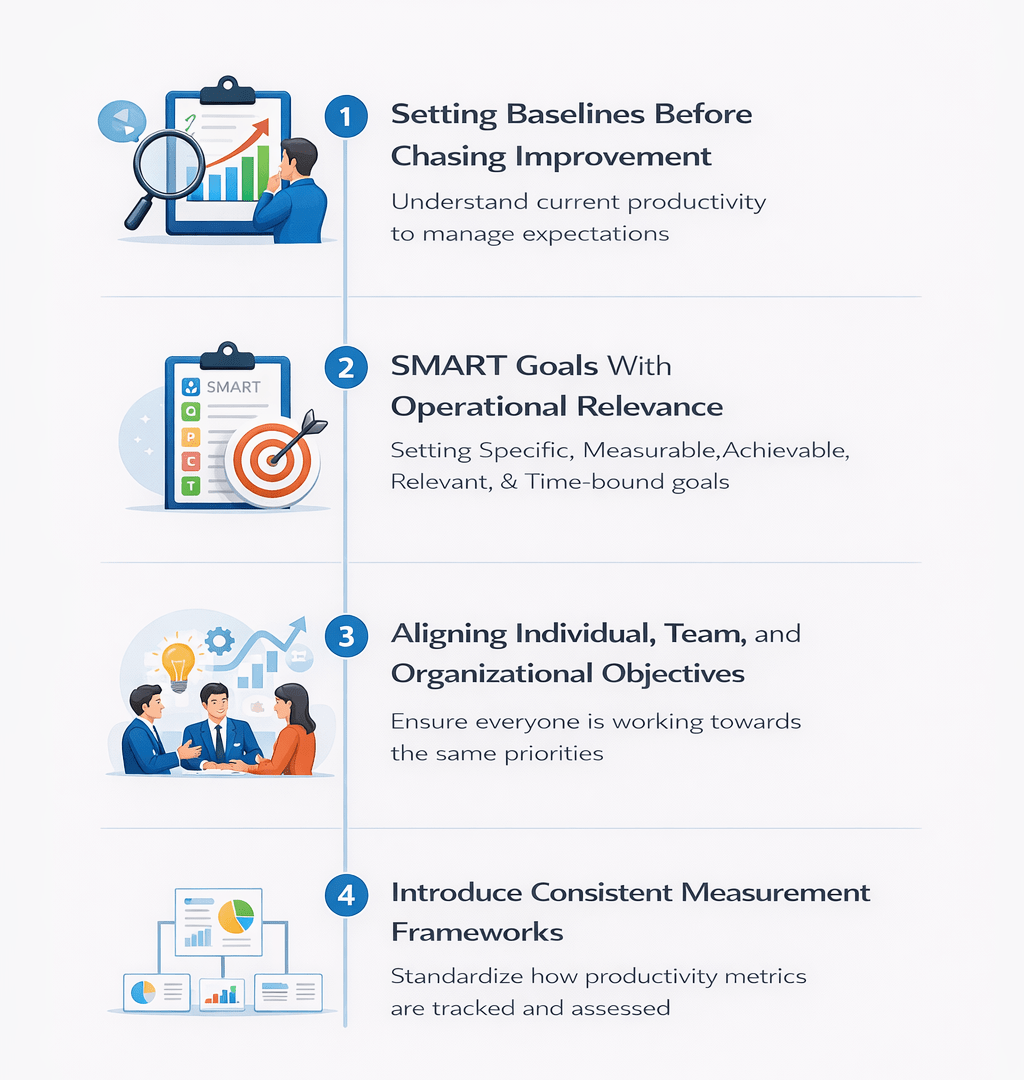
Most productivity initiatives don’t fail because leaders lack intent or tools. They fail because they’re built as one-time fixes, a dashboard here, a metric there, rather than as systems that can grow with the organization.
Operational leaders don’t just need productivity visibility today. They need a model that still works when the team doubles, when priorities shift, and when execution pressure increases.
1. Setting Baselines Before Chasing Improvement
The fastest way to undermine a productivity program is to start with targets instead of truth.
Baselines answer a simpler, more powerful question:
“How does work actually happen today?”
They capture current cycle times, workload distribution, focus patterns, and handoffs, without judgment. For people managers, this creates psychological safety. The message is not do better, but let’s understand reality first.
Only when leaders respect the baseline can improvement feel fair, achievable, and grounded in operational truth.
2. SMART Goals With Operational Relevance
Not all goals drive productivity. Some merely add pressure.
SMART goals are only effective when they reflect how work flows through the organization, not just what leadership hopes will happen. A goal that ignores dependencies, constraints, or capacity doesn’t motivate execution; it creates quiet failure.
Operationally relevant goals:
- Are tied to specific stages of work (not abstract outcomes)
- Reflect controllable behaviors and system improvements
- Balance speed with quality and sustainability
For example, improving turnaround time without addressing approval delays sets teams up to miss targets they don’t control. People managers feel this tension most acutely; they’re asked to deliver outcomes without authority to remove blockers.
3. Aligning Individual, Team, and Organizational Objectives
One of the hardest scaling challenges is alignment across levels.
At a small scale, alignment happens informally. Leaders talk often. Context flows naturally. But as organizations grow, productivity fractures when:
- Individuals optimize personal efficiency
- Teams optimize local throughput
- The organization optimizes global outcomes
- Without alignment, these optimizations collide.
A scalable productivity system creates a clear line of sight from individual effort to organizational impact. Employees understand how their focus contributes to team delivery. Teams understand how their output supports strategic goals. Leaders can see where execution drifts from intent.
4. Introduce Consistent Measurement Frameworks
Inconsistency is the silent killer of productivity tracking.
When teams measure different things in different ways, leaders lose comparability. When metrics change every quarter, trust erodes. When definitions shift, data becomes noise.
Scalable systems rely on stable frameworks, not rigid rules.
Consistency doesn’t mean uniformity. It means shared principles:
- Time is interpreted as context
- Output is evaluated with quality
- Trends matter more than snapshots
Comparisons are made within roles and workflows, not across unrelated functions
For operational leaders, consistency enables pattern recognition at scale. For people managers, it creates fairness and clarity. Everyone knows what’s being measured, why it matters, and how success is defined.
Tools That Support Productivity Without Micromanagement
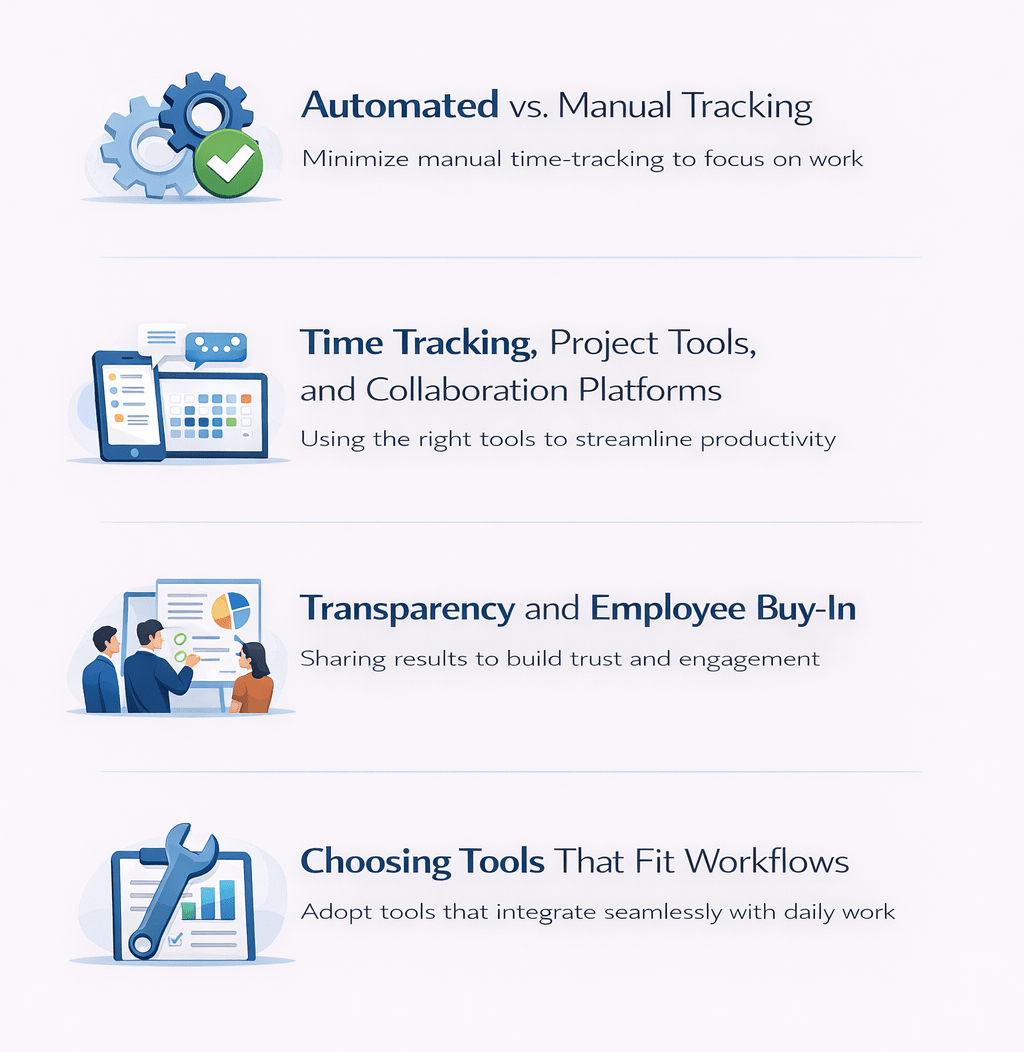
For many operational leaders, the conversation about productivity tools begins with a quiet fear: What if this turns us into managers who watch instead of leading?
That fear is justified, because the wrong tools don’t just fail to improve productivity, they damage trust. They create performative behavior, defensive teams, and leaders who mistake dashboards for understanding.
The right tools do the opposite. They fade into the background of work, quietly illuminating patterns without interrupting execution. They help leaders see how work flows, not hover over how people behave.
Automated vs. Manual Tracking
Manual tracking asks employees to remember, record, and justify their time. In theory, it builds awareness. In practice, it builds friction.
People forget. They reconstruct days from memory. The data becomes aspirational rather than accurate, and the act of tracking becomes yet another task competing for focus.
Automated time tracking changes the dynamic entirely.
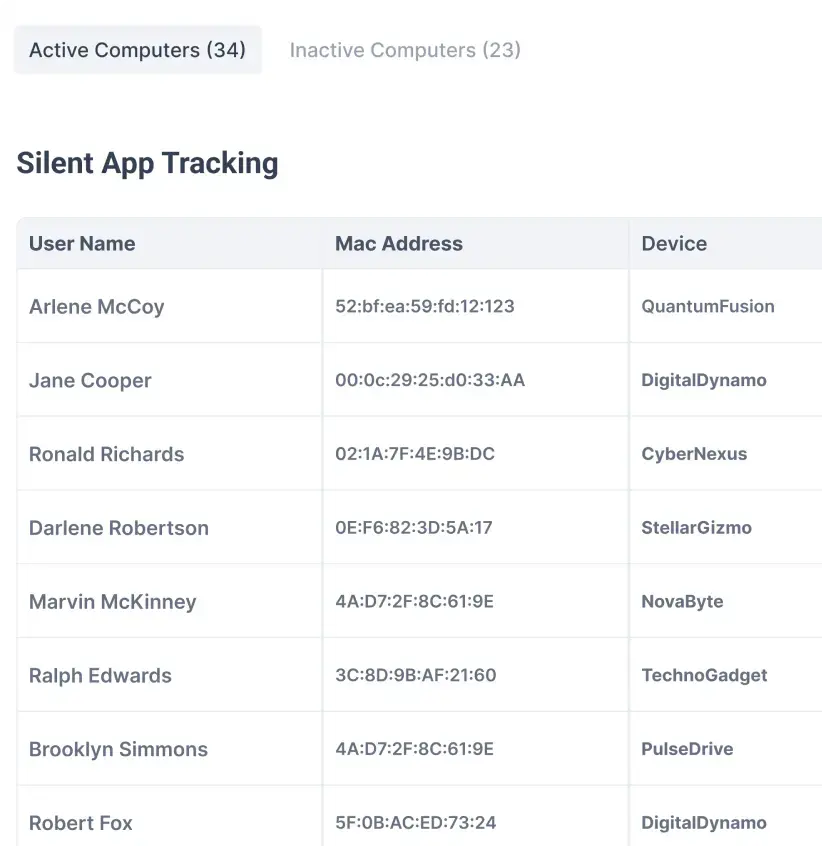
When tracking happens passively, capturing time, app usage, or task movement in the background, it removes the emotional weight from measurement. Employees aren’t “reporting themselves.” Leaders aren’t “checking up.” The system simply reflects reality.
For people managers, this means fewer debates about accuracy and more conversations about patterns. For operational leaders, it means reliable insight without administrative drag.
Time Tracking, Project Tools, and Collaboration Platforms
No single tool tells the full productivity story. Real insight comes from how different systems complement each other.
Time tracking tools provide context, how effort is distributed across focus work, collaboration, and interruptions. Project management tools show progress, what’s moving, what’s blocked, and what’s overdue. Collaboration platforms reveal communication intensity and coordination patterns.
Individually, these tools answer narrow questions. Together, they explain why outcomes look the way they do.
For example, missed deadlines stop being a mystery when time data shows constant interruptions, project tools show unclear ownership, and collaboration tools show decision-heavy conversations concentrated around a few people.
Operational leaders need coherent signals across the ones they already use.
Transparency and Employee Buy-In
Productivity tools fail fastest when they are introduced quietly and explained poorly.
Employees don’t resist measurement; they resist uncertainty. When people don’t understand what’s being tracked, why it matters, or how it will be used, they assume the worst.
Transparency changes everything. People managers play a critical role here. When they use data to protect focus, rebalance workloads, and remove low-value work, employees see the benefit firsthand. Buy-in is earned through fair, visible action.
Choosing Tools That Fit Workflows
The most expensive productivity tools are the ones teams have to work around.
A tool that forces unnatural behavior, rigid categorization, or constant input will always lose to real work. Employees adapt by minimizing use, and leaders are left with partial data and false confidence.
Scalable productivity tools fit existing workflows. They adapt to how teams already work, across roles, functions, and rhythms, rather than prescribing a single “right” way to be productive.
For operational leaders, this means evaluating tools not just on features, but on friction:
- How much cognitive load do they add?
- How often do they interrupt work?
- How easily do insights translate into action?
The best tools feel almost invisible. Their value shows up not in usage rates, but in better decisions, smoother execution, and fewer surprises.
Productivity in Remote & Hybrid Work Environments
What leaders lost wasn’t control, but the old shortcuts they used to infer progress in the remote and hybrid environment. Leaders who wonder how to monitor employee productivity in remote settings, and wonder if they should initiate a Work from Office policy to enhance productivity, are stuck between retention and contribution. Let’s find the middle ground here.
Presence, proximity, and activity used to stand in for execution. In distributed teams, those signals disappeared, exposing a more important truth: productivity was never about where people sat, but about how clearly work moved from intent to outcome.
Results-First Management
In remote and hybrid environments, results become the only signal that matters. Leaders can no longer rely on real-time observation or constant interaction to feel confident that work is progressing. Instead, productivity must be defined by clear outcomes and measurable progress, not by responsiveness or availability. When expectations are explicit and success is clearly defined, employees gain autonomy over how they work while leaders gain confidence in what is being delivered.
Async Visibility
Many organizations respond to remote work by increasing synchronous oversight, more messages, more meetings, more check-ins. The result is visibility without clarity and communication without progress. Async visibility offers a more sustainable alternative. When progress is visible through shared systems, automated insights, and reliable metrics, leaders don’t need constant updates to stay informed. Work speaks for itself.
Teams remain aligned without being interrupted, and productivity is preserved rather than consumed by coordination overhead.
Structured Communication Rhythms
High-performing distributed teams don’t communicate continuously; they communicate deliberately. Clear rhythms replace reactive noise. Regular but lightweight check-ins, well-defined escalation paths, and fewer, more purposeful meetings create predictability in an otherwise flexible environment.
For operational leaders, this structure restores cadence and foresight. For teams, it reduces fragmentation and protects deep work. Communication becomes a support system for execution, not a competitor for attention.
Preventing Burnout While Maintaining Output
Remote work doesn’t cause burnout; unmanaged expectations do. When availability becomes a proxy for commitment, employees feel pressure to stay visible at the expense of recovery and focus. Over time, output may appear stable, but resilience erodes.
Sustainable productivity in hybrid environments requires leaders to actively protect focus time, normalize boundaries, and intervene early when workload patterns signal strain. Productivity tracking, used responsibly, helps leaders act before burnout shows up as attrition or missed outcomes.
Best Practices for Sustainable Productivity
Sustainable productivity is not achieved through intensity or pressure. It’s built through systems that balance clarity, trust, and adaptability. Organizations that sustain high performance over time treat productivity as an evolving capability, one that must be continuously reinforced rather than periodically enforced.
Outcome-Focused Tracking
The most resilient productivity systems begin with outcomes, not effort. They measure what is delivered, how reliably, and at what quality, using time and activity data only to explain patterns and constraints. This keeps teams oriented toward impact instead of appearances. When outcomes lead the conversation, productivity remains aligned with business value even as tools, roles, and workflows change.
Trust and Transparency
Trust is the foundation of any productivity system that lasts. Transparency around what is measured, why it matters, and how insights will be used prevents fear and speculation. When employees see data being used to remove friction, rebalance workloads, and improve workflows, not to punish or micromanage, trust becomes reinforced rather than tested. Productivity tracking stops feeling like oversight and starts feeling like support.
Employee Involvement
Productivity improves fastest when employees are part of the system, not subjects of it. Involving teams in goal-setting, interpreting productivity insights, and identifying improvements transforms measurement into ownership. People managers shift from policing performance to coaching it. Leaders gain insight grounded in reality, not filtered through hierarchy. Engagement rises because productivity becomes something people shape together.
Continuous Improvement
Productivity is never completely achieved. What works today may become tomorrow’s bottleneck as organizations grow and priorities shift. Sustainable systems treat productivity insights as feedback loops, not verdicts. Small, continuous adjustments to workflows, expectations, and tools compound into lasting gains. This mindset prevents stagnation and keeps execution aligned with the organization’s evolving needs.
Recognition and Well-Being
True productivity systems acknowledge that people are not infinitely elastic. Recognizing consistent delivery, protecting recovery time, and reinforcing healthy work patterns ensures output remains durable. When well-being is treated as an input to performance rather than a reward after exhaustion, organizations sustain momentum without sacrificing their people.
How Flowace Fits Into a Modern Productivity Framework
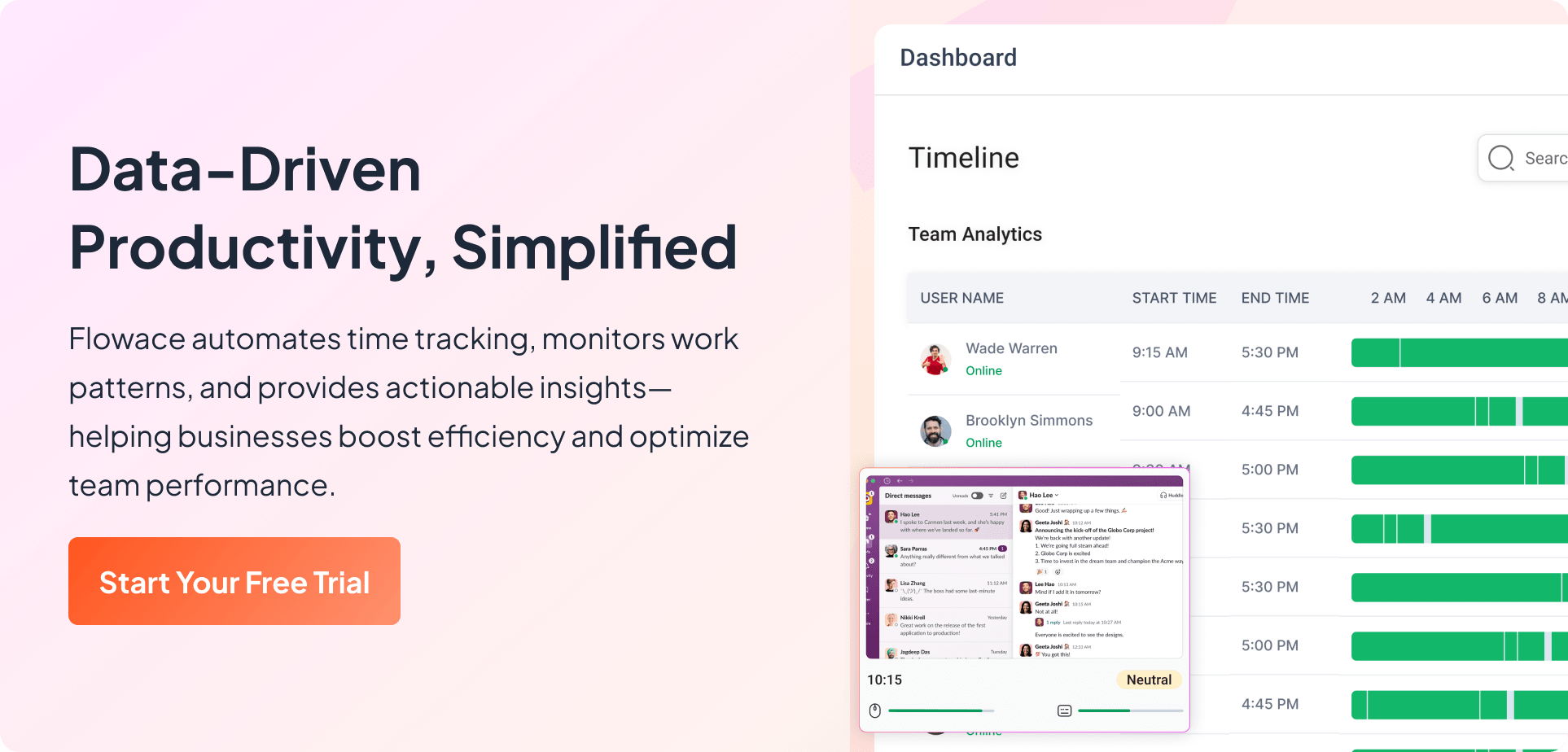
Automated Timesheets
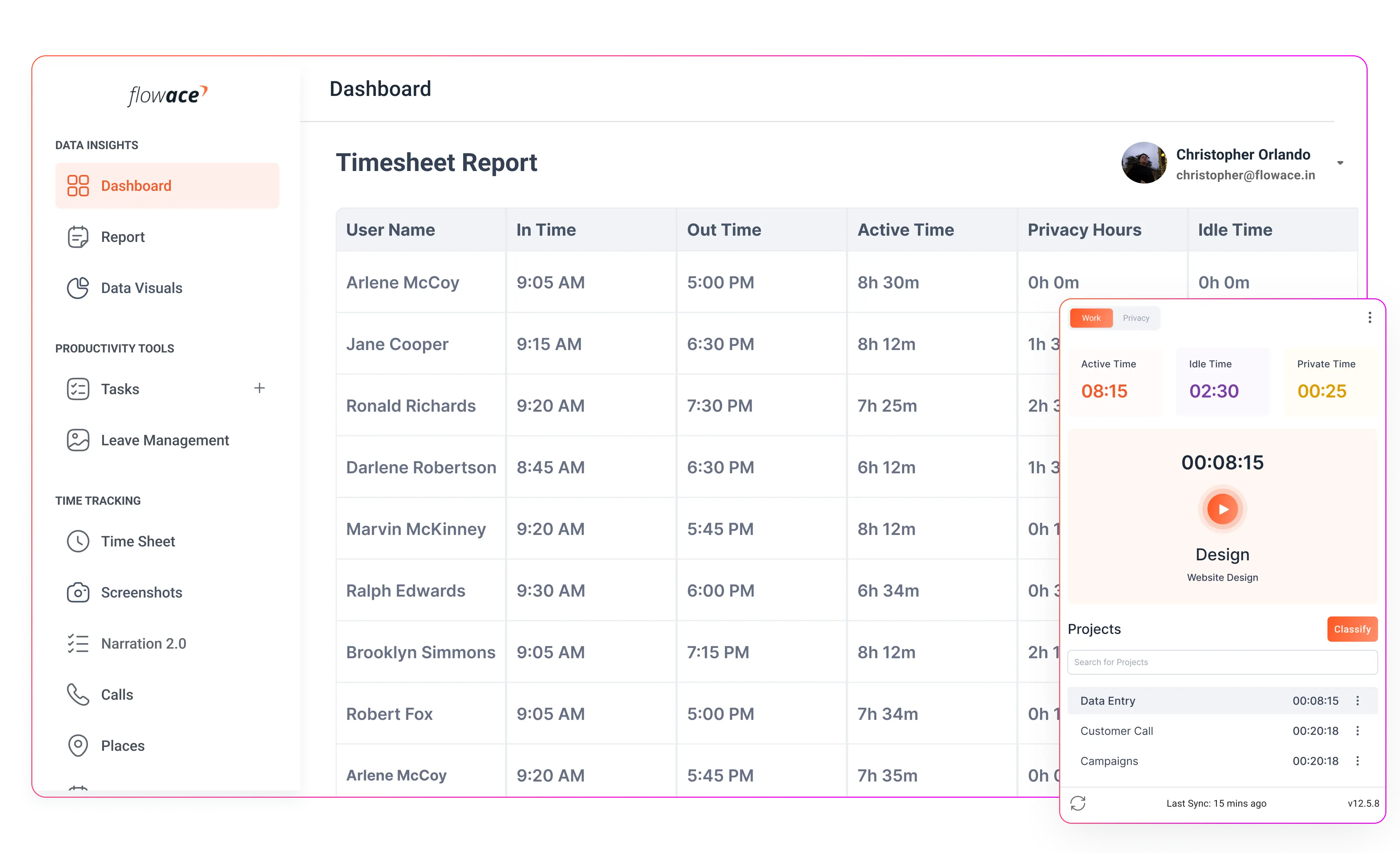
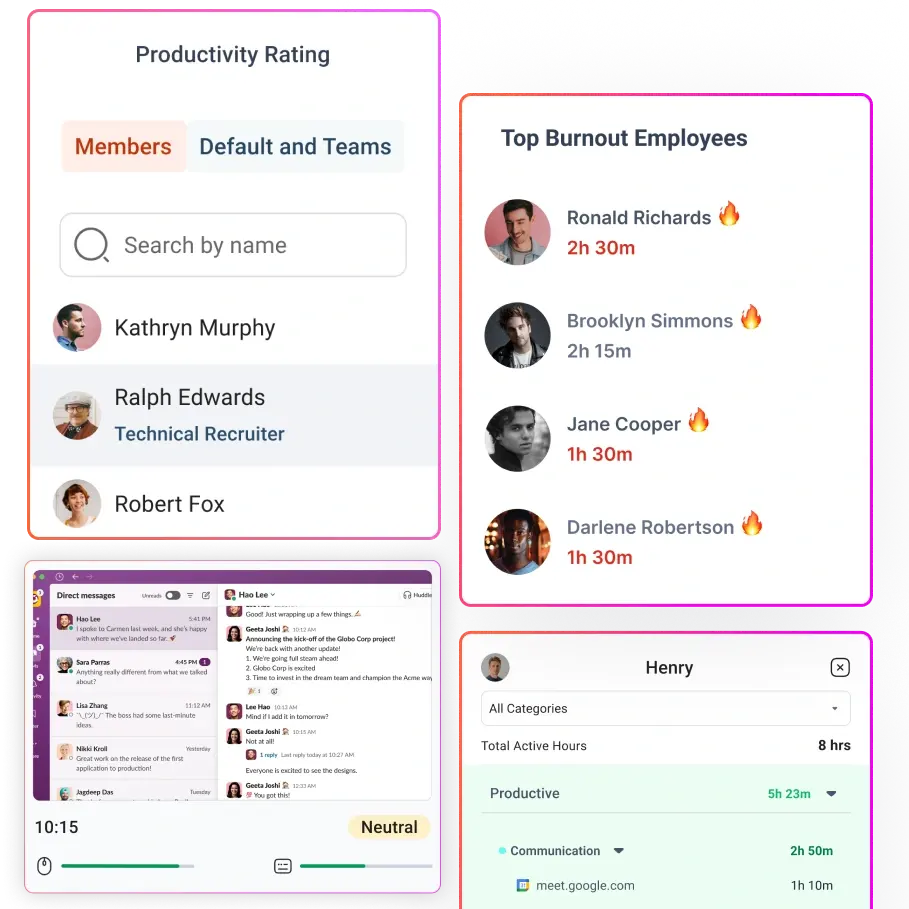
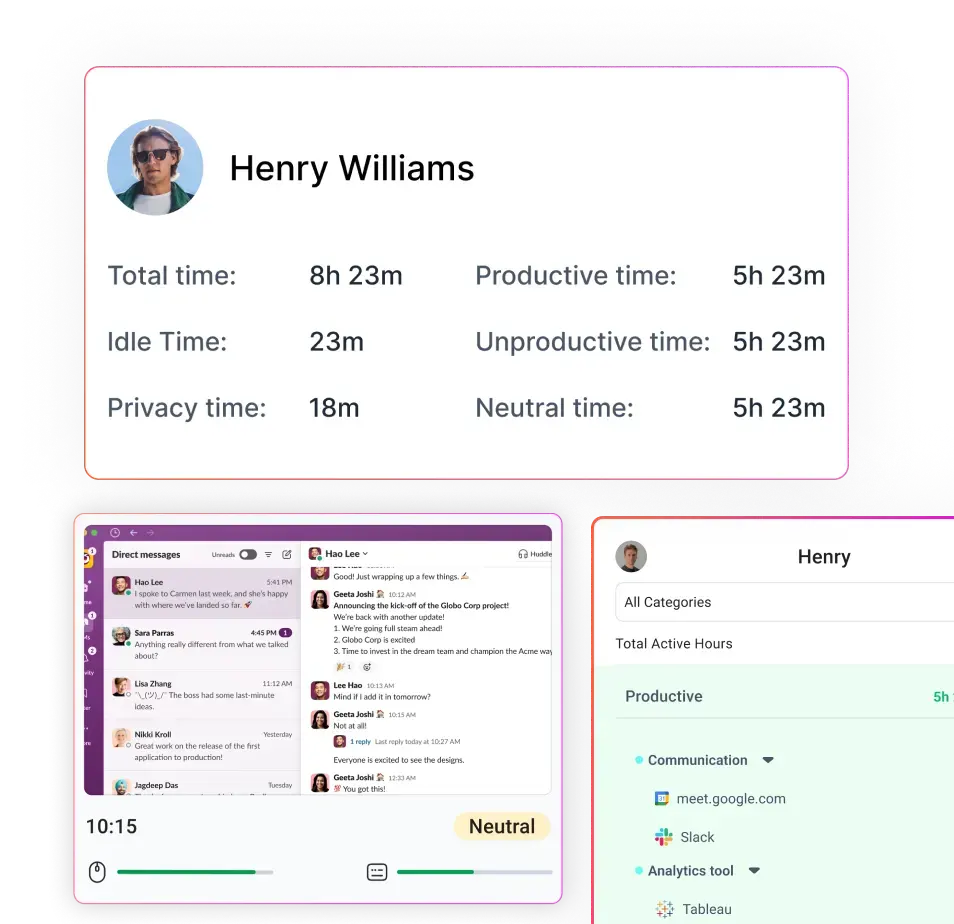
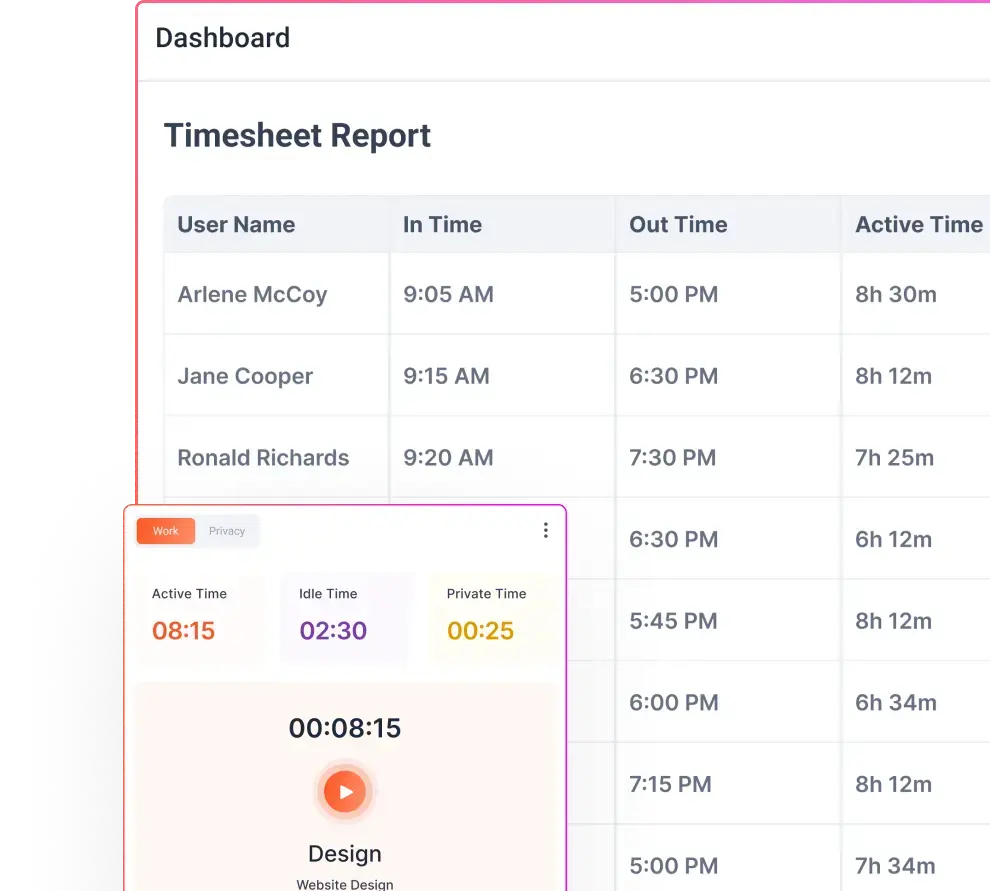
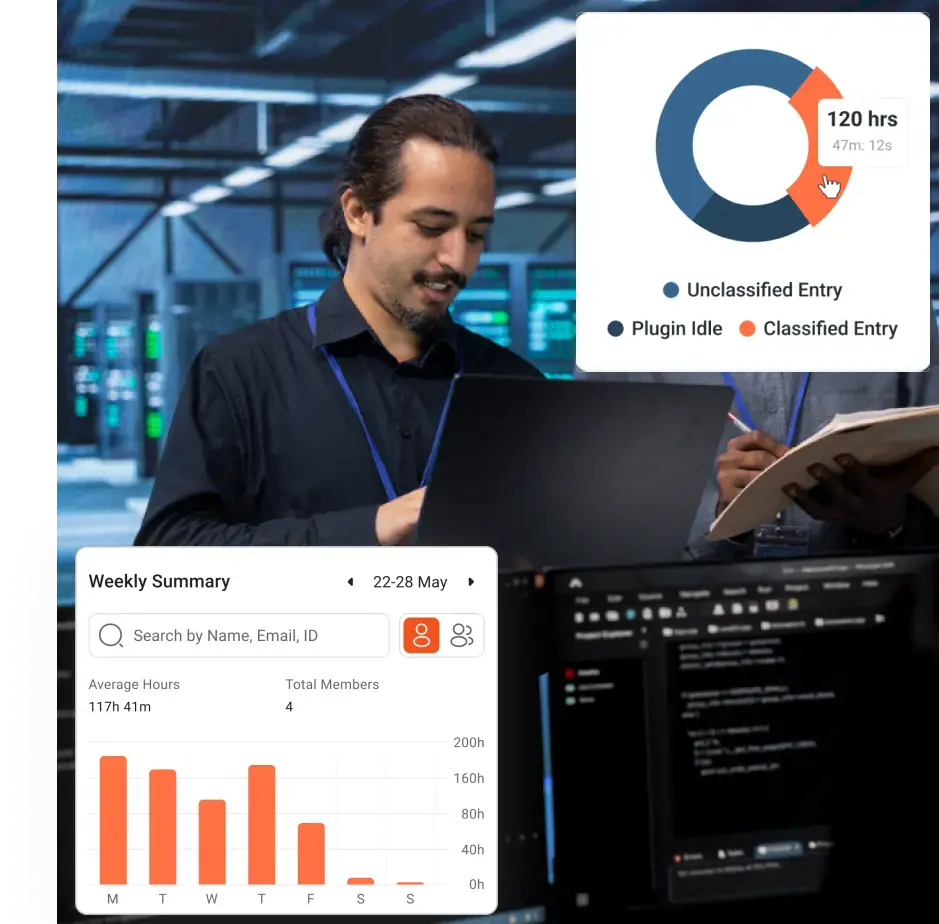
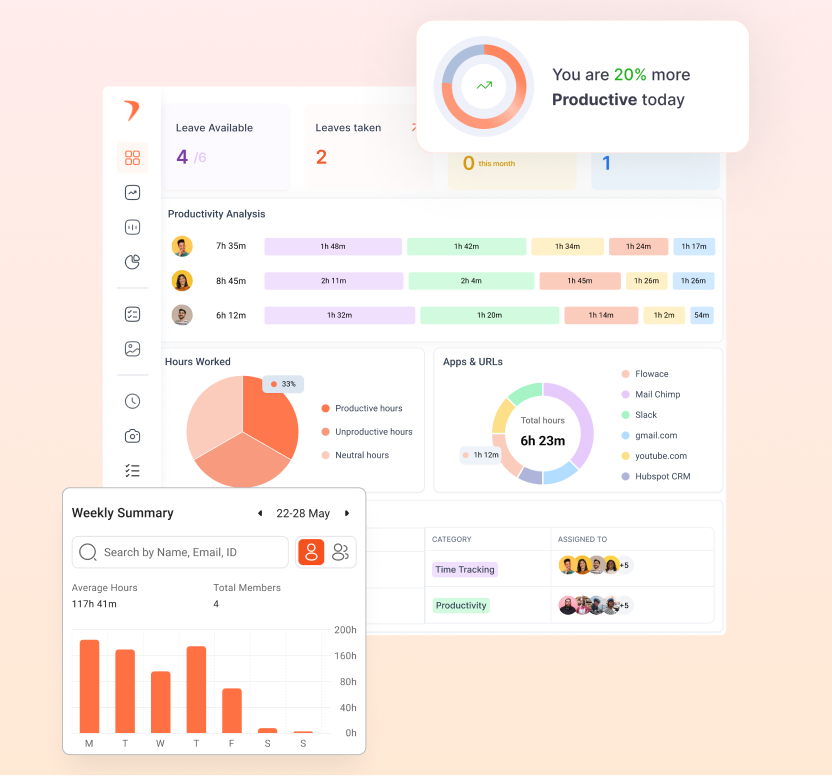
Flowace removes the friction and inaccuracy of manual reporting by generating timesheets automatically. Time is captured passively and objectively, without interrupting employees or asking them to justify their day. For leaders, this creates a shared, reliable understanding of how work unfolds. For employees, it removes administrative burden and anxiety. Productivity conversations start from truth, not reconstruction.
App and Activity Insights
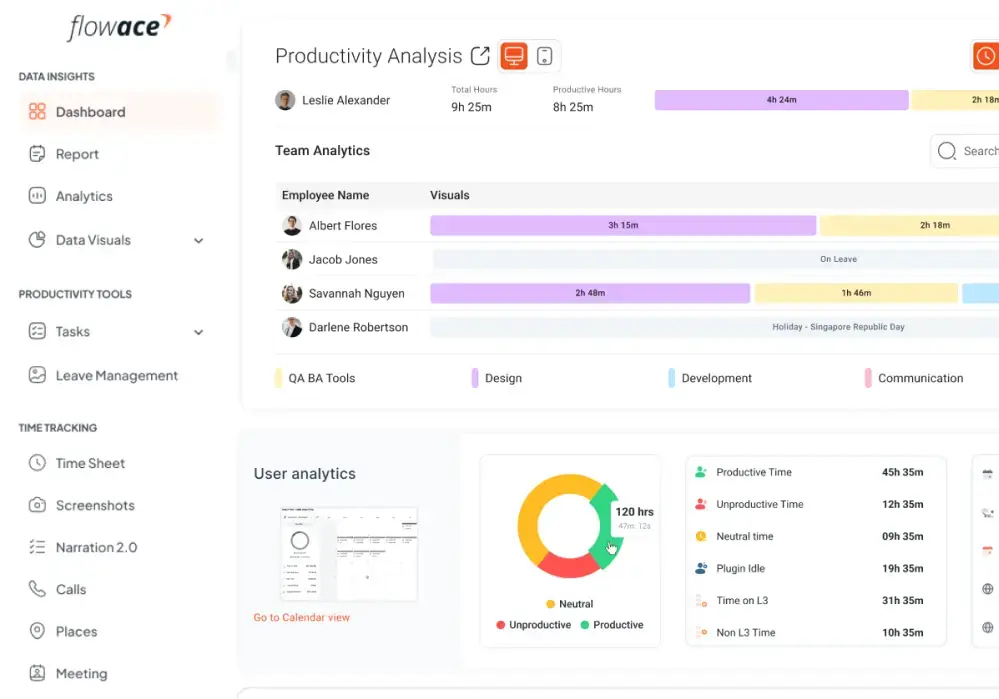
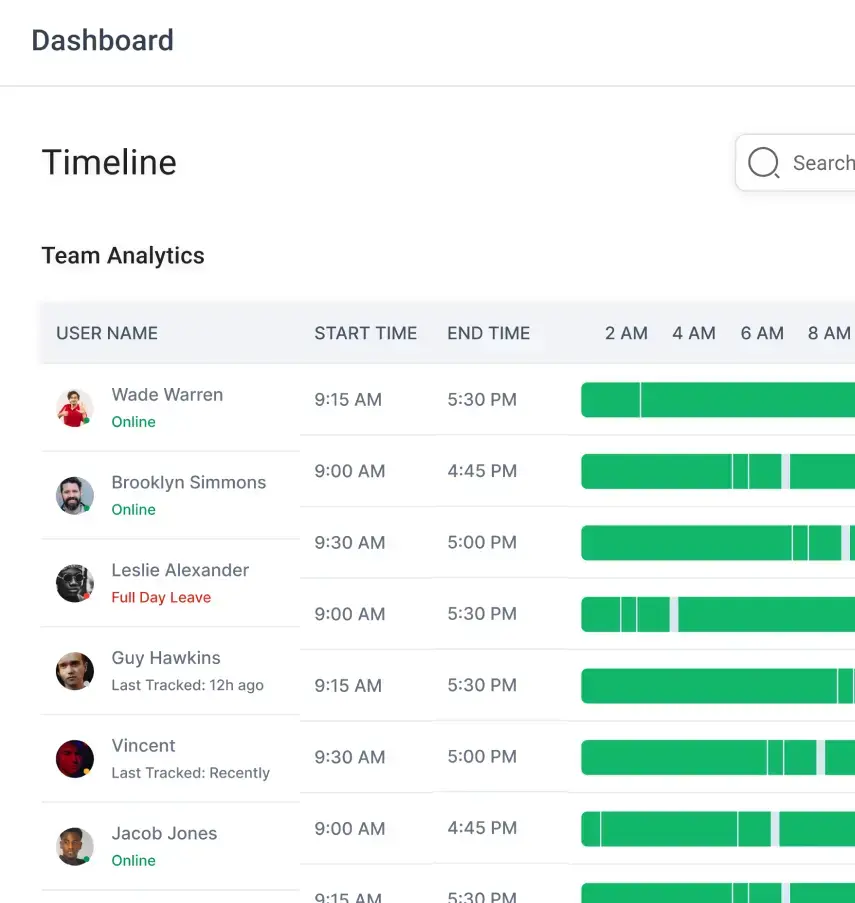
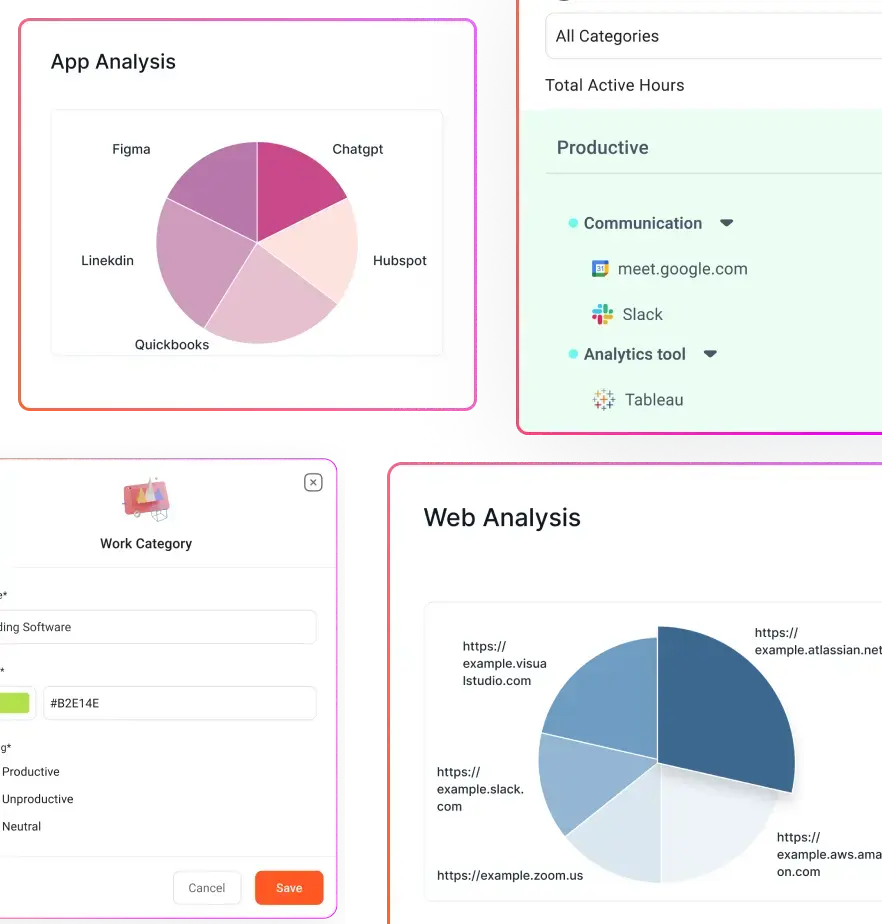
Flowace provides visibility into work patterns that are otherwise impossible to see — how focus is distributed, where interruptions accumulate, and which tools shape daily execution. These insights are not about scrutinizing individuals. They are about understanding the system. People managers gain the ability to coach with specificity. Teams gain the ability to redesign work for clarity and flow.
Productivity Analytics for HR, Operations, and Finance
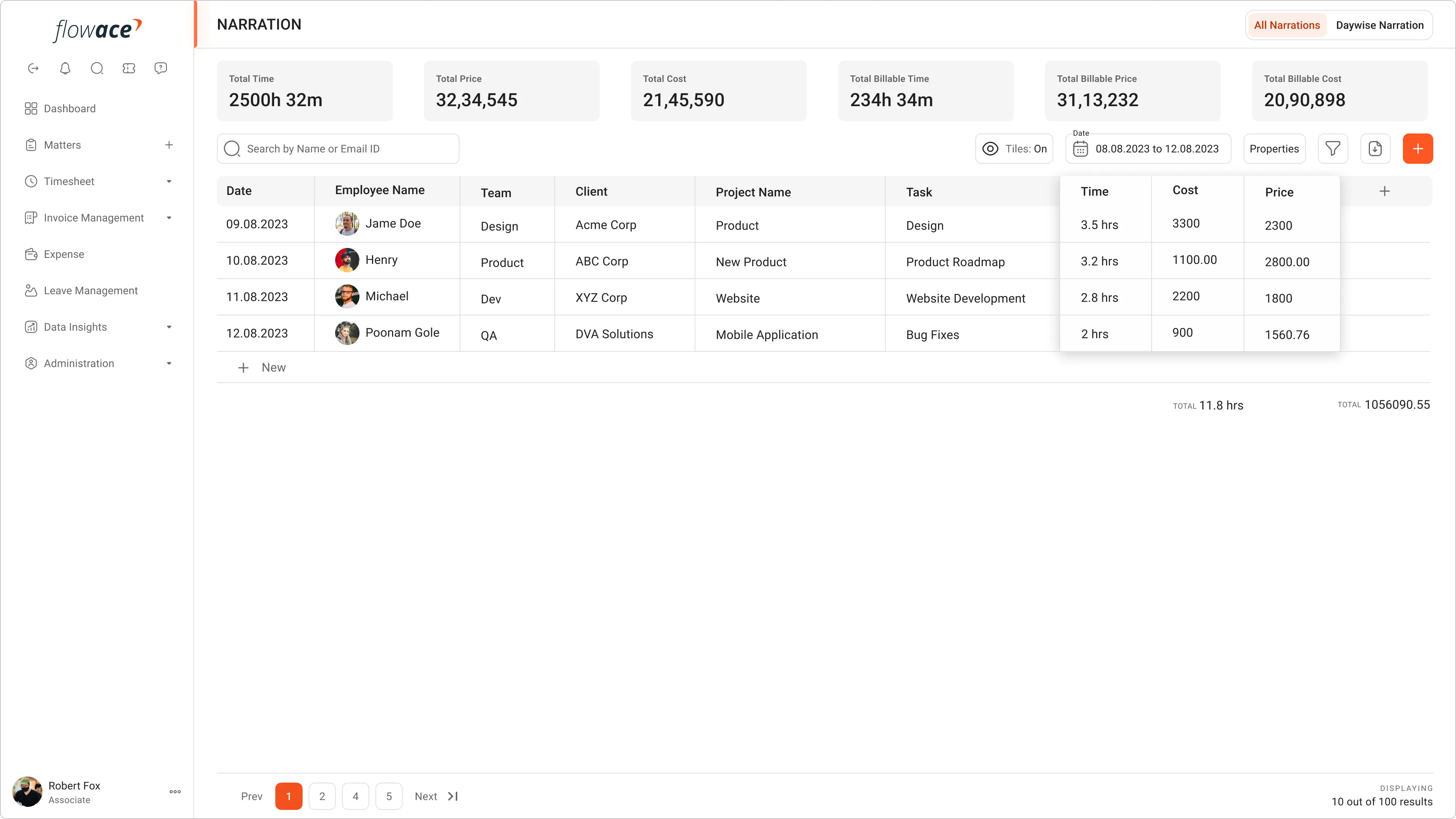
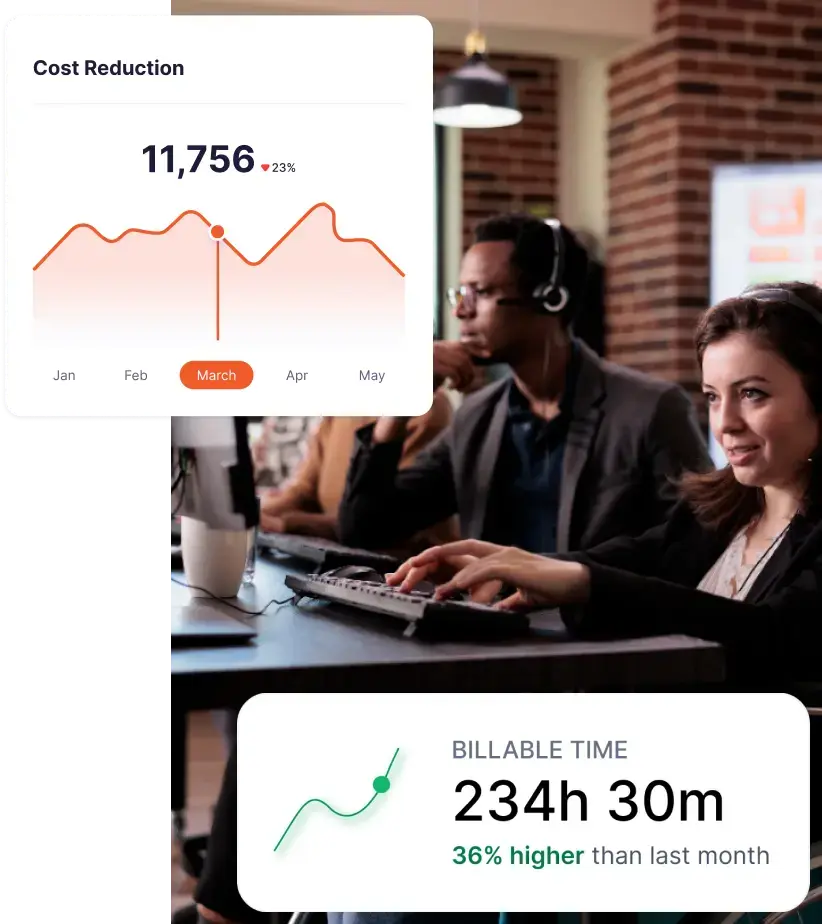
Flowace connects productivity data directly to strategic decision-making. HR can identify workload imbalances and burnout risks early. Operations can pinpoint execution bottlenecks before deadlines slip. Finance gains accurate, real-time insight into labor allocation and cost efficiency. Instead of fragmented reports, leaders get a unified view of how time, effort, and outcomes intersect.
Supporting Performance Without Surveillance
Flowace is built around a simple but critical principle: productivity insight should enable performance, not police behavior. There is no invasive monitoring, no performance theater, and no micromanagement by metric. Just ethical, transparent, and actionable intelligence that helps leaders support their teams and scale execution with confidence.
Start a free trial today to see the tool in all its glory.