
Key Takeaways:
- Proxy attendance is one of the most common and overlooked forms of time theft, especially in hybrid and remote work environments.
- Hybrid work makes proxy attendance easier due to reduced physical oversight, flexible schedules, shallow digital check-ins, and shared devices or credentials.
- Attendance systems that rely on self-reporting, manual entries, or simple timestamps create built-in risk and are easy to exploit.
- Proxy attendance often blends into normal behavior in hybrid setups, making it harder to detect and easier to justify over time.
- Common proxy attendance tactics include buddy punching, shared logins, remote check-ins posing as office presence, mobile app misuse, and manager-approved exceptions.
- Preventing proxy attendance requires more than tools. It needs a structured approach combining People, Policy, Process, and Platform.
- Flowace helps prevent proxy attendance by tying attendance to real work signals rather than simple clock-ins.
Accurate and transparent attendance data shifts focus away from policing presence and toward outcomes and productivity.
Proxy attendance is one of the most common forms of time theft, and it happens more often than most teams realize. It shows up in simple ways, like buddy punching, where someone clocks in for a teammate, or ghost logins, where a system stays active even though no one is actually working.
If you’re managing a hybrid or remote team, this gets even trickier. With fewer chances to see what’s happening day to day, it becomes easier for employees to justify stretching their hours or staying “logged in” without real work happening.
Research from the Association of Certified Fraud Examiners shows that time theft rises when managers cannot easily observe or verify day-to-day activities.
In simple words, any attendance process that depends entirely on self-reporting creates risk.
Why Hybrid Work Makes Proxy Attendance Easier?
Hybrid work changes how physical presence is observed and verified. That gap creates opportunities for proxy attendance. As leaders, you need to understand the structural reasons this happens so you can design effective controls.
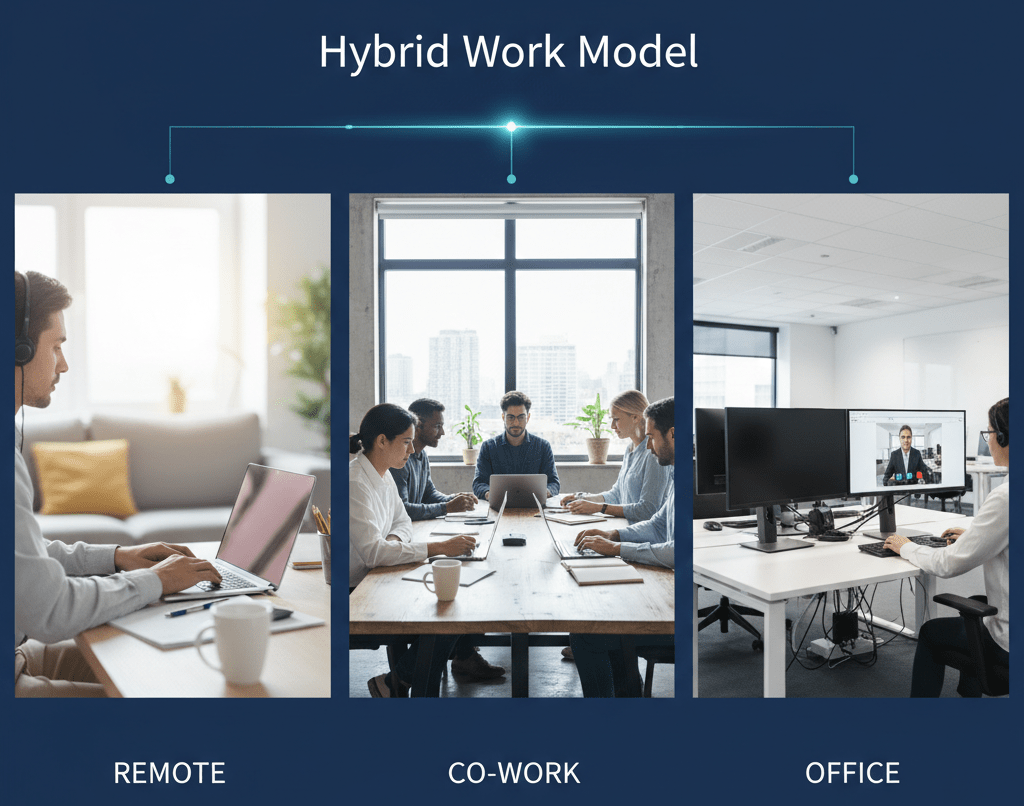
Some of the main drivers are:
- Less physical oversight: In a hybrid setup, you cannot rely on line-of-sight cues, hallway encounters, or reception logs. That lack of everyday observation makes it easier for someone to be marked present without actually being available at work.
- Digital check-ins feel legitimate but are shallow: Clock-ins, mobile taps, and QR scans were built for convenience, not identity proof. A timestamp alone does not prove someone was actually at the desk or working.
- Shared devices and credentials are common: Bring-your-own-device policies and convenience-driven practices encourage people to share phones, passwords, or session tokens. When devices are shared, a quick check-in by one person can represent another, and audit trails often do not capture that nuance.
- Flexible schedules create cover: Flexible work schedules like partial days, staggered shifts, and asynchronous hours give proxy attendance plausible deniability. If someone is expected on-site only for a morning meeting, a proxy check-in can easily satisfy the system while the real person stays remote.
- Complexity of enforcement across sites: Different offices, client sites, and home setups mean inconsistent rules and exceptions. That complexity creates loopholes and confusion, which people can exploit.
- Privacy, legal, and trust trade-offs: You may hesitate to deploy intrusive verification because of employee privacy or regulatory limits. That restraint is understandable, but it also reduces the available technical defenses.
You can see why hybrid arrangements, while necessary and productive, lower the barrier to proxy attendance. Recognizing these root causes helps you choose targeted fixes that preserve flexibility while restoring trust and accuracy.
What Proxy Attendance Looks Like in Hybrid Setups?
When you manage a team that works partly from home and partly from the office, proxy attendance often blends into normal-looking behavior. Which makes it harder to detect and easier to justify.
Proxy attendance happens when one employee marks attendance for another who is not actually present or is working remotely without approval. You may notice that someone is marked “present in office” but is unresponsive, unavailable for in-person collaboration, or clearly working from a remote environment.
Because hybrid work relies on trust and autonomy, these patterns can persist for months before they are questioned.
Common Ways Proxy Attendance Happens in Hybrid Teams
- Shared login credentials: We often see employees sharing usernames and passwords for attendance or time tracking systems. One person logs in from the office while another is at home or absent, making it appear as if both are compliant with office attendance requirements.
- Remote check-ins posing as office presence: Without strong location validation, employees can clock in from home while being marked as on-site. If your system does not enforce geofencing or location rules, remote logins can look identical to legitimate office check-ins.
- Mobile app misuse: Attendance apps are convenient, but they are also easy to exploit. Employees may check in for colleagues using shared devices, logged-in phones, or loosely controlled mobile access, especially when apps rely only on a tap or PIN.
- Proxy punching during partial office days: In hybrid schedules where employees are required to come in for only part of the day, one person may check in for a colleague in the morning. The absent employee then never shows up, but the system reflects full-day presence.
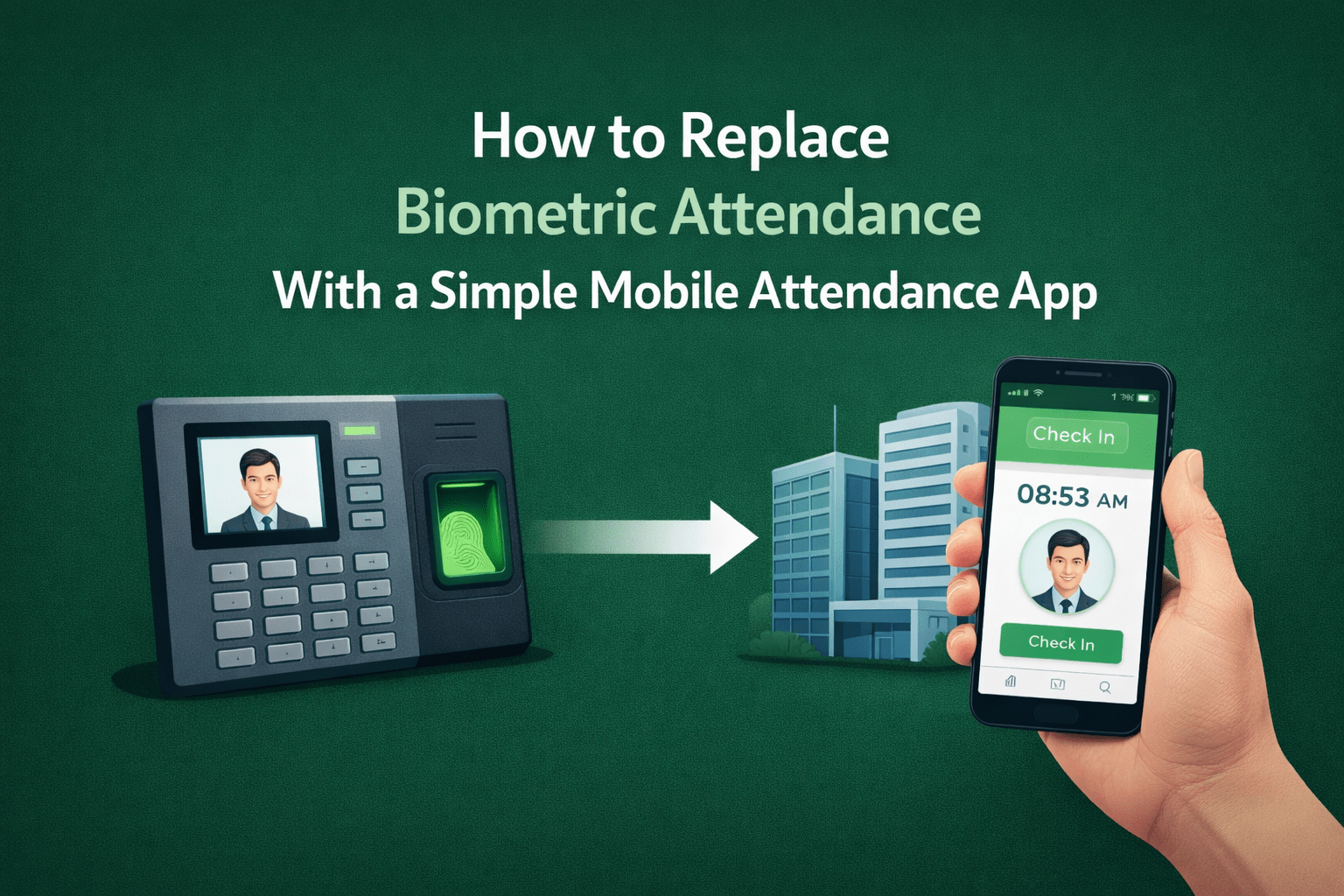
- Biometric loopholes in weak implementations: While advanced biometric systems reduce proxy attendance, older or poorly configured setups can still be exploited. For example, fingerprint devices without proper supervision or audit trails can be misused, although this is less common today.
- Manager-assisted or ignored proxy attendance: In some cases, proxy attendance is not purely employee-driven. Managers may knowingly approve questionable attendance entries to avoid conflict or meet staffing metrics, especially when policies are unclear or inconsistently enforced.
Why Manual Systems Fail to Detect Proxy Attendance in a Hybrid Office Setup?
If you are still using a manual spreadsheet to track attendance, you are already a step behind. These systems depend heavily on memory and honesty. An employee can easily forget to sign in, and a manager may miss a buddy punch during a busy day.
Even badge-based systems are not foolproof. Co-workers can share badges or PINs, making proxy attendance surprisingly easy.
When we rely on manual or semi-manual methods, attendance tracking becomes neither secure nor efficient. Hybrid work introduces even more loopholes. For remote employees, shared logins or VPN access can be used to mark attendance without actual work being done. In the office, physical proximity creates its own risks. If a desk is empty, someone else can easily swipe a colleague’s card before leaving.
The real challenge is that these behaviors are hard to catch, even with occasional checks. Without automated oversight, proxy attendance often goes unnoticed, quietly draining time, money, and trust from the organization.
The 4-Pillar Framework that Prevents Proxy Attendance in Hybrid Teams
We recommend a four-pillar approach that treats proxy attendance as an organizational design problem. When you get them working together, it helps you reduce attendance fraud while protecting trust and the operational flow of your organization:
Pillar 1: People (Training, Culture & Change Management)
Your staff serves as your initial guard. Technology and rules matter, but your culture shapes how those controls are used.
You need to do three things here. First, train. Teach managers and employees what proxy attendance looks like, why it matters, and how to report suspected cases safely. Training should include concrete examples, role plays for managers on handling disputes, and clear escalation channels.
Second, set expectations through culture. Make fairness, accountability and outcomes visible. When you reward results and team collaboration rather than raw seat time, the incentive to game attendance drops. Publicize wins where accurate attendance enabled better resource planning or faster project delivery. Recognition signals matter.
Third, manage change with intent. Any new attendance management system will cause some friction. Bring in representative employees early, test changes with small pilots, listen to feedback, and adjust. Focus on explaining why the change exists, not just what is changing. When people understand the problem you are solving, adoption becomes far easier.
Pillar 2: Policy (Rules, Rights & Accountability)
Policy is the contract between the organization and its people. It clarifies permitted behavior, exceptions, and consequences.
Draft a time and attendance policy that is simple and actionable:
- Define proxy attendance clearly, list prohibited actions, and explain permissible exceptions such as approved remote workdays.
- Be explicit about who can approve manual time edits, what documentation is required, and how disputes are resolved.
- Make sure to make privacy commitments up front: state what data you collect, how long you keep it, and who can see it.
- Create a tiered response model, for example warning for first offense, retraining for second, and progressive disciplinary measures for repeated abuse
Pillar 3: Process (Auditing, Reporting & Continuous Improvement)
A policy on paper means little unless it is backed by consistent, repeatable action. You need repeatable checks, meaningful signals, and a feedback loop to keep attendance data accurate as your organization scales.
Define what you will monitor:
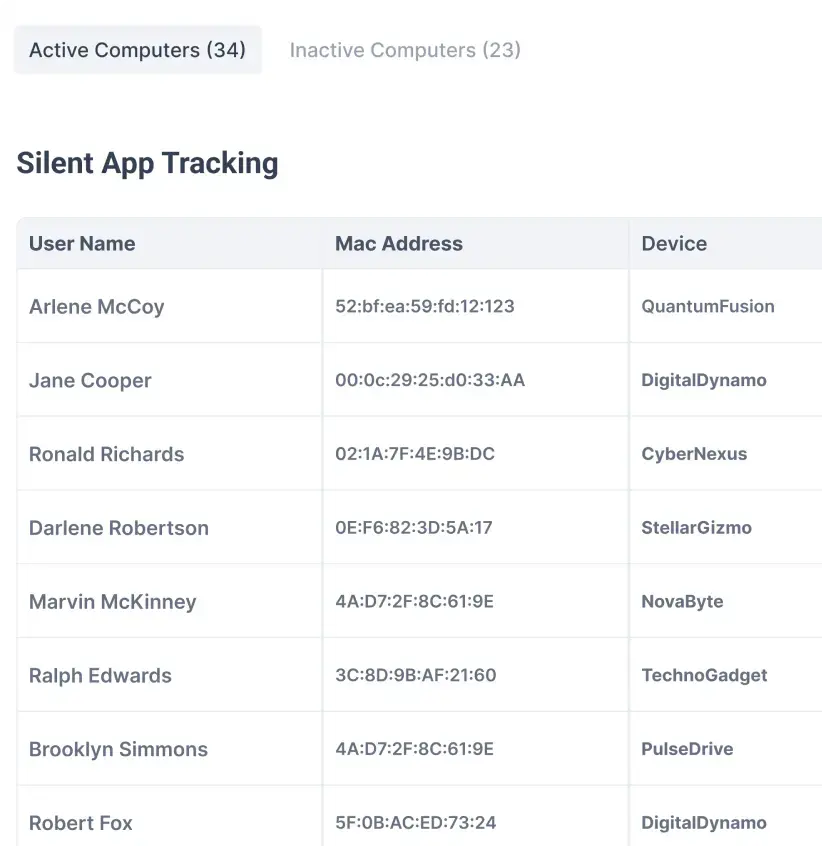
- Useful indicators include duplicate check-ins from the same device
- Frequent same-person check-ins for multiple employees
- Mismatches between scheduled on-site days and location signals
- Unusual patterns of manual edits.
Run a weekly exception report for managers and a monthly audit for HR. Document every investigation with outcomes and lessons learned. Make reporting simple for employees so they can flag suspicious behavior anonymously if needed.
Close the loop by measuring impact. Track the number of flagged incidents, time to resolution, and payroll adjustments prevented. Use these metrics to refine rules and to justify any further investment in tools or training.
Pillar 4: Platform (Technology Controls)
Technology is where most organizations overcorrect. Either they rely on weak, convenience-first tools that enable proxy attendance or they swing too far toward invasive employee monitoring that erodes trust.
The right platform should do neither. Choose tools that add identity assurance without creating so much friction that people look for workarounds. Integrate attendance signals into your HRIS and project management dashboards to improve employee attendance in hybrid teams.
This is where tools like Flowace fit naturally into a hybrid attendance strategy.
Flowace’s automatic attendance management system approaches proxy attendance as a surveillance problem. Instead of asking employees to constantly “prove” presence, it quietly verifies whether attendance signals align with actual work behavior across office, remote, and hybrid contexts.
1. Attendance tied to real work signals, not just timestamps
Proxy attendance thrives when clock-ins are treated as proof of presence. Flowace replaces that assumption. Attendance is automatically generated from hands-free activity tracking.
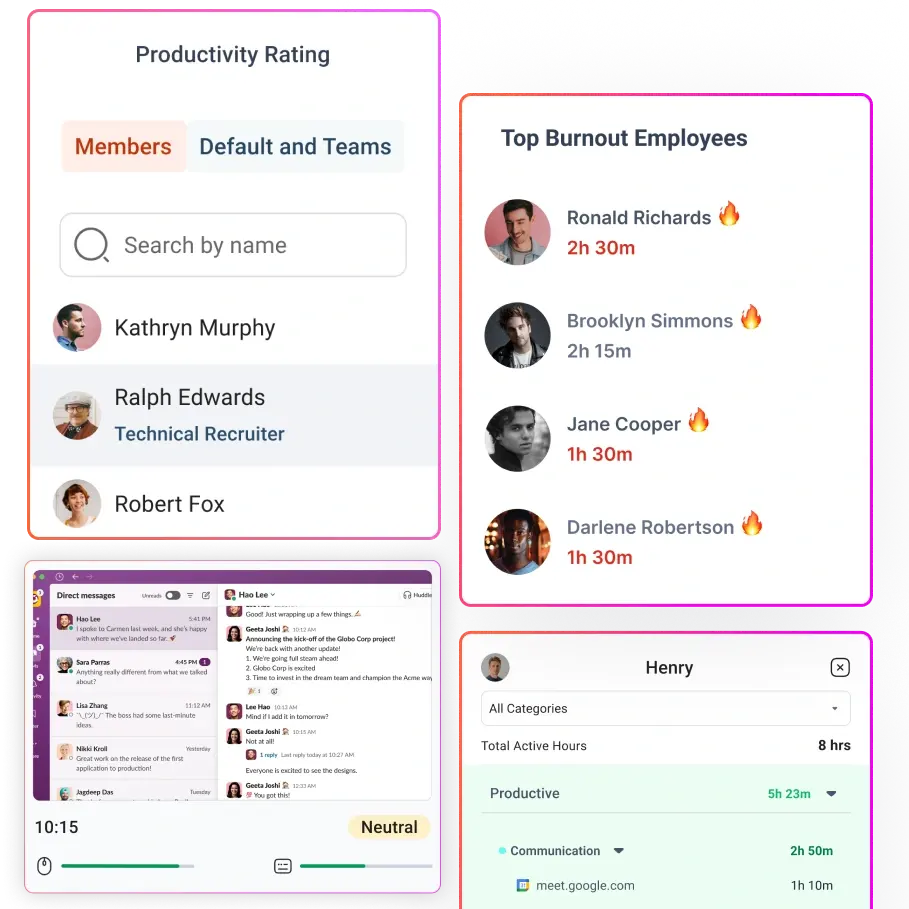
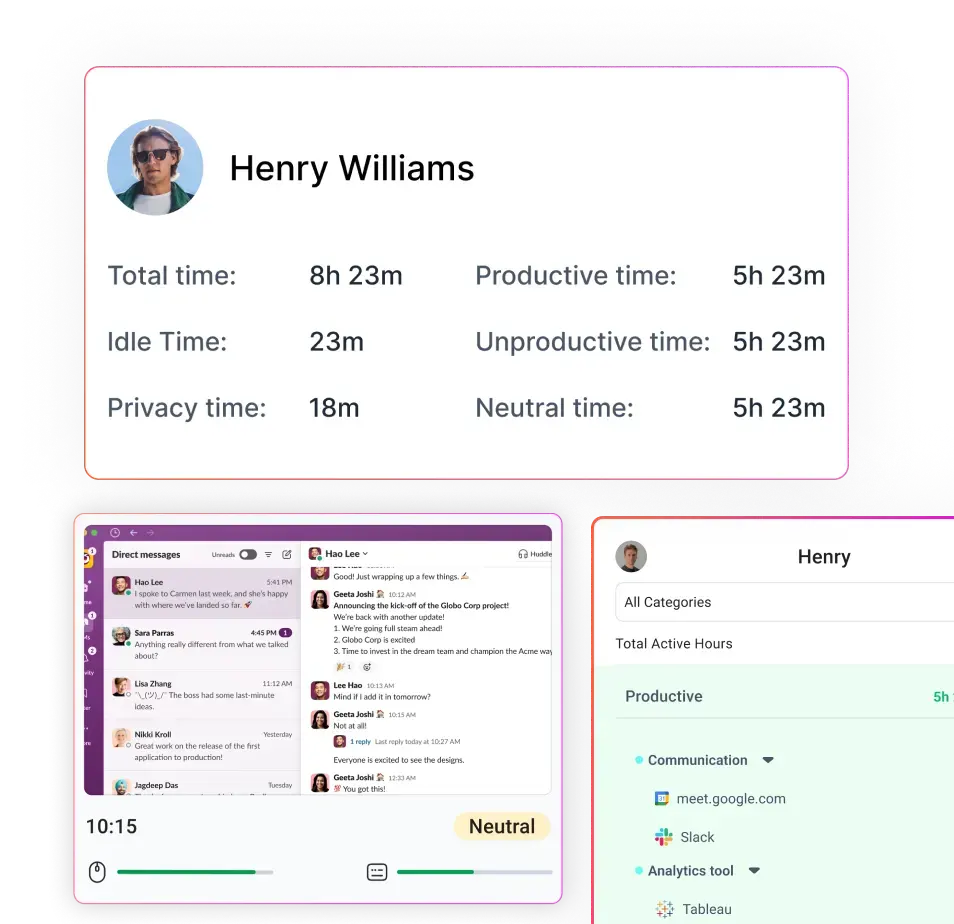
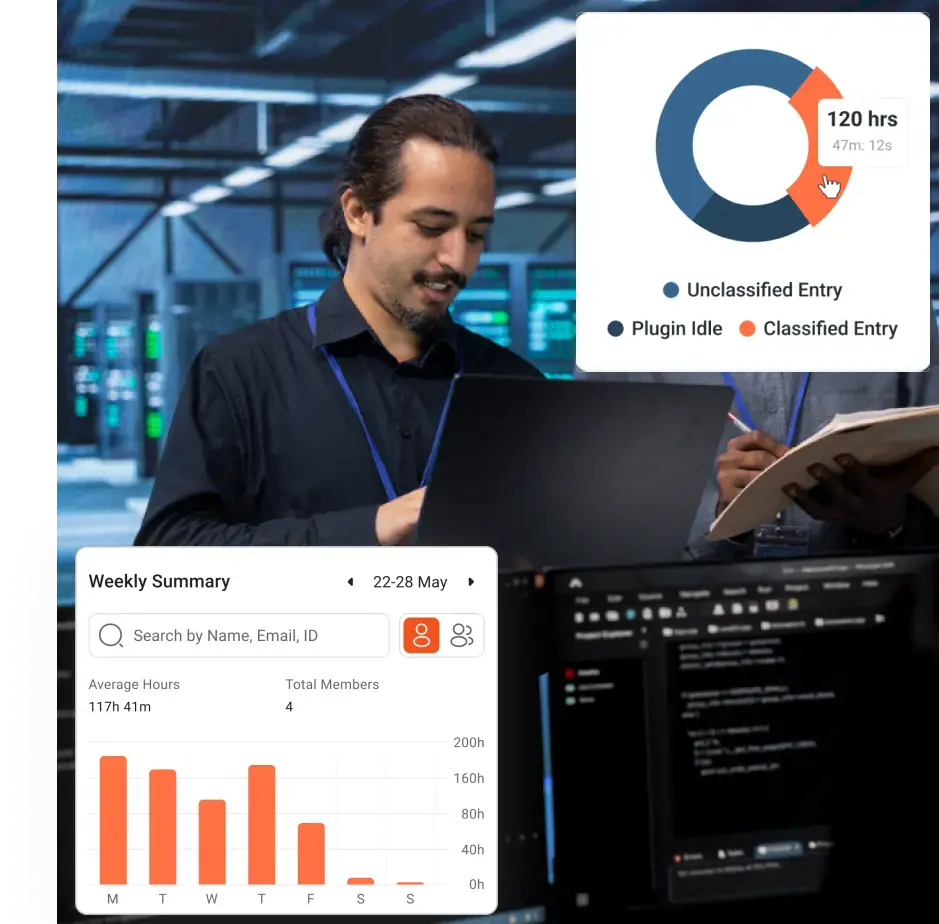
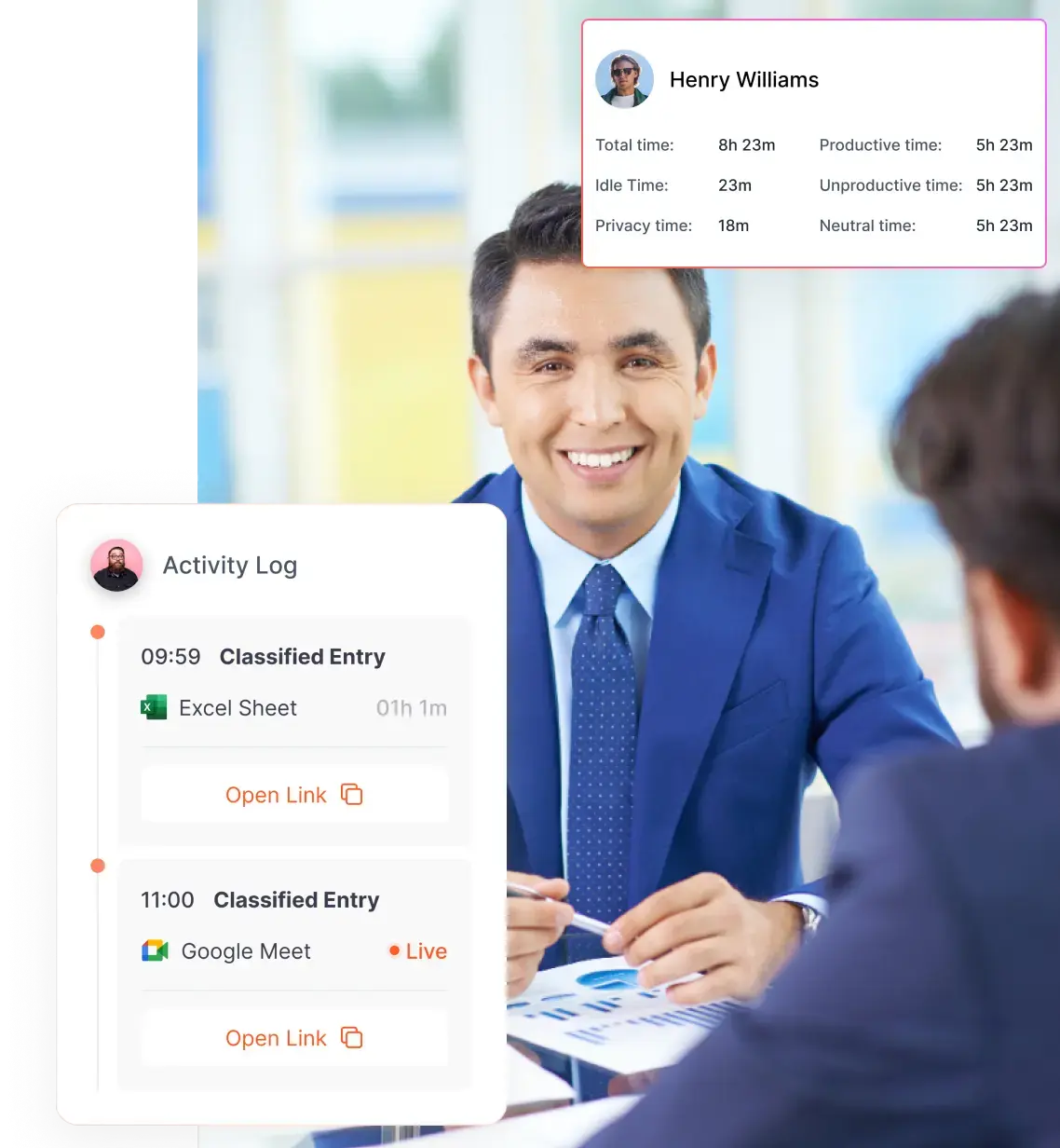
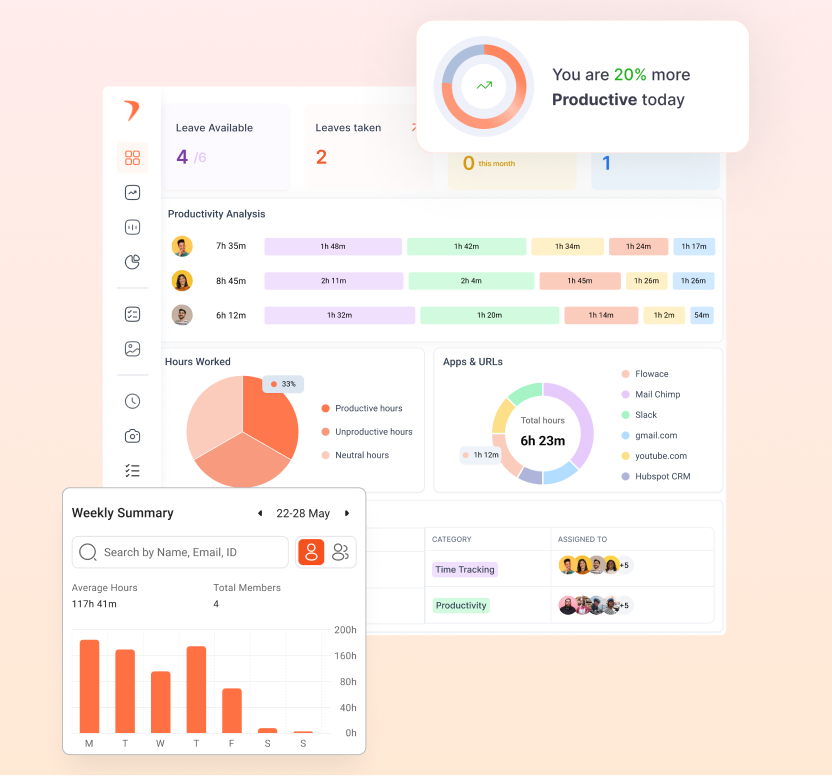
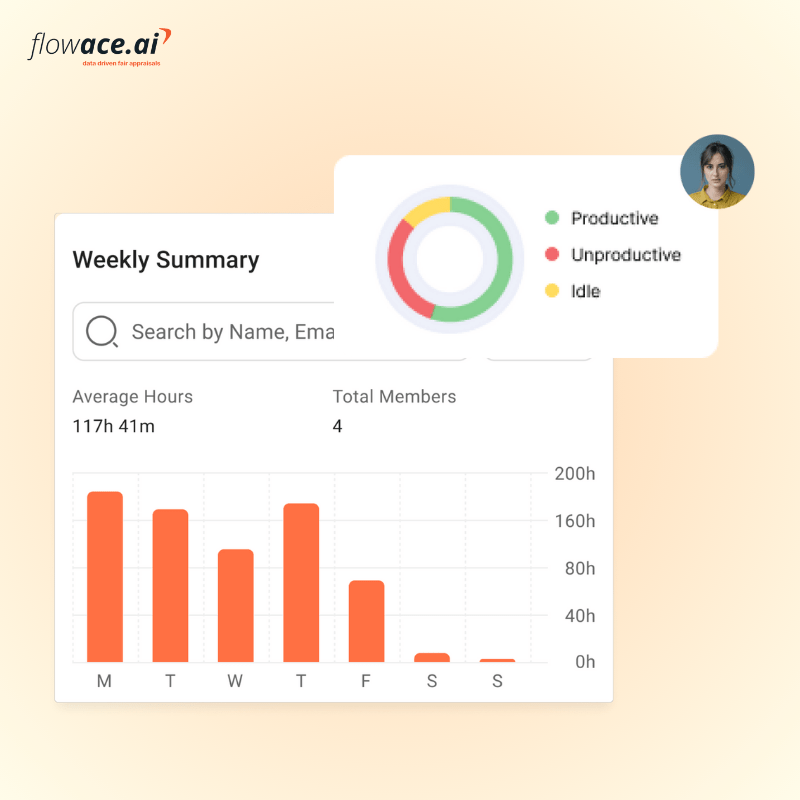
Flowace tracks login time, active time, idle periods, and work timelines, making it extremely difficult for someone to appear “present” without actually working. A buddy punch may create a timestamp, but it cannot fake sustained work patterns.
2. Reduced reliance on manual check-ins and edits
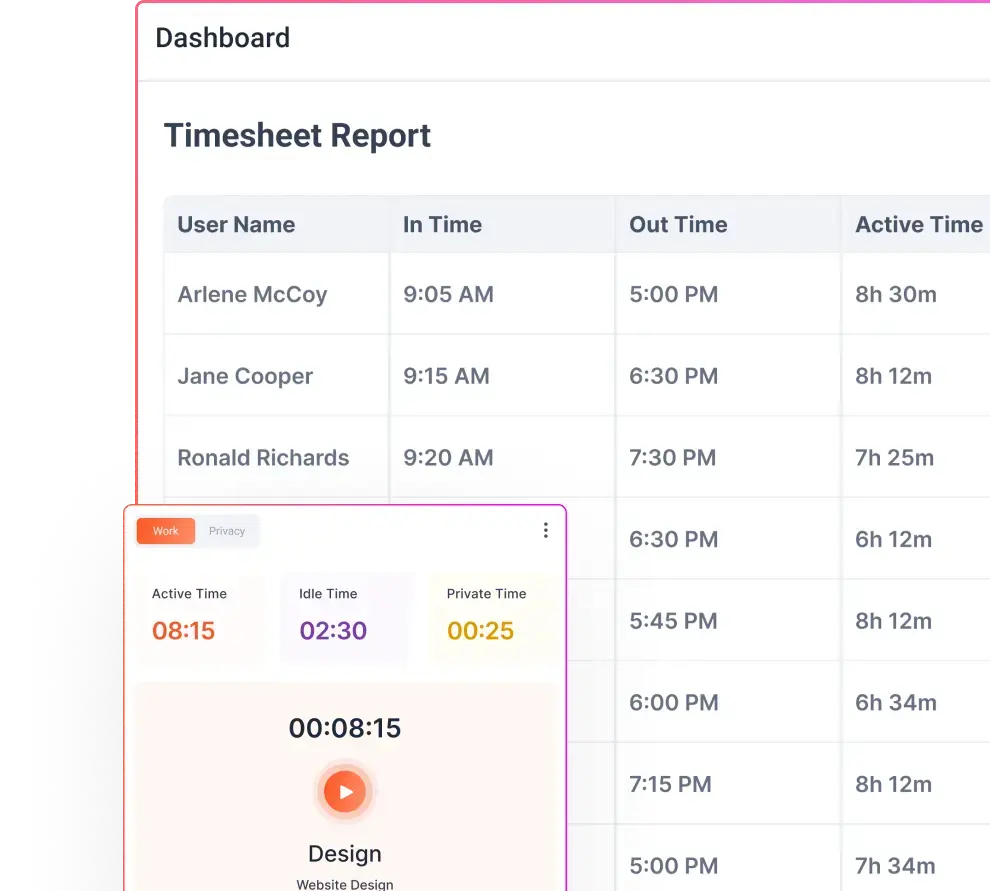
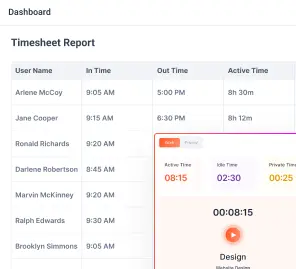
Manual edits and approvals are one of the most exploited loopholes in hybrid teams. Flowace auto-fills attendance and timesheets based on observed activity, while logging who approved any exception and why. This creates accountability without slowing down your teams.
3. Identity assurance without invasive biometrics
Many teams hesitate to adopt heavy biometric systems because of privacy and legal concerns. Flowace avoids that trade-off. Instead of mandatory biometrics, it uses device-level activity signals and optional screenshots to confirm that the right person is working on the right system.
4. Visibility across office, home, and partial-day schedules
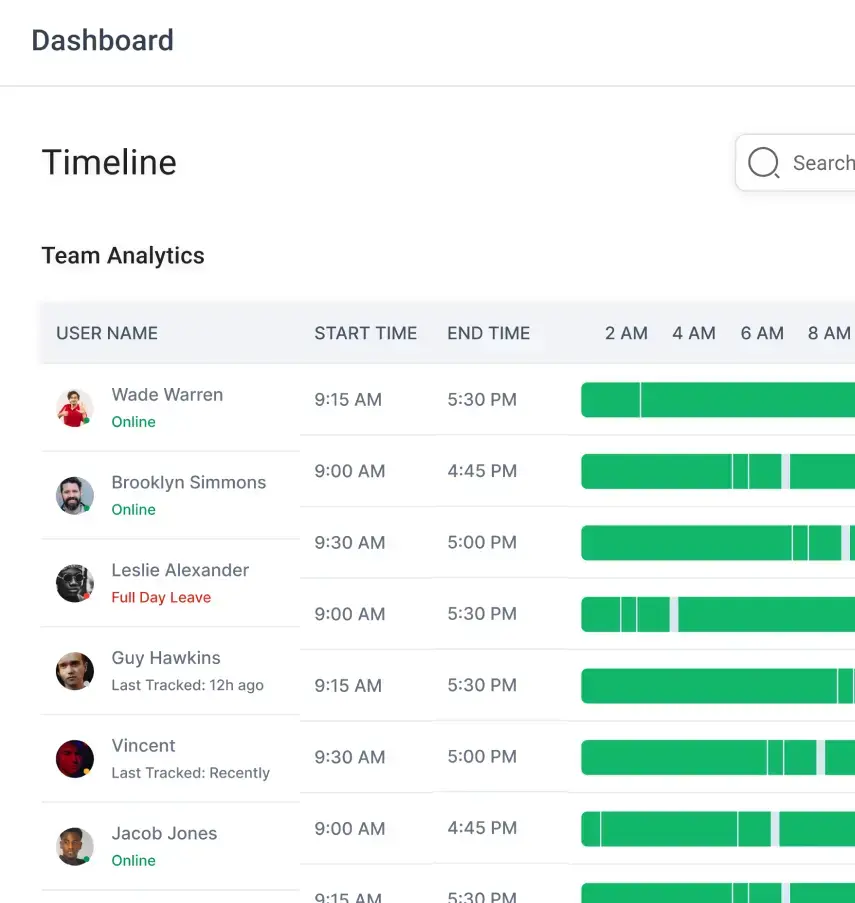
Flowace’s unified timeline shows when work actually happened, regardless of location. Managers can quickly spot mismatches between expected on-site days, actual work windows, and reported attendance without chasing employees or making assumptions.
5. Early detection through patterns
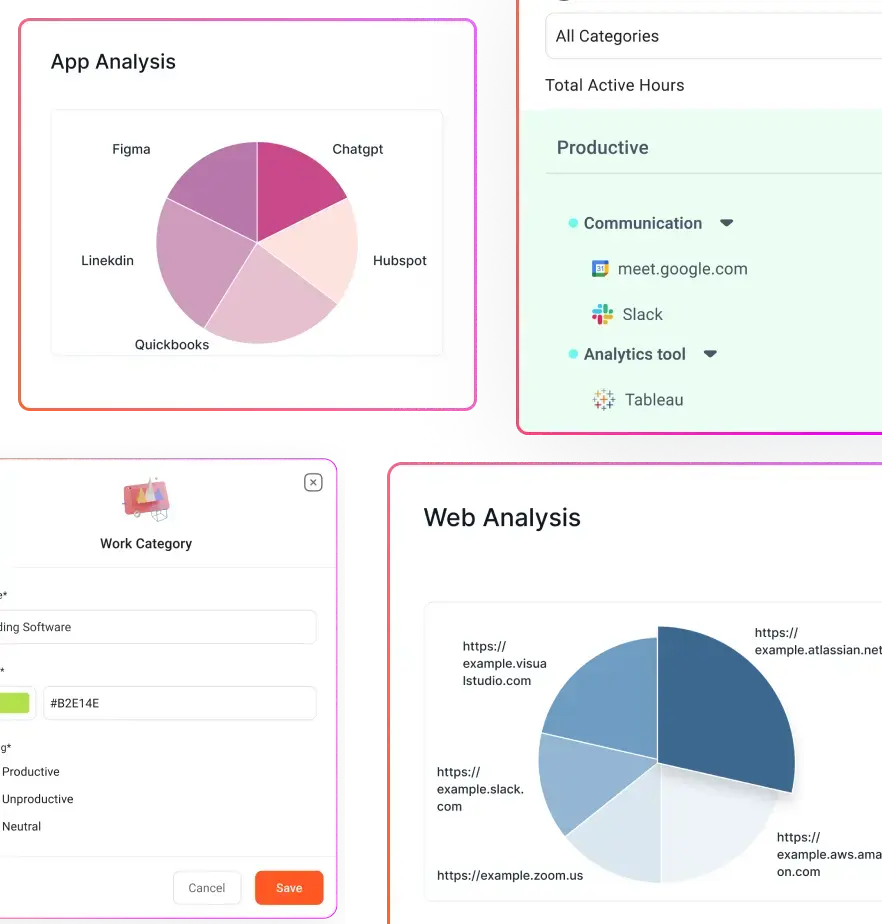
Proxy attendance rarely appears as a single incident. It shows up as patterns: repeated same-device activity, frequent idle-heavy days marked as full attendance, or recurring mismatches between attendance and output. Flowace surfaces these anomalies through dashboards and alerts, allowing managers to intervene early.
6. Privacy and compliance built into the design
One reason organizations tolerate proxy attendance is fear of crossing privacy lines. Flowace addresses this head-on with privacy mode, role-based access, data minimization, and clear audit trails. Employees know what is tracked, when it is tracked.
This reduces employee resistance to the tool while preserving trust.
Final Thoughts
Proxy attendance is not just a payroll problem. It is a visibility problem, a process problem, and often a design problem. In hybrid work environments, the traditional signals of presence no longer exist. Therefore, systems built for physical offices struggle to keep up.
The most effective way to prevent proxy attendance in a hybrid office setup is by aligning People, Policy, Process, and Platform into a single, coherent system.
By tying attendance to actual work signals, you can easily identify gaps between recorded presence and actual contribution.
Flowace helps organizations move towards evidence-based attendance management through data that leaders can confidently act on. Just as importantly, it does this while respecting privacy, supporting compliance, and preserving the trust that hybrid work depends on.
When attendance data is accurate, transparent, and fair, teams spend less time policing presence and more time focusing on outcomes.
FAQs:
- What is proxy attendance in a hybrid office setup?
Proxy attendance occurs when one employee marks attendance for another who is not actually present or working as expected. In hybrid setups, this often includes buddy punching, ghost logins, or remote check-ins recorded as on-site presence. - Why is proxy attendance more common in hybrid and remote teams?
Hybrid work reduces physical visibility and relies heavily on digital check-ins. Flexible schedules, shared devices, and self-reported attendance create gaps that make proxy attendance easier to justify and harder to detect. - Is proxy attendance considered time theft?
Yes. Proxy attendance is a form of time theft because it misrepresents actual work time, inflates payroll costs, and distorts productivity and capacity planning data. - What are the most common signs of proxy attendance?
Common indicators include employees marked as present but unresponsive, repeated check-ins from the same device, frequent manual attendance edits, idle-heavy days recorded as full attendance, and mismatches between attendance and actual output. - Why do manual attendance systems fail in hybrid environments?
Manual systems depend on honesty, memory, and sporadic checks. They lack continuous verification, audit trails, and pattern detection, allowing proxy attendance to go unnoticed for long periods. - Can biometric systems fully prevent proxy attendance?
Not always. While biometrics reduce some risks, poorly implemented or lightly supervised systems can still be exploited. Additionally, privacy and legal concerns often limit their use in hybrid workplaces. - How does technology help detect proxy attendance without micromanaging?
Modern platforms tie attendance to real work signals such as activity timelines, active and idle time, and behavioral patterns. This reduces reliance on self-reporting while avoiding constant employee surveillance.