How to Make Sure Remote Employees Are Actually Working



Key Takeaways:
- Managing remote employees effectively is not about tracking presence or hours; it’s about creating clear visibility into outcomes and progress.
- Asking “Are they working?” leads to micromanagement. Better questions focus on value delivered, progress visibility, and consistency over time.
- Activity is not productivity. Meetings, messages, and online time are easy to fake and poor indicators of real work.
- Legitimate proof of work in remote teams comes from concrete outputs: shipped deliverables, resolved tickets, reviewed code, client results, and documented updates tied to goals.
- Healthy remote teams show hard-to-fake signals: predictable shipment of outcomes, work moving through clear stages, and early escalation of blockers.
- Warning signs include high activity with low output, frequent updates without artifacts, and increasing logged hours without improved results.
- Early detection of performance issues requires trend-based metrics, regular one-on-ones, peer signals, and timely, empathetic conversations.
- Time tracking and monitoring tools should be used when required for billing, compliance, or structured performance reviews.
- Spyware-style monitoring (screenshots, keystrokes, webcams) creates legal risk, trust erosion, and behavior gaming without improving results.
- The most reliable way to ensure remote employees are working is to make work visible, measurable, and outcome-oriented, while preserving trust.
- Tools like Flowace are most effective when used to support clarity and decision-making, not to replace management judgment or human connection.
Managing remote teams often leaves you guessing what your employees are actually doing. Every remote team manager is quietly asking the same questions:
- Are they delivering value?
- Are they working on the right things?
- Is progress steady or only apparent near deadlines?
When those answers are fuzzy, you are forced to micromanage your employees.
But you don’t need screenshots, keystroke tracking, or push-button surveillance to get the answers you want.
This guide shows you how to make sure remote employees are actually working without guessing, spying, or turning into a productivity cop.
Stop Asking “Are They Working?” Start Asking These 3 Questions

Rather than doubting if someone is online, ask whether meaningful work is happening. Shifting your focus to the value delivered will improve your employee productivity. When outcomes are clear, availability becomes irrelevant. This shift moves you away from managing presence and toward managing results. It gives you objective signals you can trust.
Instead of asking if people are working, you should be asking three sharper questions:
- Is meaningful work being delivered?
- Is progress visible before deadlines are at risk?
- Is delivery reliable over time?
Each of these questions points to an outcome or a process you can observe and measure. They give you the visibility you need while preserving your team’s autonomy and trust.
Is Meaningful Work Being Delivered?
The fastest way to lose trust in a remote team is to confuse activity with impact. Clock ticks tell you very little about whether work is advancing your goals. What matters is whether people are completing the tasks that actually move the business forward.
Shipping features, closing tickets, delivering client work, or hitting agreed quality standards are the only measures that signal clear employee productivity. When goals are explicit and outcome-based, accountability becomes straightforward.
This approach also changes your role as a manager. Instead of policing minutes, you focus on enabling progress.
Is Progress Visible Before Deadlines Are At Risk?
Good remote management means spotting issues before they become crises. You do that by breaking large initiatives into smaller, trackable milestones and reviewing progress frequently enough that trends are visible. Weekly updates, lightweight reports, or shared dashboards give you and the team a clear view of the work moving forward.
Short, structured stand-ups (daily or weekly) create a natural forum for surfacing blockers and course-correcting early.
Using collaboration and performance tools can reinforce this by highlighting missed targets or unusual drops in output, prompting a conversation at the right time.
Is Delivery Reliable Over Time?
Accountability shows up as consistency over time. One strong week doesn’t tell you much, but reliable delivery across months does. Use metrics like average project completion rate or customer response times and watch for trends.
For example, if Mr.X consistently meets 95% of his sprint goals every month, that indicates reliability. If Mr.Y delivered on all milestones last quarter but is now falling behind, investigate the cause before it harms the project.
Many companies find that work-life balance metrics (burnout warning signs) or productivity scores can be automated to alert managers to long-term declines. Flowace’s Standard and Premium plans even include activity scoring and alerts for unusual idle time, showing patterns over time.
What Is Considered Legitimate Proof of Work in a Remote Setting?
“Proof of work” can be misinterpreted. In a remote context, legitimate proof of work means concrete outputs and documented activities, not just being logged in. Valid proof includes:

- Completed deliverables: Finished projects, resolved tickets, and deployed features.
- Quality reports: Positive client feedback or code reviews passed.
- Project updates: Logs or timesheets showing tasks done (with context notes).
- Status updates: Written summaries, screen recordings, or live demos of work.
- Time logs (if using time tracking): Clocked hours tied to tasks (e.g., “2h on Client A’s issue”).
Focus on evidence that directly ties to your goals. Time-tracking entries should map to planned tasks, and sprint burndown charts should reflect real progress. That’s what gives you confidence in what’s actually getting done. Some teams supplement this with “progress snapshots”: a weekly view of in-progress work or a brief presentation of completed tasks and milestones.
Tools like Flowace can support this approach without turning into a surveillance system. You can use it to connect time and activity to actual outputs. Flowace helps you track hours against named tasks, spotting patterns over weeks, or identifying when effort and delivery are out of sync. This gives you evidence to monitor your employee’s behavior.
How To Tell If Your Remote Employees Are Working
Watching your employee activity isn’t the same as understanding their work progress. You should be able to read the signals and patterns of your employees. Some signals are meaningful and hard to fake; others look reassuring but mask problems. Below, we’ll walk you through some of the reliable signals
Good Signals (harder to fake)
- Consistent shipment of outcomes: You see finished work landing regularly: features shipped, campaigns launched, and tickets closed with substance. The cadence is predictable, and the quality meets expectations. Outcomes beat updates every time.
- Work moves through clear stages: Tasks don’t sit forever in “in progress.” You can see movement from draft → review → done. Pull requests get reviewed, feedback gets addressed, and things close. This tells you collaboration is happening and delivery risk is low.
- Fast blocker escalation: When someone is stuck, they say so early. They flag the blocker, tag the right person, and suggest next steps. That prevents quite a few delays and last-minute panic.
Bad Signals (easy to fake)
- High activity, low output: Lots of meetings, messages, or status chatter — but little actually gets finished. Activity creates noise, not progress.
- Messages without deliverables: Frequent “working on it” updates without links, drafts, or artifacts. If there’s nothing concrete to review, progress is unclear.
- Hours up, results flat: Long online hours or time logs that don’t translate into outcomes. Time spent is not value delivered.
How to Know Early When an Employee Is Falling Behind?
Catching a remote teammate falling behind requires combining data with timely, empathetic conversations.
- Automate alerts: Set up notifications for when deadlines aren’t met. Many tools can email you if a ticket passes its due date.
- Regular one-on-ones: Weekly check-ins can surface issues the employee may hesitate to report. In these, look for phrases like “I’m stuck” or “ahead of schedule/behind schedule.” Managers must listen more, ask why, and offer help.
- Peer feedback: Encourage teammates to flag if a colleague’s absence or silence is unusual. A sudden drop in Slack replies or code commits is a clue.
- Progress metrics: Use tracking dashboards to compare planned vs actual progress. A red flag could be consistent under-fulfillment of sprint goals.
Keep a private log of issues as they arise (even email threads or chat excerpts), so you have facts rather than hearsay. If Flowace shows an employee’s activity dropping significantly over a few days, schedule a friendly video chat to ask if they need support. Often, an external issue or unclear expectation is the cause, and early intervention fixes it.
How to Design a Work Environment Where Accountability Is Built In?
Accountability in a remote team starts before any monitoring. Build it by designing the right culture and processes:
- Set clear goals and roles: Define each person’s responsibilities, deadlines, and how they tie to team goals. Use SMART goals so everyone knows exactly what success looks like. When goals are unclear, people aren’t sure what they’re accountable for. Clearly document these roles and share them.
- Foster transparent communication: Use shared task boards or project management tools. When tasks and progress are visible to all, people naturally self-manage (“peer accountability”). A task update is also an indirect way to show activity. One team found that publishing a dashboard of team metrics made missing a deadline socially obvious, so people stayed motivated to hit targets.
- Encourage autonomy with support: Let employees choose how to do their work, but hold them accountable for outcomes. Trust them to plan, but require regular checkpoints. This autonomy-plus-checkpoints model says “we trust you, but let’s keep in sync.”
- Regular feedback loops: Do frequent, constructive feedback sessions and 360° reviews. This makes accountability a two-way street, not just boss to employee. Peer reviews can highlight good and poor performance early. Studies suggest that deeper manager-employee contact increases awareness of remote performance issues.
- Lead by example: If managers are transparent about their own work (e.g. sharing weekly goals or using the same tools), it sets the tone. Showing the team how you measure and share progress builds a culture where everyone feels responsible.
How To Track Employees Working From Home For Free (Practical Setup)

Sometime people fail to get measurable outcomes from remote work because they track the wrong things. Hours, activity, and online status are easy to measure and easy to misread. What actually works is tracking outcomes and movement. You can do that with a free, practical setup that makes work visible without turning management into policing.
1. Use one tracker as the source of truth
Pick a single place where work lives and progresses. This could be Trello, Notion, or even Google Sheets on a free plan.
Each task should have:
- A clear owner
- A defined “done”
- A visible status (planned → in progress → review → done)
If work isn’t visible here, it doesn’t exist.
2. Centralize async updates
Create a dedicated async update channel in Slack or Microsoft Teams. This is where people post short, predictable updates.
Use a simple format that works well:
- What I completed
- What I’m working on next
- Any blockers
This gives you daily or weekly visibility without interrupting deep work.
3. Require evidence, not explanations
Updates should point to real artifacts:
- Docs or decks
- Pull requests
- Tickets or dashboards
You don’t need long status messages if you can click and see the work. Evidence removes ambiguity and keeps conversations factual.
4. Add time tracking only if required
If you bill clients by the hour or need records for compliance, you can layer in a free time-tracking plan. When time entries are linked to client work or deliverables, they support accurate billing, audits, and reporting.
When Employee Monitoring Software Helps?
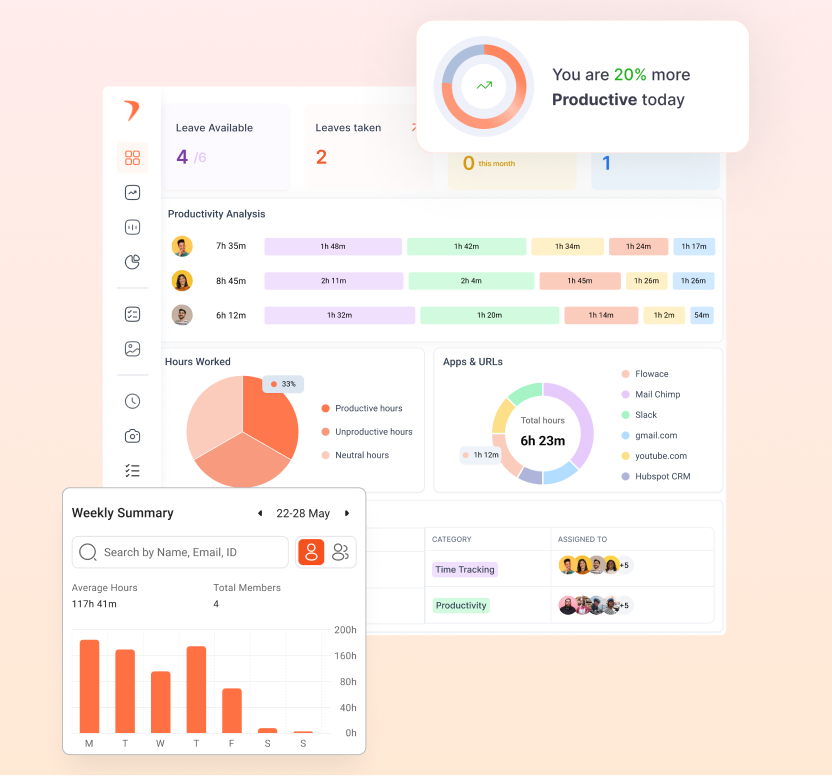
Sometimes, digital tools can give you peace of mind and save time. Employee monitoring software like Flowace automates data collection to show how team members spend work hours. For example, Flowace’s silent time-tracking captures app and website use, and it logs idle vs active time.
This way, you can see how each employee’s time aligns with priorities and project goals.
Remote employee monitoring tools are more useful during:
- Onboarding new remote hires: See early if they’re logging expected tasks and flag if something’s off.
- Supporting hybrid or global teams: When direct oversight is hard, tools can provide a unified view of activity and project time from anywhere.
- Backing up performance reviews: Objective data complements your qualitative assessments (e.g., justifying raises or raising concerns).
More importantly, Flowace shows the “productivity metrics” per person or team based on active work rather than mouse clicks. It can integrate easily with project management apps, linking time to tasks. This means you’re not just staring at a person’s screen, you’re analyzing whether the time they spent aligns with your projects.
However, remember that software is a supplement. It shines when used to streamline processes. For instance, generating weekly summary emails of progress for your team, or highlighting unusually long breaks in workflow. But it should not replace the human connection or the clear expectations we discussed.
How Do Companies Track Remote Workers’ Location?
Most organizations do not track precise location, and when they do, it’s usually indirect, limited, and purpose-driven.
Here’s how it actually works in practice.
1. IP-based approximate location
The most common signal is IP address data. It gives you a rough geographic area (city or region), mainly for security checks like detecting unusual logins.
VPNs, roaming networks, and travel break this signal constantly. Someone working from Bangalore on a U.S. VPN may look like they’re in New York. That’s a major source of false alarms.
2. Device management and endpoint posture
Companies using MDM or endpoint management tools can see device-level posture, not live location. This includes things like:
- Is the device encrypted?
- Is the OS up to date?
- Is it compliant with security policies?
By default, this is about device health and access control, not tracking where a person is.
3. Mobile GPS (rare and sensitive)
Precise GPS tracking is usually limited to:
- Field roles (logistics, on-site service, sales, travel).
- Company-owned mobile devices.
- Explicit employee consent.
Using GPS for desk-based remote roles is legally risky, culturally damaging, and often unnecessary.
Do Companies Spy On Remote Employees?
“Spying” implies secret, invasive surveillance. In reality, what most companies use (when they use anything at all) falls under employee monitoring, and it’s usually limited, disclosed, and tied to a specific business reason.
Things start to feel like spying when tools:
- Track keystrokes, screenshots, or webcam feeds.
- Run continuously without clear disclosure.
- Measure activity instead of outcomes.
- Are used to judge performance without context.
This kind of monitoring is still legal in some regions, but it’s high-risk. It damages trust, creates anxiety, and often produces misleading data.
If you want reliable outcomes, invest in clearer expectations, visible workflows, smaller deliverables, and faster blocker escalation. When work is easy to see and hard to fake, spyware becomes unnecessary.
Conclusion
Making sure remote employees are actually working doesn’t require guesswork, surveillance, or turning management into policing. It requires daily clarity.
When you shift your focus from presence to progress, the picture gets sharper. Accountability feels fair instead of forced. Most importantly, trust stays intact, which is the foundation for remote teams to run on.
The pattern is consistent across teams that do this well:
- Clear goals and definitions of “done.”
- Work that moves through visible stages.
- Regular, lightweight check-ins.
- Evidence of progress instead of activity theater.
- Tools used to support decisions, not replace judgment.
Monitoring software, time tracking, and productivity metrics can help, but only when they sit on top of a healthy system.
If you want a practical way to connect time, activity, and outcomes without crossing into surveillance, tools like Flowace can help support that system. Book your free demo with Flowace today or start your free trial now to gain clear visibility into real work without micromanagement.
FAQs:
How to make sure remote employees are actually working?
Focus on outcomes, not online activity. When deliverables, milestones, and progress are visible, productivity becomes easy to verify without micromanaging.
How to make sure remote employees are working?
Use clear goals, shared task tracking, and regular async updates. If work is moving through defined stages, people are working.
How to ensure remote workers are working?
Ensure expectations are explicit and progress is reviewed before deadlines. Reliable delivery over time is the strongest signal of real work.
How to make sure remote workers are working?
Stop tracking presence and start tracking results. Availability matters far less than shipped work and resolved tasks.
How to tell if your remote employees are working?
Look for consistent output, visible progress, and early blocker escalation. Activity without deliverables is a warning sign.
How to know if remote employees are working?
Check whether work artifacts exist and are reviewable. If there’s nothing concrete to assess, progress is likely unclear.
How to make sure employees are actually working from home?
Define what “done” means and require evidence tied to goals. Time online alone doesn’t indicate productivity.
How to make sure employees are working from home?
Use structured updates and shared dashboards instead of surveillance. When progress is visible, trust follows naturally.
How to track employees working from home free?
Use a free task tracker (Trello, Notion, or Google Sheets), an async update channel, and links to real work. Start with outcomes and add time tracking only if billing or compliance requires it.
Remote employee monitoring software: what should I use?
Choose tools that connect time or activity to tasks and deliverables, not raw screen activity. Software should support visibility, not replace management judgment.
How do companies track remote workers’ location?
Most rely on IP-based approximate location or device compliance checks for security, not GPS tracking. VPNs and travel make location data unreliable for productivity.
Do companies spy on remote employees?
Some do, using screenshots or keystroke logging, but it creates trust, legal, and retention risks. Surveillance usually signals broken processes, not poor employees.
Remote work rules for employees: what should be included?
Define expectations around deliverables, communication, response times, and documentation. Clear rules reduce the need for monitoring.
How to make remote working more effective?
Design work for visibility with clear goals, smaller milestones, and regular feedback. Effectiveness comes from systems, not surveillance.