6 Effective Time Management Techniques for a More Productive Day




Published: October 2026 · Last Updated: October 2026 · Last Verified: 26 October 2026
Effective time management techniques are the practice of planning and organizing how you spend your hours so you get more done with less stress. It covers daily habits like prioritizing tasks, avoiding distractions, and building routines that make your day run smoother.
This article breaks down six practical techniques for managing your time better, at work and in daily life: planning ahead, organizing yourself, getting crystal clear on priorities, avoiding multitasking, delegating tasks, and rewarding your own progress.
Effective Time Management Techniques In a Nutshell
Effective time management techniques are simple ways to plan your day, set priorities, and finish important tasks on time. They help you stay organized, reduce stress, and balance work with personal life.
Using these techniques can help you focus on what matters most, avoid wasting time, and get more work done without feeling overwhelmed. Whether you are a student, an employee, or a business owner, good time management can make your daily tasks easier to handle.
Here are six effective time management techniques you can use to manage your time better and reach your goals.
6 Efffective Time Management Techniques
Plan Ahead

A list of objectives and chores made the night before is one of the most effective ways to set up a productive day. If you prepare each day in advance, prioritize your list, and follow your strategy, the job will move more quickly and smoothly than ever.
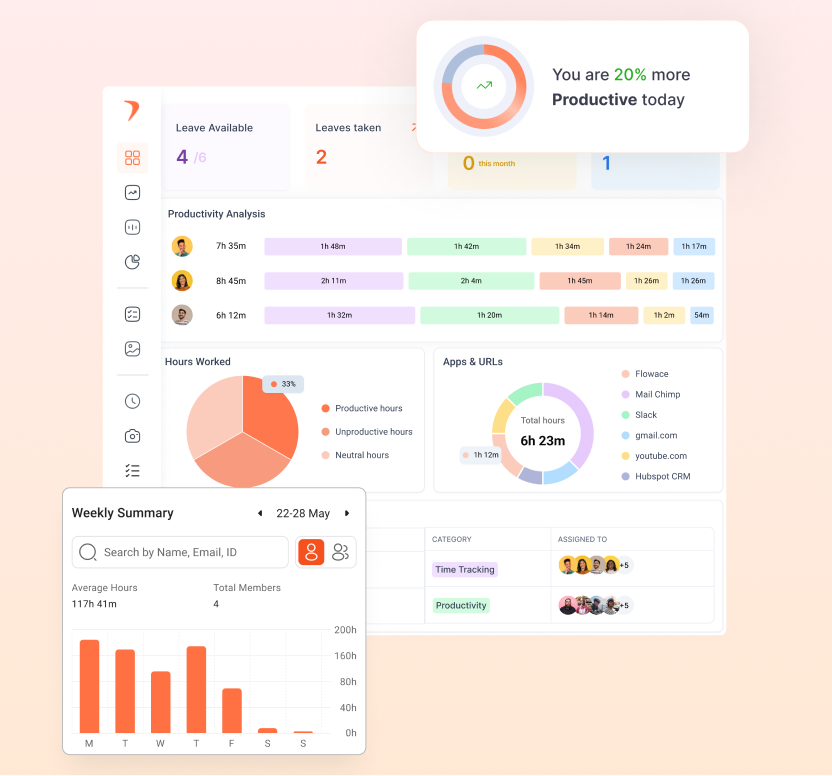
Automatic time tracking shows how long tasks really took last week, so tomorrow’s list is based on numbers. Knowing what must be accomplished for the day or week can help you stay organized and motivated.
Leadzen.ai, a remote sales-intelligence team, cut its average workday from 12.73 hours to 9.84 hours over three years while productivity climbed from 76.5% to 86.9% is a proof that a shorter, better-planned day doesn’t mean less output.
Organize Yourself

Organizing yourself with time management tips makes you more productive in the long run.
Developing routines and habits lets you do more in less time, whether that means starting your day earlier, planning ahead, or simply managing your tasks more efficiently.
Want to see exactly where your day actually goes before you plan the next one?
Explore Automatic Time Tracking SoftwareGet Crystal Clear

Having a goal is great. A useful hack is deciding when you will work on a specific task in advance. A weekly productivity report shows which hours you actually spend on your most important task. Moreover, it will establish a routine that helps you complete your most important task.
By tracking your progress, you will get a clear sense of how much you can get things done in a given time, which will help you fine-tune your ability to create a realistic schedule.
No Multitasking

Juggling several tasks at once wastes time and lessens your overall productivity. Instead of dividing your attention into three different things, it is better to focus entirely on one thing and give it your full attention.
Multitasking divides your attention, and you might naturally feel overwhelmed, leading to sloppy mistakes and memory problems. However, when you focus on a single task with full attention, you can give it your best effort.
Delegate the Things

We carry the baggage of doing everything independently and burden ourselves with never-ending tasks. As your business grows, it becomes difficult for you to do all these yourself; that is where task delegation comes in.
You can easily reclaim time with the art of delegation. By delegating the task to someone you trust, you can add more time to your day, stay focused, and enjoy your life.
Reward Yourself

You may occasionally feel overwhelmed by your planner’s list of duties, so it’s important to get motivated and stay that way. Instead of giving in to these negative feelings, go back to your schedule and find a free time you usually enjoy.
Be proud of the progress and success you are achieving towards your objective.
Try to keep your rewards as a special treat for your work.
To Sum Up
Effective time management techniques help you plan your day, focus on important tasks, meet deadlines, and balance work with personal life. By setting clear goals, planning your schedule, and tracking how you spend your time, you can reduce stress and get more done each day.
Start by choosing the techniques that best fit your daily routine. If you manage a team, tools like Flowace can help you track work hours and understand employee productivity insights. Review your progress regularly and adjust your plans when needed.
Remember, small changes in how you use your time can help you build better habits, reach your goals, and make more time for the things that matter most.
If time blocking sounds like a good next step, we have a simple article to help you start.
Read The Time Blocking ArticleFrequently Asked Questions About Effective Time Management Techniques
1. What is time management in simple terms?
Time management is the practice of planning and organizing how you spend your hours so you get more done with less stress. It covers daily habits like prioritizing tasks, avoiding distractions, and tracking how your time is actually used.
2. How many time management techniques should I try at once?
Start with one or two techniques, such as planning ahead and avoiding multitasking. Trying every technique at once usually leads to giving up early, while small, consistent habits are easier to stick with.
3. What is the difference between time management and time blocking?
The difference between time management and time blocking is that time management is the broad skill of planning and prioritizing your day. Time blocking is one specific technique within it, where you schedule exact blocks of time for each task on your calendar.
4. Why do good time management plans still fail?
Good time management plans usually fail when they are too rigid, do not account for interruptions, or are never reviewed. Building in buffer time and checking your plan each week helps it hold up against a busy schedule.
5. How long does it take to build better time management habits?
It varies widely between people. The most-cited habit study (Lally et al., 2010, European Journal of Social Psychology) found it took a median of 66 days for a new habit to become automatic, with a huge range anywhere from 18 to 254 days depending on the person and the habit. Repeating a small number of techniques daily, without worrying about a fixed timeline, works better than switching methods too often.
6. Can time management techniques help with work life balance?
Yes. Techniques like delegating tasks and setting clear work hours free up time for rest and personal activities. Good time management protects personal time alongside work time.