What Causes Low Productivity? 9 Reasons And Fixes




Low productivity usually comes from a mix of nine common causes. Many of these causes come from the systems around employees, including processes, tools, workload, and management practices.
This article explains each cause, the warning sign that reveals it, and one practical fix to try this week. It also covers how to measure low productivity, how it appears in BPO teams versus knowledge work, and when the issue comes from workplace factors or individual habits.
9 Causes And Fixes Of Low Productivity At a Glance
|
Cause |
Quick Sign | Quick Fix |
|
Low engagement and motivation |
People do just enough to get by | Give one clear goal tied to a real result |
| Poor or absent management | Team output dips under one manager |
Swap status meetings for short one-on-ones |
| Skill gaps from training | Repeated mistakes on the same task |
Teach the skill right when it’s needed |
|
Poor role skill fit |
A strong performer stalls in a new task | Match the role to the person’s real strengths |
| Unbalanced workloads | Some people drown, others coast |
Track hours against output team-wide |
|
Outdated tools and technology |
Manual workarounds for simple tasks | Fix the one tool your team complains about most |
| Unclear communication | People work on the wrong priority |
Keep one written source of current priorities |
|
Meeting and interruption overload |
Deep work never gets protected time | Block one no-meeting stretch every day |
| Unaddressed stress and burnout | A steady performer suddenly slows down |
Normalize flagging overload early |
The 9 Most Common Causes Of Low Productivity
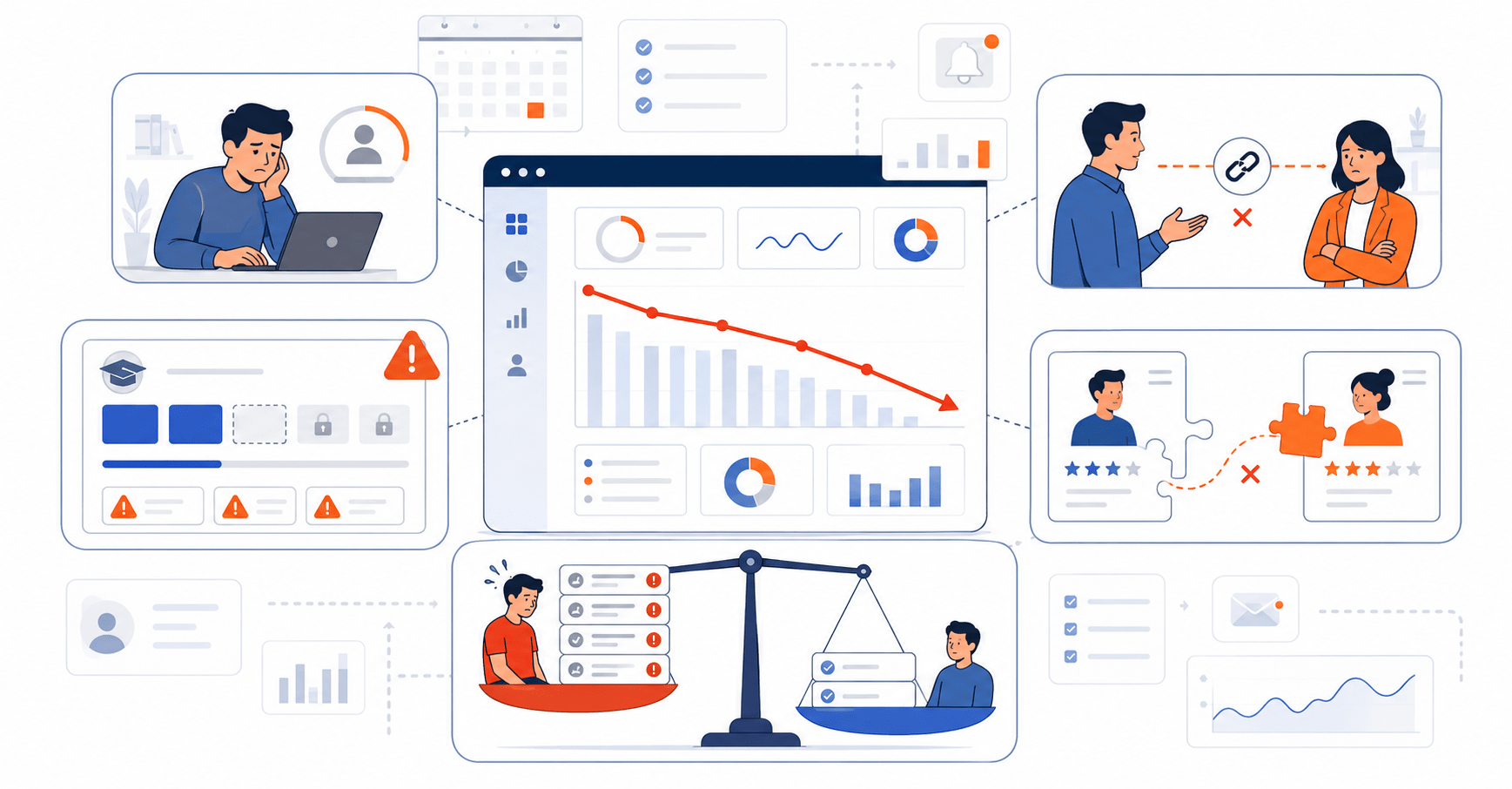
Low productivity usually comes from a mix of workplace systems, management practices, workload issues, tools, and individual challenges. Each cause below includes the warning sign to look for and a practical fix.
1. Low Engagement and Motivation
Low engagement is one of the most common causes of low productivity. When employees feel disconnected from their work, motivation and output often decline.
The fix: Set clear goals that employees can connect to real outcomes. Regular feedback, recognition, and meaningful work can help improve engagement.
2. Poor or Absent Management
Poor management can reduce productivity by creating unclear goals, weak communication, and limited support.
The fix: Replace unnecessary status meetings with focused one-on-one conversations. Train managers to set clear expectations, provide feedback, and remove blockers.
3. Skill Gaps From Insufficient Training
Employees lose time when they do not have the skills, instructions, or resources needed to complete tasks efficiently.
Repeated mistakes, slow task completion, and frequent questions can indicate a training or process gap.
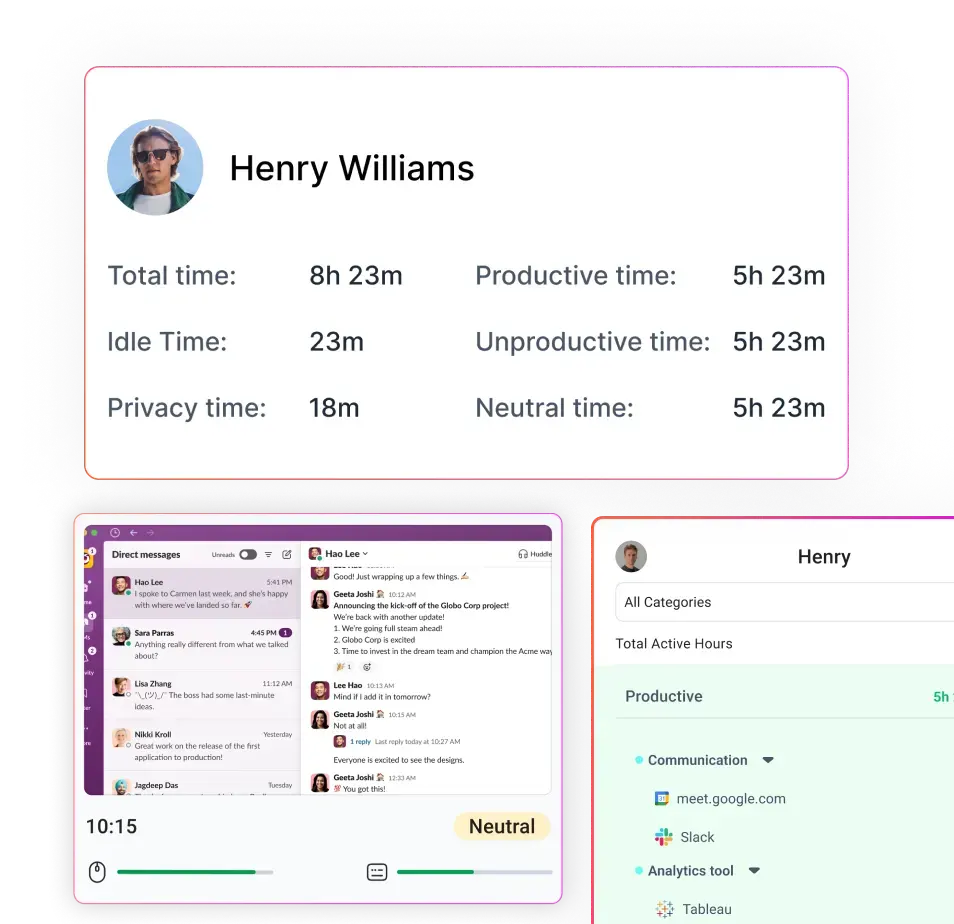
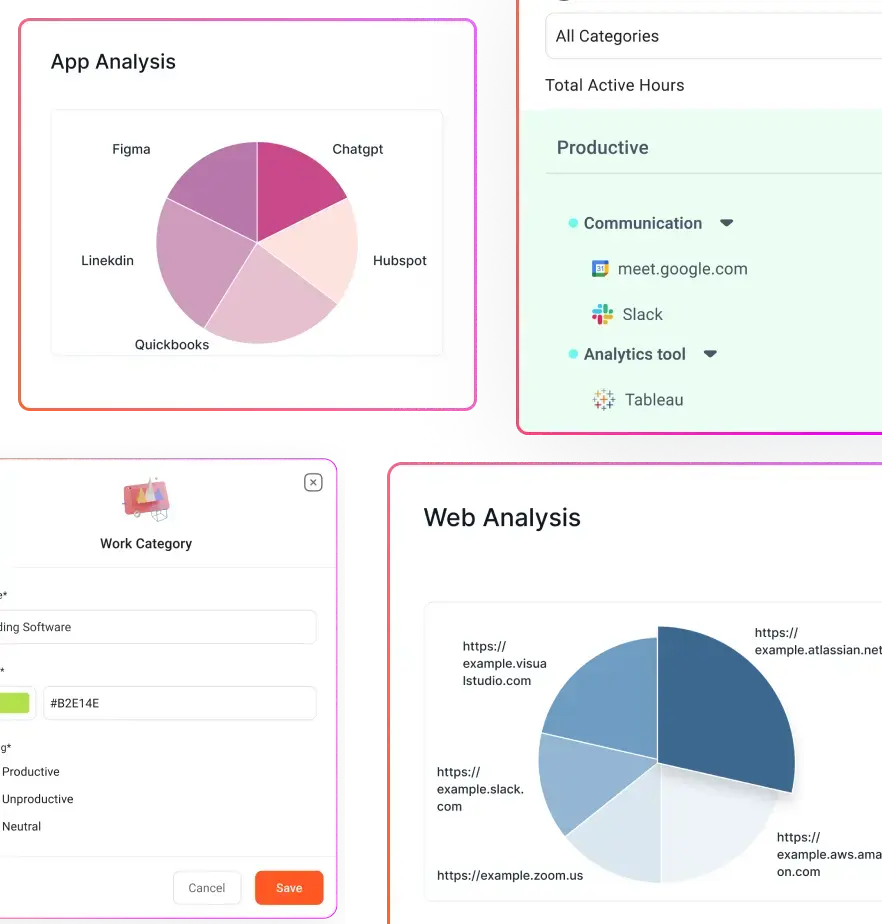
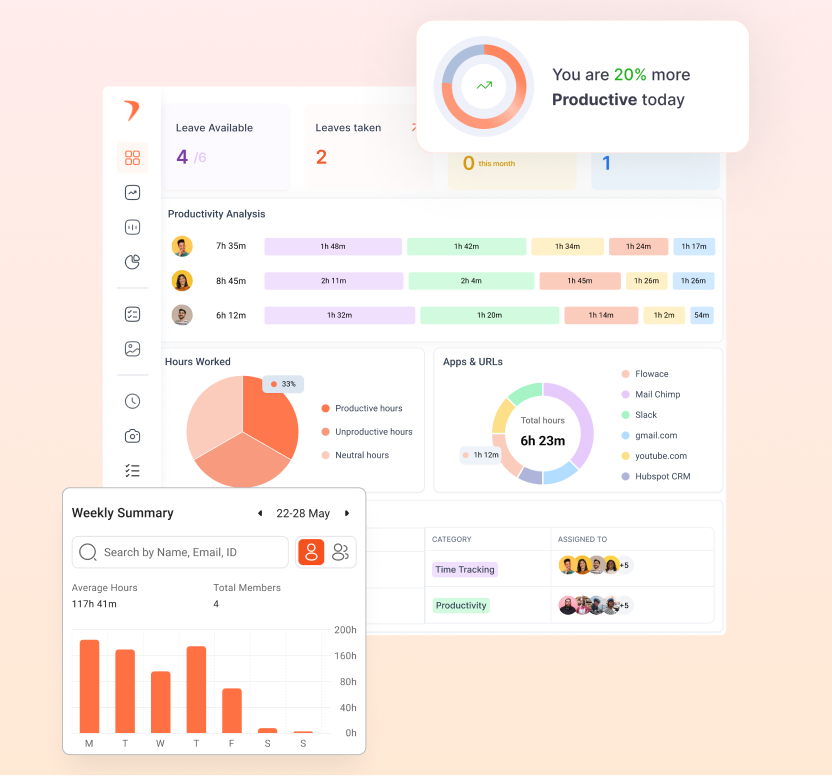
The fix: Pair every new task with a short, clear how-to step. Teach the skill right when the person needs it. Skip the once-a-year training day nobody remembers. A workforce analytics dashboard makes it easy to spot which tasks keep causing repeated mistakes, so you know exactly where to add training first.
4. Poor Role Skill Fit
Productivity can drop when daily tasks do not match an employee’s skills, experience, or strengths.
A role mismatch can make work slower and require more effort to achieve the same result.
The fix: Review job responsibilities and actual work patterns regularly. Adjust tasks, training, or responsibilities where major gaps appear.
5. Unbalanced Workloads
Too much work burns people out. Too little work bores them. Both endings lead to low productivity.
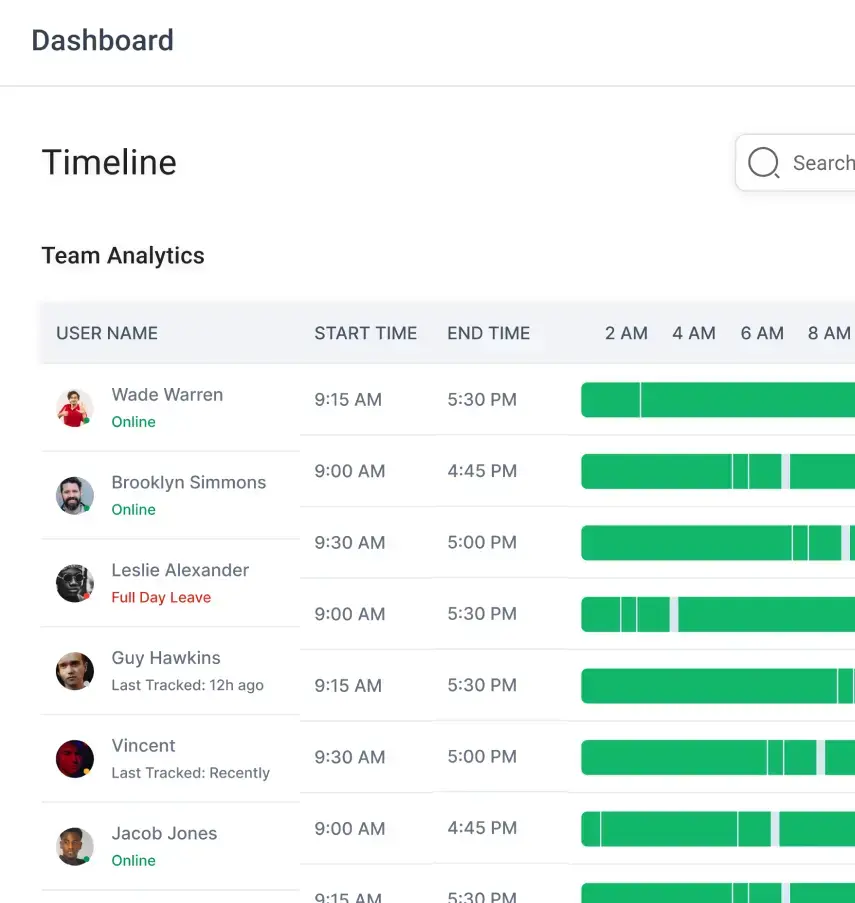
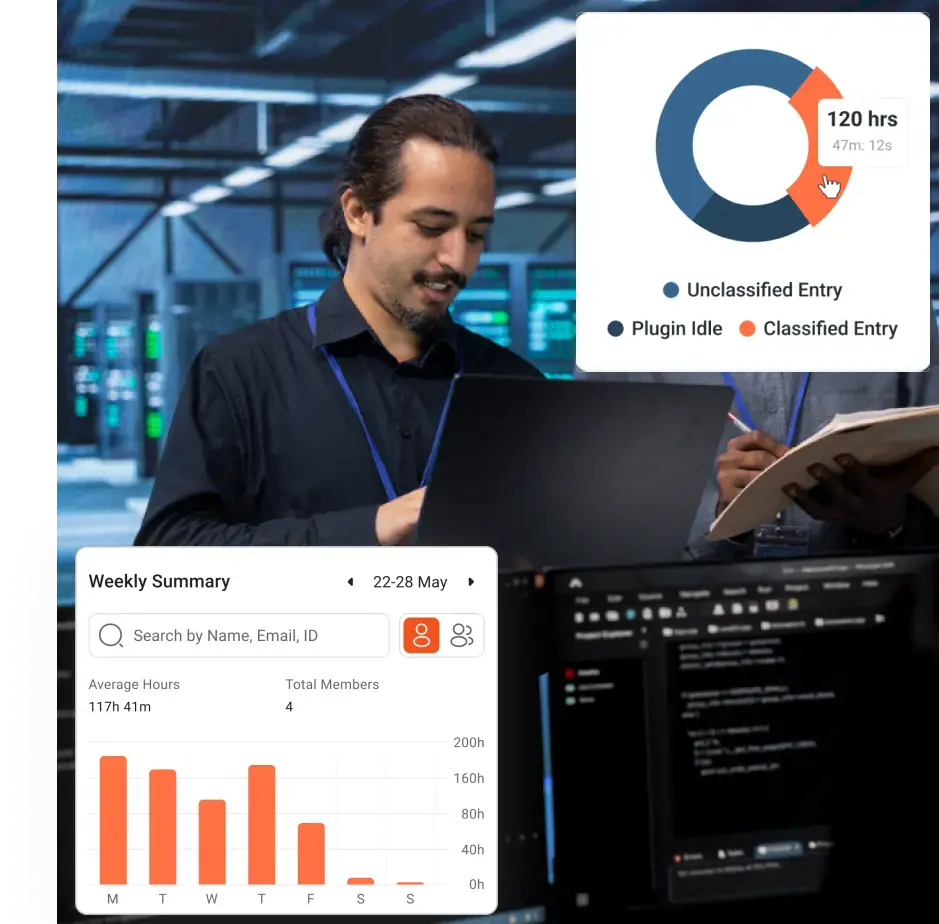
Flowace’s workforce management software has flagged a clear pattern across client teams. Some employees run consistently above 100% of capacity while others sit below 70%, often on the very same team. Nobody spots this by eye. It shows up only when workload gets tracked against real output.
The fix: Track workload, hours, and output across the whole team. This helps managers understand where support is needed, balance tasks better, and prevent productivity issues before they grow.
Find the hidden causes hurting your team's productivity.
Explore Productivity Insights6. Outdated Tools and Technology
Slow or clunky software forces people to build their own workarounds. Every workaround costs time that never gets logged anywhere.
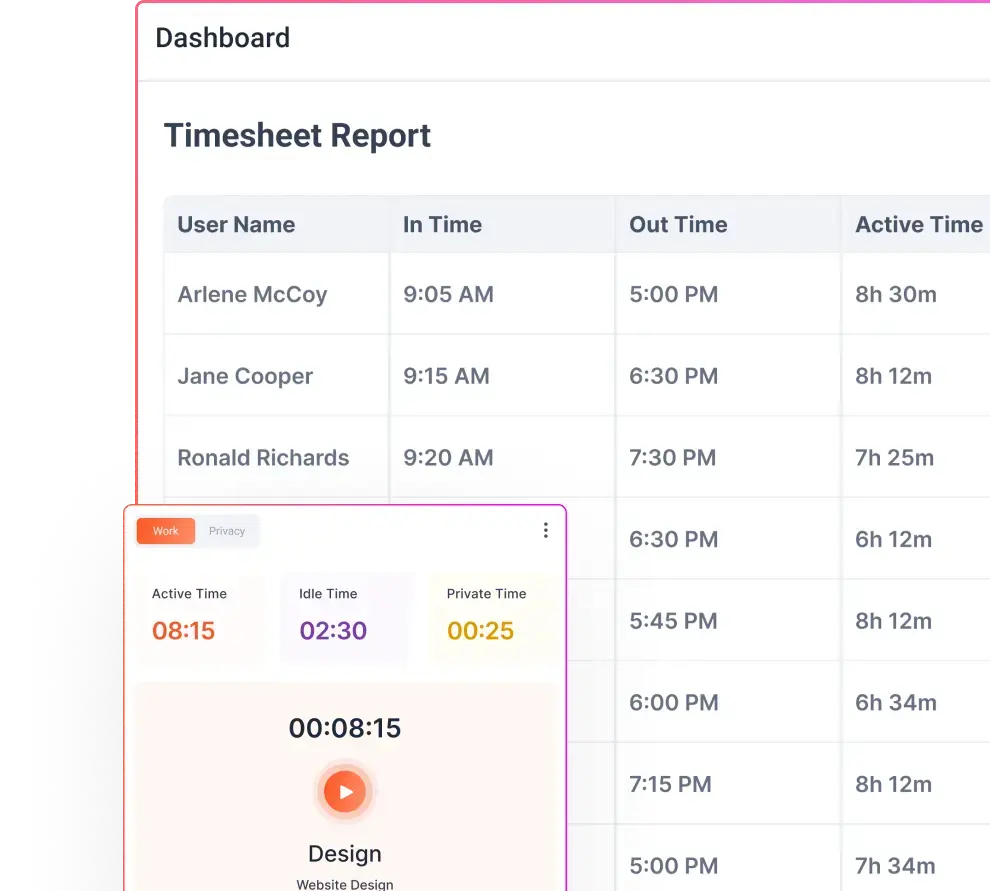
The fix: Ask your team which single tool annoys them most, and fix or replace that one first. Automatic time tracking often exposes which tool is the real time sink, since it shows exactly where the day disappears.
7. Unclear Communication and Priorities
Employees lose productivity when priorities change often or expectations are unclear.
People may spend time completing work that no longer supports the most important business goals.
The fix: Keep priorities clear and visible. A simple task list or shared goal system helps teams focus on the work that matters most.
8. Meeting and Interruption Overload
Interruptions break focus before real work starts. Focus is what drives output.
The fix: Protect one no-meeting block every day for deep work. Cut your default meeting length before you add a single new meeting to the calendar.
9. Unaddressed Stress, Burnout, and Personal Wellbeing
Stress and burnout can look just like low productivity. But the real cause is personal wellbeing. It needs its own kind of fix.
The fix: Normalize saying “I’m stretched too thin” long before it turns into a full breakdown. Our in-depth article on employee burnout covers the deeper signs and how to respond to each one.
How To Measure Low Productivity Of An Employee?
Identifying a cause is only the first step. You also need metrics to check whether your improvements are working. These four measures help managers understand productivity problems.
- Output per hour: The amount of completed work divided by hours worked. It helps show whether output is changing over time instead of relying on how busy someone appears.
- Utilization rate: The percentage of available work time spent on productive tasks. A consistently high rate may indicate workload pressure, while a low rate may suggest unused capacity, unclear priorities, or role mismatch.
- Cycle time: The time required to complete one task from start to finish. A rising cycle time can reveal productivity problems before overall output drops.
- Focus time ratio: The amount of uninterrupted work time compared with meetings, messages, and other interruptions. A low focus time ratio may point to distraction and workflow issues.
Track these metrics together. A single number can give an incomplete picture. For example, lower cycle time combined with higher focus time may show a different situation than either metric alone.
How Low Productivity Looks Different By Team Type?

Low productivity appears differently depending on the type of work. BPO teams usually focus on speed, accuracy, and consistency, while knowledge work teams focus more on quality, outcomes, and focused work time.
In BPO and Call Center Teams
BPO work often involves high-volume and repeatable tasks, so productivity is measured through metrics such as average handle time, turnaround time, quality scores, and SLA performance.
Employee turnover can also affect productivity because new team members need time to learn processes and reach full performance.
In Knowledge Work Teams
Knowledge work is often project-based, so productivity is harder to measure by task volume alone. Deliverables completed, quality of output, and focused work time are more useful indicators.
Knowledge workers can lose productivity through meetings, searching for information, switching between tools, and other coordination tasks. Reducing unnecessary work helps teams spend more time on high-value activities.
Spotting productivity issues early helps teams fix problems before they grow. A 750-user talent platform used Flowace to improve visibility into workforce activity and build an early-warning system for delivery performance.
What Are the Signs Your Team Has a Low Productivity Problem?
Low employee productivity usually appears through missed deadlines, lower output, repeated mistakes, and workload problems. Watch for these six warning signs:
- Deadlines keep getting missed without a clear reason.
- Meeting time increases while results stay the same.
- Employees complete only required tasks and stop sharing ideas.
- Small mistakes and repeated work become more common.
- High-performing employees show signs they may leave.
- Managers cannot clearly see who has too much work or extra capacity.
Tracking workload, output, focus time, and productivity metrics and KPIs helps managers understand where problems start and take action earlier.
Is Low Productivity Always The Employee’s Fault?
Low productivity is not always caused by employees. Many productivity problems come from the systems, processes, and support around them.
Poor management, unclear priorities, outdated tools, and heavy workloads can make it harder for employees to perform at their best. Improving productivity often starts with clearer processes, better support, and stronger manager decisions.
Workforce analytics tools like Flowace help managers understand work patterns, identify productivity issues earlier, and make better decisions based on data.
Improve workforce visibility with smarter productivity tracking.
Explore FlowaceFrequently Asked Questions About Low Productivity
1. What causes low productivity?
Low productivity usually comes from nine common causes. These include weak engagement, poor management, skill gaps, poor role fit, uneven workloads, outdated tools, unclear priorities, meeting overload, and burnout.
2. What are the signs of low productivity in the workplace?
Common signs include missed deadlines, rising meeting time with little change in output, repeated mistakes, lower initiative, and high-performing employees showing signs they may leave.
3. How do you fix low productivity in employees?
Start by identifying the actual cause. Set clear goals, improve training, match roles to strengths, remove workflow problems, and protect focused work time from unnecessary interruptions.
4. Is low productivity always the employee’s fault?
No. Many productivity issues are linked to workplace systems, management, processes, workloads, and tools. Improving productivity often requires fixing the conditions that affect how people work.
5. Does working longer hours cause low productivity?
Yes, excessive working hours can reduce productivity over time. Fatigue, mistakes, and burnout can lower output even when employees spend more time working.
6. Does workforce analytics improve productivity?
Workforce analytics does not solve productivity problems by itself. It helps managers understand work patterns, workload issues, and focus challenges so they can take better action. Platforms like Flowace help teams analyze productivity data and identify areas for improvement.
7. How do you measure low productivity?
Track metrics such as output per hour, utilization rate, cycle time, and focus time ratio together. A single metric may not show the full picture, but combined data can reveal productivity issues earlier.
8. Is productivity measured differently in BPO teams than in knowledge work?
Yes. BPO teams often use metrics like turnaround time, handle time, quality scores, and SLA performance. Knowledge work teams usually focus more on deliverables, quality of output, and focused work time.