9 Warning Signs of Employee Burnout and What to Do



Signs of employee burnout often show up before anyone says a word.
The World Health Organization says burnout comes from chronic work stress that has not been managed well. It shows up in three ways. People feel worn out. They pull back and grow cynical. They feel less able to do good work. Often, the first clue shows up in work patterns, not in words.
This article covers nine signs of employee burnout in four simple groups. It starts with what your data shows. Then it moves through the three ways the WHO describes it. Use the table below for a fast scan, or jump to the group you see in your team.
|
Sign |
Group | How It Shows Up |
First Action |
|
Rising overtime or after hours activity |
Work Data | Logins creep past normal hours, week after week | Look at the 30-day trend instead of reacting to one bad week. |
| Active hours drop, workload stays flat | Work Data | Less focus time, same deadlines |
Compare hours worked with output |
|
Constant tiredness rest does not fix |
Feeling worn out | Tired on Monday, tired on Friday, tired after time off | Ask them directly, then check workload against capacity |
| Frequent headaches, colds, stomach trouble | Feeling worn out | More sick days for vague physical complaints |
“Track patterns over months |
|
Cynicism or negative talk about the job |
Growing cynical | Sarcastic comments, a “why bother” attitude | Ask what changed. Listen first |
| Pulling back from meetings | Growing cynical | A vocal person goes quiet, camera off, no questions |
Have one-on-one check-ins |
|
Rise in sick days or unplanned time off |
Growing cynical | More Monday or Friday absences than usual | Compare with their past performance |
| Missed deadlines from a reliable person | Falling performance | Late work with no word given, out of character |
Ask about blockers first, don’t assume they stopped caring |
|
Drop in confidence about their own work |
Falling performance | Over apologizing, asking for proof on routine tasks |
Give clear, recent proof that their work is good |
How to Spot Signs of Employee Burnout Through Work Data?
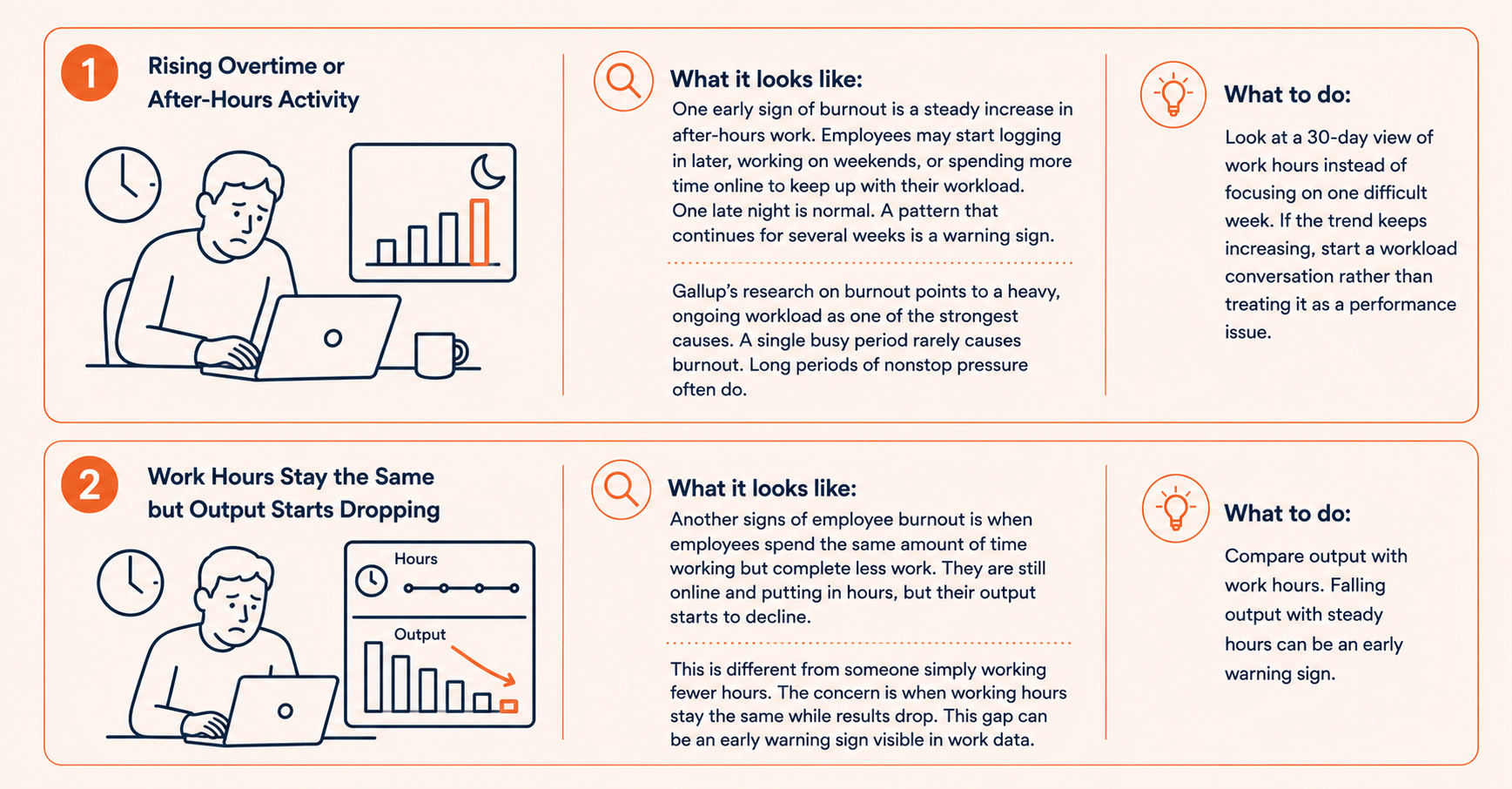
Most signs of employee burnout are noticed only after performance drops. But work data can reveal early warning signs before the problem becomes visible. By looking at changes in work patterns, managers can spot signs of burnout and address workload issues earlier.
1. Rising Overtime or After-Hours Activity
What it looks like:
One early sign of burnout is a steady increase in after-hours work. Employees may start logging in later, working on weekends, or spending more time online to keep up with their workload. One late night is normal. A pattern that continues for several weeks is a warning sign.
Gallup’s research on burnout points to a heavy, ongoing workload as one of the strongest causes. A single busy period rarely causes burnout. Long periods of nonstop pressure often do.
What to do:
Look at a 30-day view of work hours instead of focusing on one difficult week. If the trend keeps increasing, start a workload conversation rather than treating it as a performance issue.
2. Work Hours Stay the Same but Output Starts Dropping
What it looks like:
Another signs of employee burnout is when employees spend the same amount of time working but complete less work. They are still online and putting in hours, but their output starts to decline.
This is different from someone simply working fewer hours. The concern is when working hours stay the same while results drop. This gap can be an early warning sign visible in work data.
What to do:
Compare output with work hours. Falling output with steady hours can be an early warning sign.
What Are the Early Signs of Employee Exhaustion at Work?
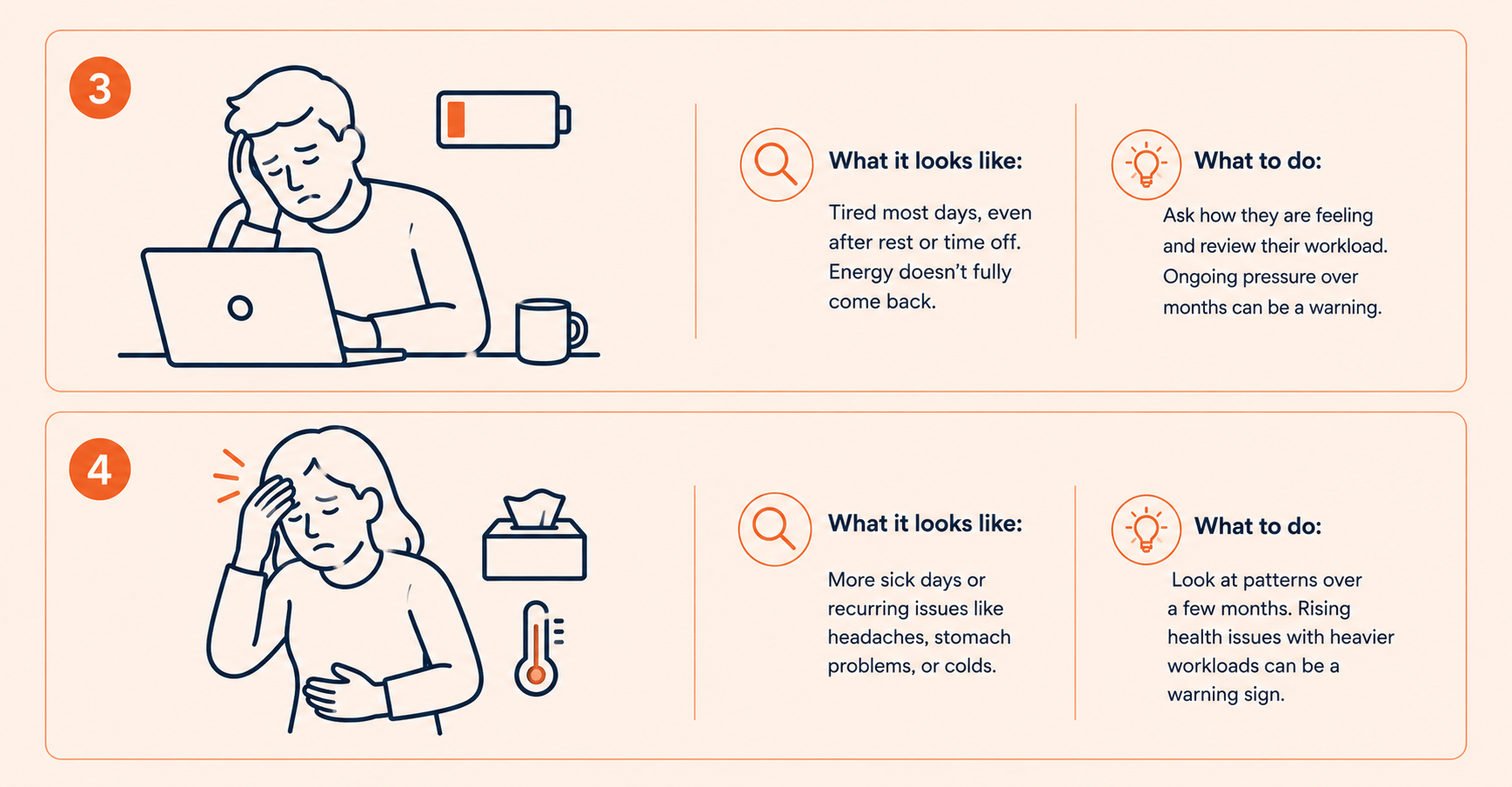
The World Health Organization lists exhaustion as one of the main signs of burnout. It is often the first sign people notice, even in themselves.
3. Constant Tiredness That Rest Does Not Fix
What it looks like:
The person feels tired most days, even after taking time off. A weekend break or a short vacation does not fully bring their energy back. Normal tiredness improves with rest, but burnout-related exhaustion often continues.
What to do:
Ask how they are feeling and review their workload. One difficult week is usually not the cause. Ongoing pressure over months can be a warning sign.
4. Frequent Headaches, Stomach Problems, or Getting Sick More Often
What it looks like:
The person starts taking more sick days or dealing with recurring issues like headaches, stomach problems, or frequent colds. Long-term stress can affect the body as well as mental well-being.
What to do:
Look at patterns over a few months. Rising health concerns along with heavier workloads can be an early burnout warning sign.
The productivity numbers looked fine. Bhuta Sah & Co LLP found hidden gaps.
Read Full Case StudyHow Does Employee Burnout Lead to Cynicism and Detachment?
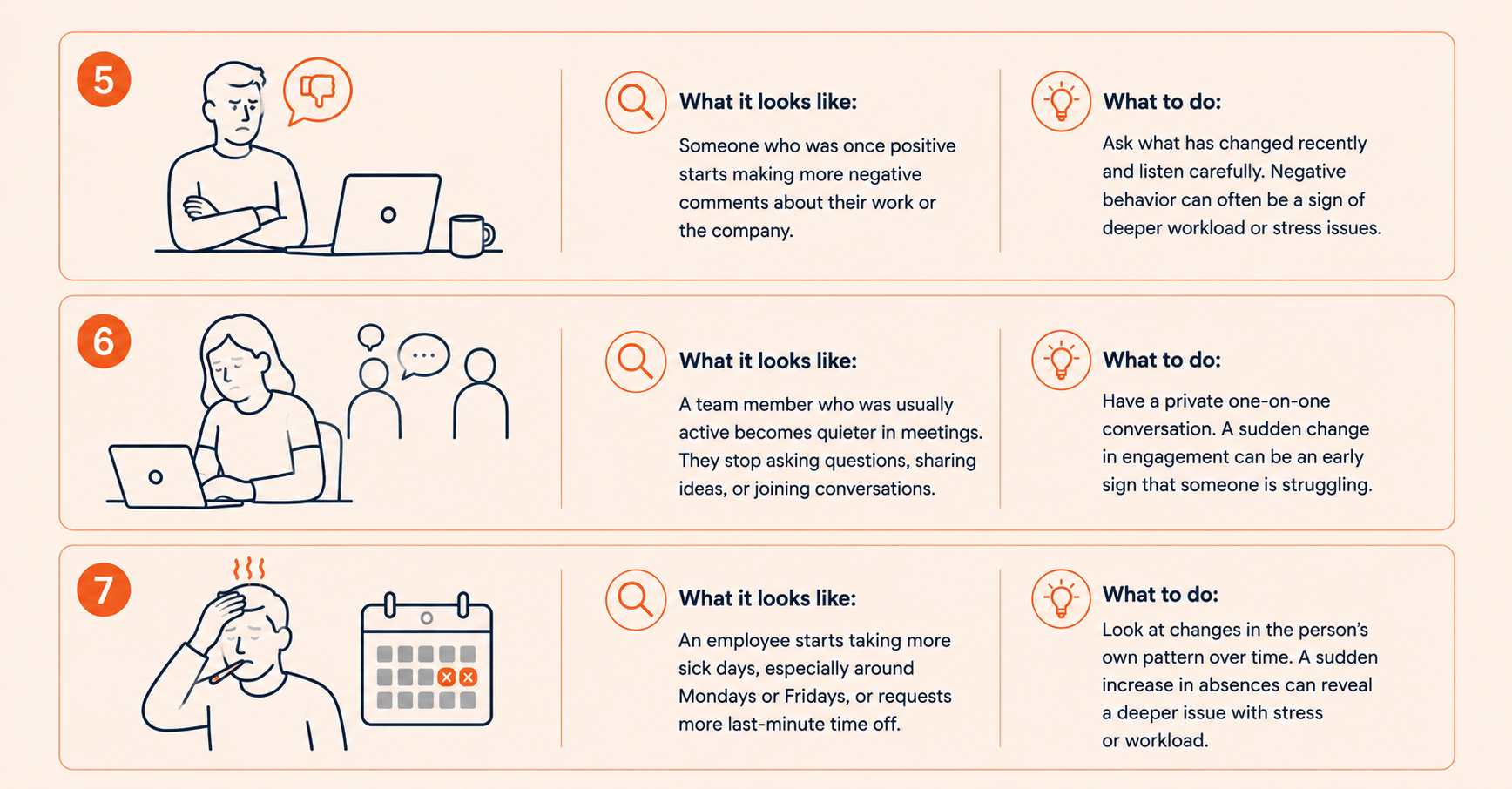
The World Health Organization lists cynicism as the second major signs of employee burnout. It happens when employees start feeling disconnected from their work. It usually appears slowly through changes in attitude and behavior.
5. Increased Negativity About Work
What it looks like:
Someone who was once positive starts making more negative comments about their work or the company. Feedback becomes less about solving problems and more about frustration or criticism.
What to do:
Ask what has changed recently and listen carefully. Negative behavior can often be a sign of deeper workload or stress issues.
6. Pulling Away from Meetings and Team Conversations
What it looks like:
A team member who was usually active becomes quieter in meetings. They stop asking questions, sharing ideas, or joining conversations. These small changes can be easy to miss at first.
What to do:
Have a private one-on-one conversation. A sudden change in engagement can be an early sign that someone is struggling.
7. More Sick Days or Unplanned Time Off
What it looks like:
An employee starts taking more sick days, especially around Mondays or Fridays, or requests more last-minute time off.
What to do:
Look at changes in the person’s own pattern over time. A sudden increase in absences can reveal a deeper issue with stress or workload.
What Are the Signs of Burnout Affecting Employee Performance?
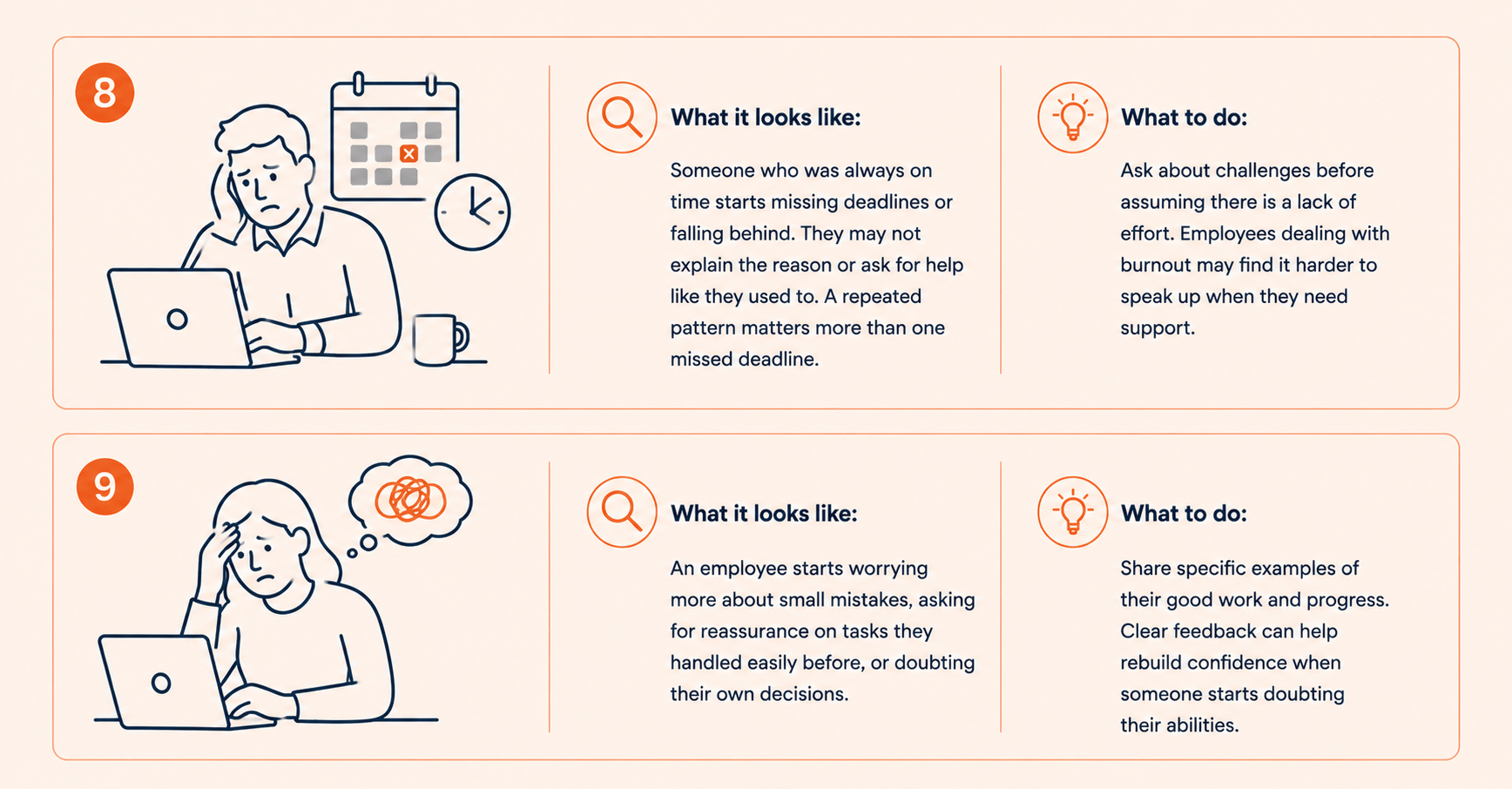
The World Health Organization lists reduced ability to do good work as the third major signs of employee burnout. It can look like a performance issue, but burnout may be the real reason behind the change.
8. Missing Deadlines from Someone Who Was Usually Reliable
What it looks like:
Someone who was always on time starts missing deadlines or falling behind. They may not explain the reason or ask for help like they used to. A repeated pattern matters more than one missed deadline.
What to do:
Ask about challenges before assuming there is a lack of effort. Employees dealing with burnout may find it harder to speak up when they need support.
9. Losing Confidence in Their Own Work
What it looks like:
An employee starts worrying more about small mistakes, asking for reassurance on tasks they handled easily before, or doubting their own decisions.
What to do:
Share specific examples of their good work and progress. Clear feedback can help rebuild confidence when someone starts doubting their abilities.
Is It Burnout or Just a Bad Week?
Not every difficult period means burnout. The key differences are how long it lasts, how much it affects work, and whether rest helps.
- How Long It Lasts
A bad week usually passes after the pressure goes down. Burnout signs often continue for weeks or months without improving.
- How Much It Affects Work
A bad week is often linked to one deadline or project. Burnout can affect a person’s overall work, energy, and attitude.
- Whether Rest Helps
A short break can help someone recover from a stressful week. With burnout, the same feelings often return because the underlying workload or pressure has not changed.
When these signs of employee burnout continue over time and affect different parts of work, it may be time to look deeper into workload and support.
What Should Managers Do When They Spot Employee Burnout Signs?
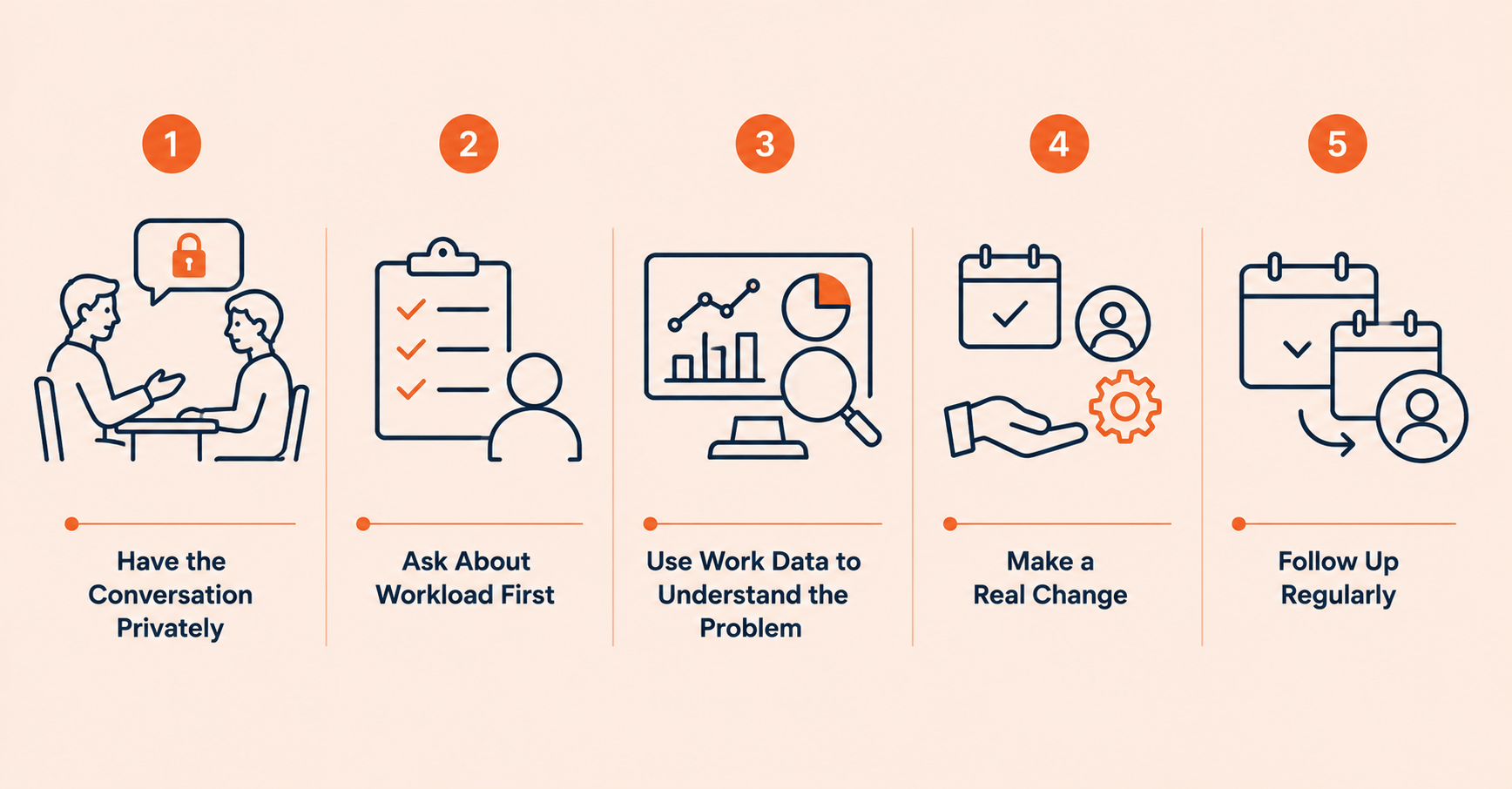
Spotting signs of employee burnout is only the first step. The next step is taking action that helps reduce pressure and support the employee.
1. Have the Conversation Privately
Talk to the employee one on one instead of bringing it up in front of others. A private conversation creates space for honest feedback.
2. Ask About Workload First
Start by understanding their workload and challenges. A heavy, ongoing workload is one of the main causes of burnout, not a lack of effort.
3. Use Work Data to Understand the Problem
Look at work patterns alongside the conversation. Trends like increasing overtime or longer work hours can help show where pressure is building.
4. Make a Real Change
Adjust deadlines, move tasks, or add support where needed. A conversation without any change may not solve the problem.
5. Follow Up Regularly
Burnout signs often build over time. Set a follow-up date and check in again after a few weeks to see if things are improving.
How Work Data Helps Spot Burnout Signs Earlier?
Some burnout signs are hard to notice because they build slowly. Work data can help managers spot changes in work habits before they become bigger problems.
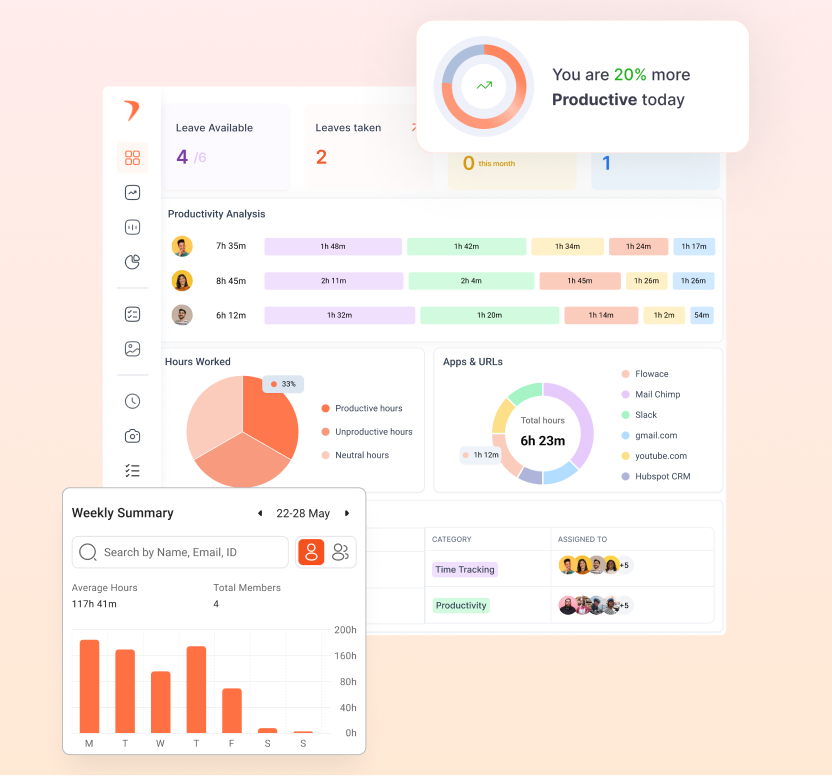
Flowace helps teams track patterns like overtime, after-hours work, and changes in daily work habits. This gives managers more information when talking about workload and support.
Here is what this can look like:
- Automatic overtime alerts, so a rising pattern gets flagged before it turns into a habit.
- A work-life balance view that compares active hours with total logged time to show real work patterns.
- Team-level dashboards that highlight workload differences across employees and teams.
Any tool that tracks work activity should be used openly. Teams should know what is being tracked, why it is being tracked, and how the information will help them. Clear communication helps build trust.
Find workload gaps before burnout builds.
Explore Productivity Insights SoftwareFrequently Asked Questions About the Signs of Employee Burnout
1. What are the signs of employee burnout?
Common signs of employee burnout include constant tiredness, feeling disconnected from work, lower confidence, and a drop in performance. Other signs can include more overtime, missed deadlines, and frequent health complaints.
2. What are the 3 dimensions of burnout according to the WHO?
The World Health Organization describes three main parts of burnout. The first is feeling exhausted. The second is becoming negative or distant from work. The third is feeling less able to do your job well.
3. What is the difference between stress and burnout?
Stress often improves when pressure goes down. While burnout is a deeper state of exhaustion that can continue even after taking a short break.
4. How many stages of burnout are there?
There are different burnout models with three, five, or twelve stages. Herbert Freudenberger and Gail North created a well-known 12-stage model, while simpler versions are also used today.
5. What causes employee burnout?
Common causes of employee burnout include heavy workloads, unclear expectations, poor manager support, unfair treatment, and limited control over work. Long-term pressure is one of the biggest risks.
6. Can burnout be reversed, and how long does recovery take?
Yes, burnout can improve when the causes behind it are addressed. Recovery time depends on the person and situation. Early signs may improve faster, while long-term burnout can take more time.
7. How do you tell an employee they seem burned out?
Have a private conversation and focus on what you have noticed. Mention specific changes, ask how they are feeling, and discuss ways to reduce pressure or provide support.
8. Is burnout the same as depression?
No. Burnout is usually linked to work-related stress, while depression can affect many areas of life. Both can be serious and may need professional support.
9. How can managers spot burnout in remote or hybrid employees?
Look for changes in work patterns and behavior. Signs can include longer work hours, lower activity levels, fewer conversations, or changes in regular work habits.
10. Can you tell if someone is burned out from their work activity data?
Work data cannot confirm burnout by itself. However, changes like rising overtime, lower active work time, or unusual work patterns can highlight areas to discuss with the employee.