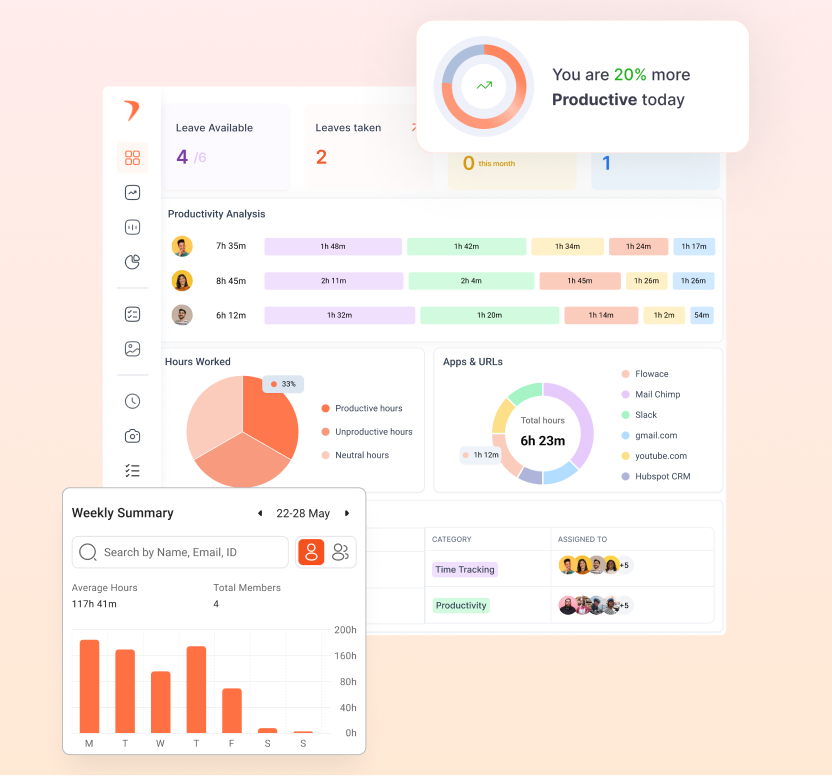
What Predictive Workforce Analytics Is and How to Use It



Predictive workforce analytics uses past and current data about your team. It uses that data to guess what happens next. It can flag turnover risk. It can flag workload risk. It can flag a drop in output. This article covers what it is, why it works, how to use it, and where it falls short.
In short, it takes data you already have and points it forward. It does not just show you last month. It shows you what may come next month, while you still have time to act.
What Is Predictive Workforce Analytics
Predictive workforce analytics uses past and current employee data to predict future workforce trends and risks. It helps businesses identify possible issues such as employee turnover, workload problems, and productivity drops before they become bigger challenges.
It runs on the same data that powers everyday workforce analytics. It just points that data forward instead of only back. One is people data, like tenure and survey scores. The other is work data, like attendance, meeting load and task speed. Put together, this data can show a pattern a manager would otherwise miss.
The goal is to help managers act early instead of waiting for problems to appear in reports. By using workforce data to forecast possible outcomes, businesses can plan staffing needs, improve workloads, and support better employee performance.
How Predictive Workforce Analytics Differs From Traditional HR Reporting
Predictive workforce analytics looks ahead, while traditional HR reporting looks at what already happened. A report tells you who left last quarter. Predictive workforce analytics helps identify who might leave next quarter. That extra time gives managers a chance to act before problems grow.
What Data Do You Need for Predictive Workforce Analytics
You need two types of data for predictive workforce analytics.
The first is people data, such as years at the company, employee survey results, and past turnover. The second is work data, such as attendance, focus time, meeting time, and how fast work gets done. Together, this data shows how employees work and how they feel.
It is the same base as standard workforce analytics, just tracked over time instead of in one snapshot.
Most businesses already collect much of this data. Attendance records, calendars, and project tools create new data every day. The challenge is not collecting it. The challenge is tracking it over time to find patterns.
A simple starting list includes:
- Attendance and work schedules
- Focus time and daily work patterns
- Meeting time and after-hours work
- How fast work gets done
- Employee survey results
- Years at the company and past turnover
Employee productivity monitoring tools can collect much of this data automatically. That saves time and reduces manual tracking.
What Are the Benefits of Predictive Workforce Analytics
Predictive workforce analytics helps businesses find workforce problems early. Instead of waiting for someone to quit or miss a deadline, managers can spot risks and act before they grow.
The biggest benefits include:
- Finding employees who may leave before they resign
- Planning hiring based on actual business needs
- Spotting heavy workloads before they lead to burnout
- Reducing the cost of unused software licenses
- Making hybrid and remote work decisions based on data instead of opinions
Where Organizations See the Biggest Wins
Most organizations see the biggest benefits from improving employee retention and managing workloads. These problems are expensive, but they are also easier to measure than many other workforce issues. Keeping experienced employees and preventing burnout can save both time and money.
After that, many businesses expand predictive workforce analytics to hiring, scheduling, and workplace policies.
How Do You Implement Predictive Workforce Analytics in 5 Steps
You can implement predictive workforce analytics by following five simple steps.
Start with one clear goal, collect the right data, choose the right software, be open about how you use data, and review the results regularly. Most businesses can start small and improve the process over time.
Step 1: Choose One Goal
Start with one problem you want to predict. It could be employee turnover, heavy workloads during busy seasons, or slow onboarding for new hires. Trying to predict too many things at once can slow your progress.
Step 2: Match Your Goal to the Right Data
Once you choose a goal, list the data you need. For example, a turnover model may use years at the company, employee survey results, and manager changes. A workload model may use focus time, meeting time, and attendance. This helps you collect only the data you need.
Step 3: Choose the Right Analytics Software
Look for workforce analytics software that collects data and shows it in clear reports or dashboards. A workforce management software that tracks attendance, focus time, and workloads can help you get started faster because much of the data is already available.
Step 4: Be Open About How You Use Data
Tell employees what data you collect and why you collect it. Being open builds trust and helps employees understand the purpose of predictive workforce analytics. It can also support workplace privacy and data protection policies.
Step 5: Review Results Regularly
Check your results every week or month. A model nobody checks is just an unused report. The real value comes from checking it and acting on it.
Many teams start with a manual process before they automate it. One 750-user AI talent platform used Flowace to improve visibility into workforce activity patterns. Before implementation, the team identified that 35.3% of logged hours were recorded as idle time, helping them understand where productivity gaps existed.
By turning workforce activity data into clearer insights, the team gained better visibility into work patterns and areas that needed attention.
How Flowace Helped a 750-User Team Spot Workforce Risks Early
Know MoreReal-World Examples of Predictive Workforce Analytics
These four patterns cover most of what predictive workforce analytics gets used for today.
1. Predicting Employee Turnover Before It Happens
A predictive model looks for signals linked to turnover risk. It can combine factors such as tenure, survey results, manager changes, and work patterns to identify where support may be needed.
By combining workforce signals, businesses can identify possible retention risks earlier and take action through better support, workload changes, or manager intervention.
2. Forecasting Workload and Productivity Problems
A predictive model analyzes signals such as meeting load, after-hours work, workload changes, and idle time between tasks. These patterns can help managers identify teams that may be facing productivity or capacity challenges.
Microsoft’s 2025 Work Trend Index found that employees are interrupted frequently throughout the workday, making it harder to maintain uninterrupted focus time. Identifying these patterns early can help managers review workloads, reduce unnecessary interruptions, and improve team productivity.
According to Flowace’s customer case study, a 96-agent BPO team at AM2PM improved its activity rate from 75.1% to 84.9% after gaining better visibility into workforce activity patterns. Results are based on this specific customer example and may vary depending on team size, processes, and business goals.
3. Improving Hiring and New Employee Onboarding
A predictive model can compare how new employees progress against patterns from similar roles and past hires. If someone needs additional support, managers can identify the gap earlier and improve onboarding, training, or workload planning.
This helps organizations move from waiting for performance issues to appear toward providing support earlier.
4. Planning Better Hybrid and Remote Work Policies
A predictive model can compare work patterns across in-office, hybrid, and remote teams. It helps leaders understand how different work setups affect focus time, workload balance, and team productivity instead of relying only on assumptions.
Workforce analytics software can provide the data needed to evaluate these patterns across distributed teams. Flowace helps organizations track workforce activity, attendance, and productivity insights across remote, hybrid, and in-office teams.
What Is the Difference Between Workforce Analytics and Predictive Workforce Analytics
Workforce analytics explains what already happened on your team. Predictive workforce analytics uses that same data to guess what happens next. The table below breaks this down by dimension.
| Dimension | Workforce Analytics | Predictive Workforce Analytics |
| Time focus | Looks at what already happened | Looks at what may happen next |
| Main question | What happened last month | What might happen next month |
| Data used | Past records and reports | Past data plus real time signals |
| Typical output | Reports and dashboards | Forecasts and risk flags |
| Example | Turnover rate for last quarter | Employees likely to leave next quarter |
| Action it supports | Explains a result after the fact | Lets a manager act before the outcome |
Think of workforce analytics as the base layer. Predictive workforce analytics is what you build on top, once your data is steady.
What Are the Limitations of Predictive Workforce Analytics
Predictive workforce analytics is useful, but it comes with real limits worth naming upfront.
- A model is only as good as its data. Messy data gives you a shaky guess.
- It shows odds, not a sure thing. A flagged risk still needs a human to check it.
- It cannot replace a manager’s judgment or the context only a person can see.
- It raises fair privacy questions. Workers should know what is tracked and why.
- It needs a history of steady data. A brand new team will have less to work with at first.
What Tools Are Used for Predictive Workforce Analytics
Predictive workforce analytics usually combines three types of tools: workforce analytics software, workforce management platforms, and data dashboards.
These tools collect and organize workforce data such as attendance, workload patterns, focus time, productivity trends, and employee feedback. Dashboards then turn this data into reports and insights that help managers identify possible risks and make better decisions.
Analytics can highlight patterns related to turnover, workload, and productivity, but human judgment remains important. Managers still need context to understand why a pattern appears and what action makes sense.
How Flowace Supports Predictive Workforce Analytics
Flowace does not build the guess model. It builds the data layer under it, which is the part most teams get stuck on first.
Flowace tracks attendance, focus time, app use and workload across remote, hybrid and office teams, all in one dashboard instead of five separate tools.
One concrete example is its automated trigger system. You set a threshold, such as a late start pattern or a period of low output, and Flowace flags it as soon as it happens. This helps managers spot issues early instead of finding out weeks later through reports that may not get reviewed.
Find What Your Workforce Data Is Missing With Flowace
Analyze Your Workforce DataFrequently Asked Questions About Predictive Workforce Analytics
1. What is predictive workforce analytics?
Predictive workforce analytics uses past and current employee data to predict what may happen next. It helps businesses identify risks like employee turnover, workload problems, and lower productivity before they become bigger issues.
2. How is predictive workforce analytics different from traditional HR reporting?
Traditional HR reporting shows what already happened, such as last quarter’s turnover rate. Predictive workforce analytics uses data to predict future risks and gives managers time to take action.
3. What are the benefits of predictive workforce analytics?
The main benefits include finding turnover risks early, planning staffing based on business needs, spotting heavy workloads before burnout, reducing unused software costs, and making better hybrid work decisions.
4. How do you implement predictive workforce analytics?
You can implement predictive workforce analytics in five steps: choose a goal, identify the data you need, select the right software, explain how data is used, and review results regularly.
5. What data do you need for predictive workforce analytics?
Predictive workforce analytics uses two main types of data. People data includes years at the company, survey results, and past turnover. Work data includes attendance, focus time, meeting time, and work patterns.
6. What are examples of predictive workforce analytics in action?
Common examples include predicting employee turnover, finding workload problems, improving new hire onboarding, and creating better hybrid or remote work policies using workforce data.
7. What is the difference between workforce analytics and predictive workforce analytics?
Workforce analytics explains past workforce trends. Predictive workforce analytics uses those trends to predict possible future outcomes and help managers take action.
8. What are the limitations of predictive workforce analytics?
Predictive workforce analytics has limits. It needs accurate data, shows possible risks instead of guaranteed results, and cannot replace a manager’s judgment. Businesses must also handle employee data responsibly.
9. What tools are used for predictive workforce analytics?
Most predictive workforce analytics systems combine workforce management software, employee monitoring tools, and dashboards. These tools collect work data and turn it into useful insights for managers.
10. Is predictive workforce analytics the same as predictive HR analytics?
Predictive workforce analytics and predictive HR analytics are similar, but they focus on different areas. Predictive HR analytics often covers hiring, skills, and employee planning, while predictive workforce analytics focuses more on daily work patterns and workforce risks.