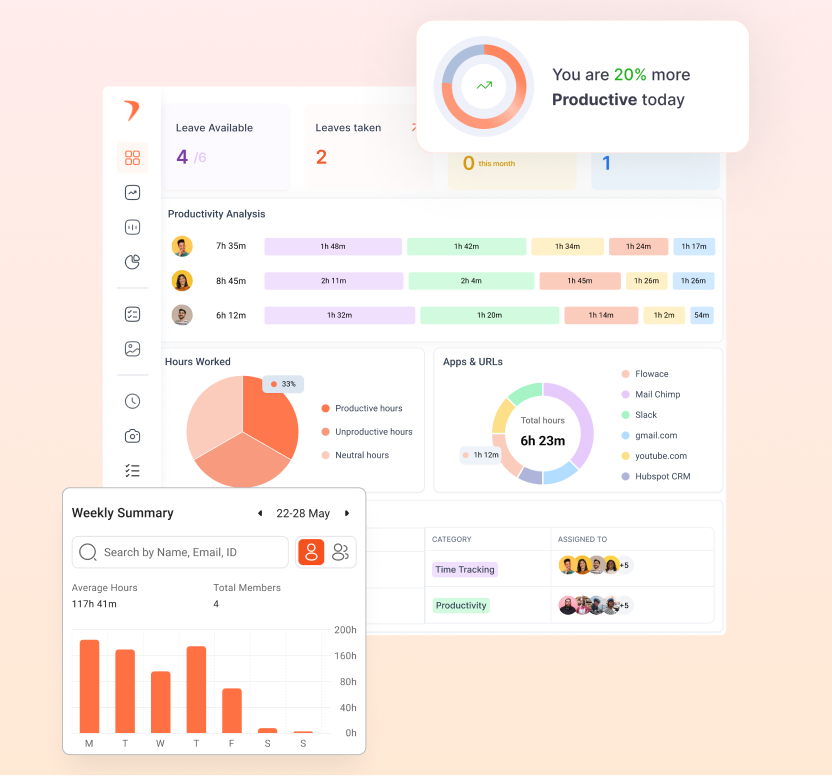
11 Productivity Hacks That Actually Work in 2026



Productivity hacks are simple techniques that help you get more work done in less time. It reduces distractions, removes small obstacles, and makes daily tasks easier to complete.
This article covers 11 productivity hacks split into three groups. Focus and deep work, prioritization and planning, and distraction control plus 4 extra productivity hacks for managers running a team.
Use the table below to find the right productivity hacks for your biggest time waster, or jump straight to your category.
Quick Comparison Table On 11 Productivity Hacks
|
Hack |
Category | Best For |
Time To See Results |
|
Pomodoro Technique |
Focus & Deep Work | Reclaiming focus after interruptions | Same day |
|
Time Blocking |
Focus & Deep Work | Protecting deep work on a busy calendar | 1 week |
| 2-Minute Rule | Focus & Deep Work | Clearing small tasks before they pile up |
Same day |
| Eisenhower Matrix | Prioritization & Planning | Deciding what to work on first |
Same day |
|
Ivy Lee Method |
Prioritization & Planning | Ending decision fatigue at day’s end | 3 to 5 days |
| Eat That Frog | Prioritization & Planning | Beating procrastination on hard tasks |
Same day |
|
1-3-5 Rule |
Prioritization & Planning | Keeping a daily to-do list realistic | Same day |
| Notification Batching | Distraction & Interruption Management | Cutting your interruption count |
Same day |
|
Brain Dump |
Distraction & Interruption Management | Clearing mental clutter before a big task | Same day |
| Kanban Board | Distraction & Interruption Management | Seeing work in progress at a glance |
1 week |
|
Habit Stacking |
Distraction & Interruption Management | Making a new habit stick | 2 to 3 weeks |
Focus And Deep Work Hacks
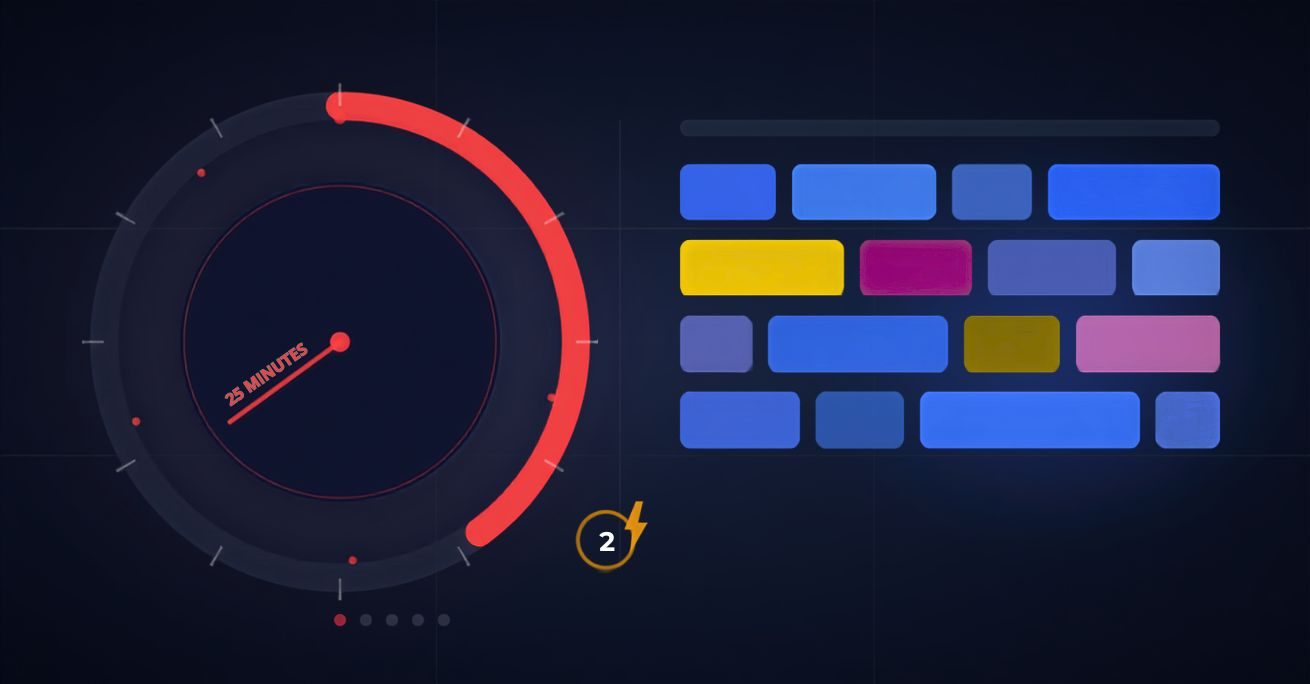
These three productivity hacks protect your time-blocking schedule so real work can happen. Start here if meetings and messages keep breaking your day into pieces.
1. Pomodoro Technique
The Pomodoro Technique is a popular productivity hacks that uses 25-minute focus sessions followed by 5-minute breaks.
- Set a timer for 25 minutes.
- Work on one task only until the timer rings.
- Take a 5-minute break away from your screen.
- After 4 rounds, take a longer break of 15 to 30 minutes.
2. Time Blocking
Time blocking is one of the simple productivity hacks. It means setting a fixed time on your calendar for one task or one type of work.
- Block 2 to 3 hours for your hardest task each morning.
- Mark the block as busy on your shared calendar.
- Group small tasks like email into one afternoon block instead of checking all day.
- Leave 15 minutes of buffer between blocks for overflow.
3. 2-Minute Rule
The 2-minute rule is part of simple productivity hacks. If a task takes less than 2 minutes, do it right away. Small unfinished tasks can pile up and distract you from important work.
- Do the task the moment it takes less than 2 minutes.
- Skip this rule during a Pomodoro or time-blocked session, finish your block first.
- Save true 2-minute tasks for the gaps between meetings.
Prioritization And Planning Hacks
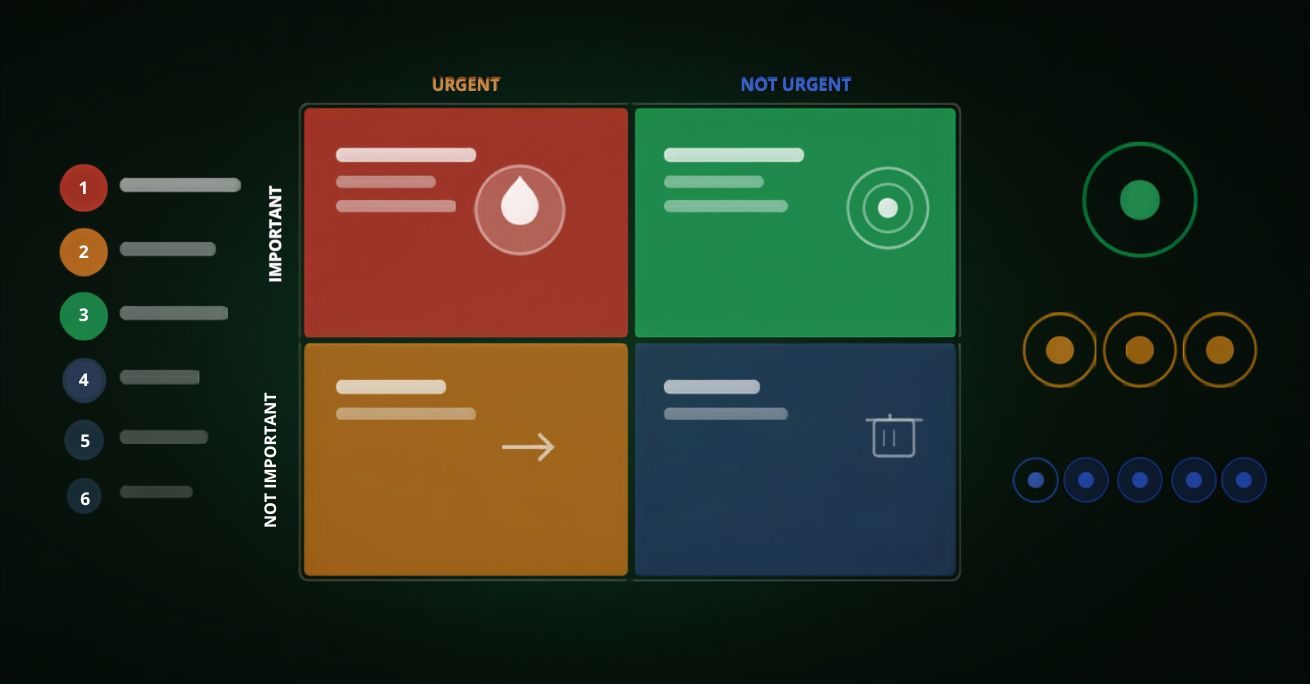
These four productivity hacks help you decide what to work on first, before you even open your inbox.
4. Eisenhower Matrix
The Eisenhower Matrix is one of the useful productivity hacks. It sorts tasks into four groups based on urgency and importance, helping you decide what needs your attention first.
- List every task on your plate today.
- Sort each one into one of the four boxes.
- Do the urgent and important box first.
- Schedule the important but not urgent box. Don’t skip it just because it can wait.
- Delegate or automate the urgent but not important box.
- Delete or ignore the fourth box.
5. Ivy Lee Method
The Ivy Lee Method has you write down your 6 most important tasks for tomorrow, in order, at the end of today.
Consultant Ivy Lee created this productivity method in 1918 for Bethlehem Steel executives. It still holds up because it removes decision-making from your morning, when willpower is already low.
- At the end of each day, write your top 6 tasks for tomorrow.
- Rank them from most to least important.
- Start with task 1 tomorrow morning and stay on it until it’s done.
- Move any unfinished task to the top of tomorrow’s list.
6. Eat That Frog
Eat That Frog is one of the popular productivity hacks. It means finishing your hardest task first so it does not take up your focus all day.
- Pick your hardest task the night before.
- Do it first, before email or meetings.
- Keep your phone out of reach while you work on it.
7. 1-3-5 Rule
The 1-3-5 Rule limits your daily to-do list to 1 big task, 3 medium tasks, and 5 small tasks. Nine items total keeps your list realistic instead of a wish list you’ll never finish.
- Pick 1 task that matters most today.
- Pick 3 medium tasks you can finish in an hour or two each.
- Pick 5 small tasks under 30 minutes each.
- Stop adding tasks once your list hits nine.
A small change in focus habits created ₹3.33 crore in recovered output.
Full BreakdownDistraction And Interruption Management
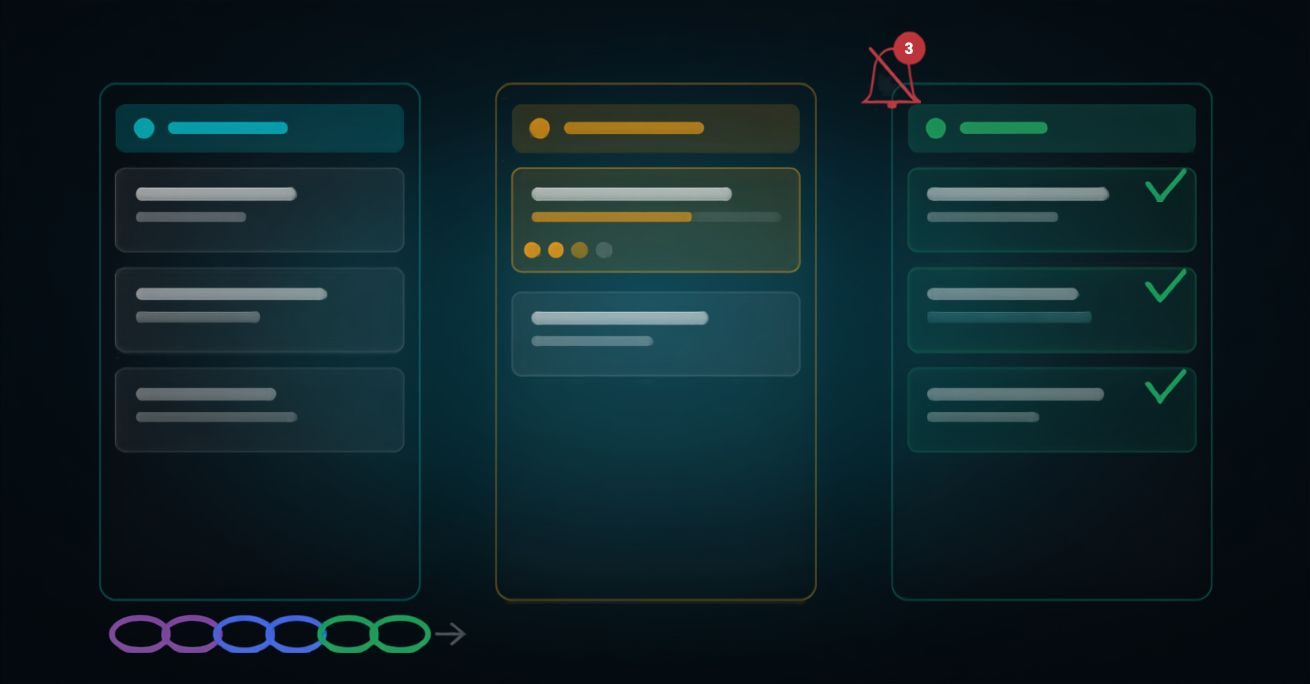
One interruption costs you more than the moment it happens. It takes over 23 minutes to fully refocus after a single interruption. These four productivity hacks cut how often that happens in the first place.
8. Notification Batching
Notification batching means checking email and messages at set times instead of the moment they arrive.
- Turn off push notifications for email and chat apps.
- Pick 3 set times a day to check messages, for example 10 a.m., 1 p.m., and 4 p.m.
- Tell your team the times you check messages so they know what to expect.
9. Brain Dump
A brain dump means writing down every task, worry, and idea in your head onto one list before you start work. It clears the mental clutter that competes with whatever you’re trying to focus on.
- Set a timer for 10 minutes.
- Write down everything on your mind, no editing as you go.
- Sort the list into tasks, ideas, and things you can let go of.
- Move real tasks into your planner or task app.
10. Kanban Board
A Kanban board shows your work in three columns: to do, in progress, and done. Seeing your work laid out this way makes it obvious when you’re juggling too much at once.
- Create three columns, on paper, a whiteboard, or an app.
- Add one card per task.
- Limit your in-progress column to 2 or 3 cards at a time.
- Move cards across the board as work happens.
11. Habit Stacking
Habit stacking means attaching a new habit to a habit you already have. Your brain already runs the first habit on autopilot, so the new one rides along instead of needing its own reminder.
- Pick a habit you already do every day, like making coffee.
- Attach your new habit right after it, for example planning your top 3 tasks.
- Keep the new habit under 2 minutes at first.
- Stick with the same order every day for 2 to 3 weeks.
*Bonus Hacks
Manager-Level Productivity Hacks To Boost Team Output
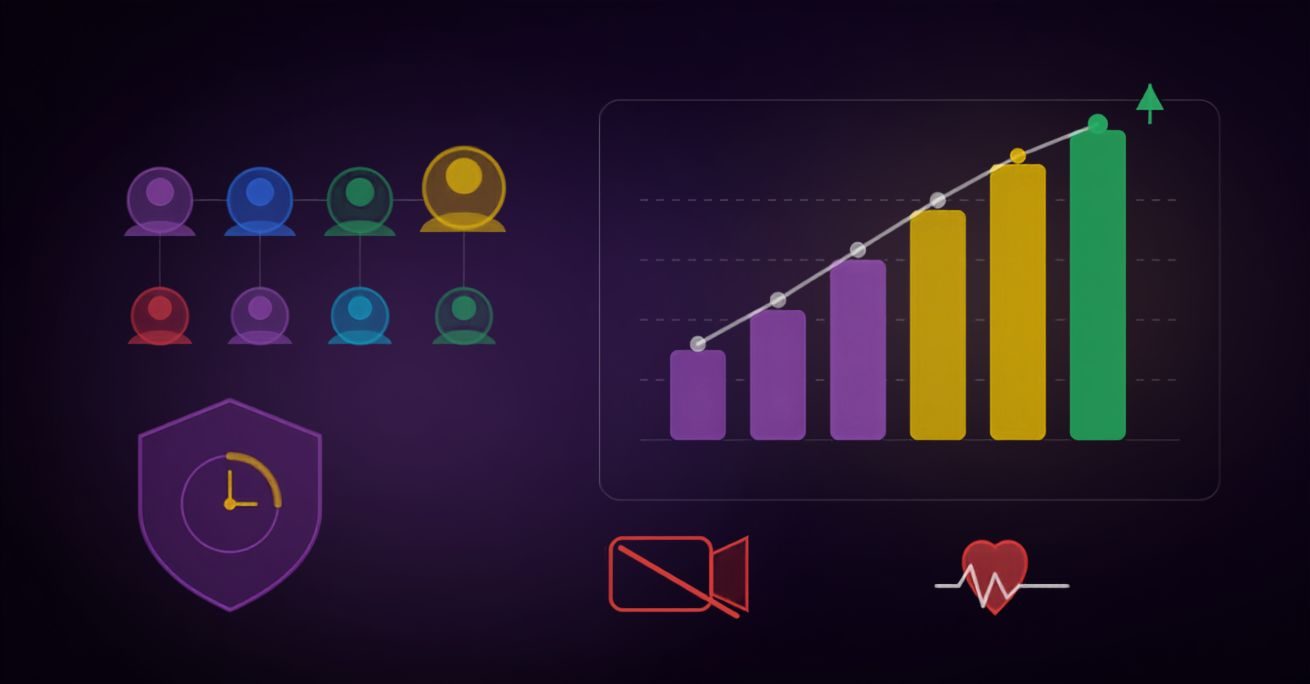
These four bonus productivity hacks are for HR managers and team leads rolling out focus habits across a whole team.
1. Protect Team Focus Time
Protecting focus-time blocks means setting hours where no one on the team schedules meetings. A shared no-meeting window rebalances that split.
- Pick 2 to 3 hours each day as a no-meeting window for the whole team.
- Block it on shared calendars.
- Get leadership to follow the same rule so it actually sticks. Read more on how to set productivity baselines for remote and hybrid teams before you roll this out.
2. Reduce Unnecessary Meetings
Cutting meetings means removing meetings that can be replaced with an email, message, or shared document. Many workers see unnecessary meetings as one of the biggest productivity problems at work.
- Audit recurring meetings for the next 2 weeks.
- Cancel any meeting with no clear agenda or decision to make.
- Cap remaining meetings at 25 or 45 minutes instead of 30 or 60.
- Track the change with an activity-based utilization metric instead of guessing whether it worked.
3. Turn Productivity Data Into Smarter Decisions
Using productivity data means tracking real focus and work patterns instead of guessing who’s busy.
Flowace’s workforce analytics and employee monitoring software can surface these patterns automatically but even a simple weekly check-in on workload and focus time works. The point is using real signals instead of hours logged.
Learn how to monitor employee productivity and what an employee productivity dashboard should actually show you.
- Track focus hours weekly, not just hours logged.
- Look for workload imbalance across the team.
- Use the data to start conversations, not to grade people.
4. Support Wellbeing To Prevent Burnout
Supporting wellbeing means watching for employee burnout signs before they show up as missed deadlines.
- Check in on workload during 1-on-1s, not just deadlines.
- Watch for late-night work or skipped breaks as early signs. If someone’s output drops without explanation, read what to do when a remote employee isn’t working before assuming it’s a motivation problem.
- Build a culture where breaks support better work.
How To Choose The Right Productivity Hacks For You?
The right productivity hacks to choose is based on the problem you want to solve.
If meetings and notifications keep interrupting your focus, start with time blocking and notification batching.
If you struggle with deciding what to prioritize, use the Eisenhower Matrix or the 1-3-5 Rule.
If you keep delaying an important task, try Eat That Frog to complete your highest-impact work first.
If you manage a team, start by protecting focus time and creating clear priorities before adding more productivity processes.
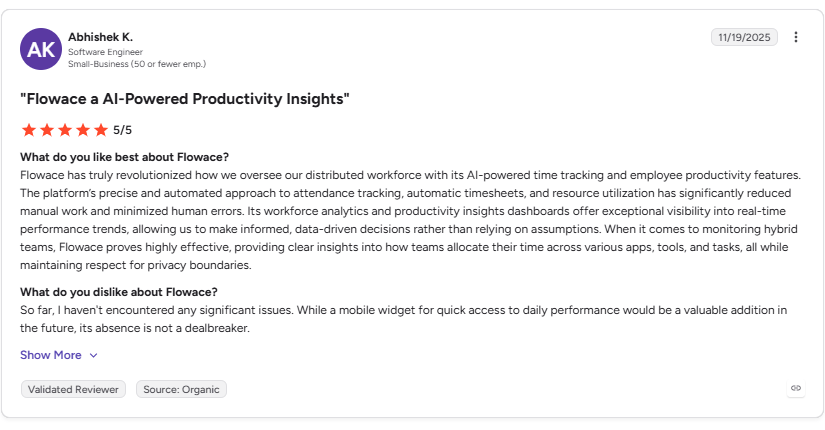
The best productivity methods should solve a specific challenge and fit naturally into your daily workflow. For teams that want deeper visibility into work patterns, Flowace helps track productivity trends and improve team workflows. Flowace is also trusted by users on G2 through customer reviews and ratings.
Build a productivity system that fits the way your team works.
Get Productivity InsightsFrequently Asked Questions About Productivity Hacks
1. What is the 3-3-3 rule for productivity?
The 3-3-3 rule splits your day into 3 hours of focused work on your most important task, 3 shorter tasks under 30 minutes each, and 3 maintenance tasks like email or tidying your workspace. It works well when a full day feels too open ended to plan.
2. What are the most effective productivity hacks?
There’s no single best hack for everyone. Time blocking has strong evidence behind it because it directly protects focus time, and 68% of workers say they don’t get enough of it during the day.
3. What is the 1-3-5 Rule?
The 1-3-5 Rule caps your daily to-do list at 1 big task, 3 medium tasks, and 5 small tasks, 9 items total. It keeps your list realistic and stops you from adding more once your day is already full.
4. How can I be more productive at work?
Start with one hack instead of changing everything at once. Protect a block of focus time, batch your notifications, and pick your top task the night before. Small, repeated habits beat a long list of tools you never actually use.
5. How long does it take to refocus after an interruption?
On average, it takes over 23 minutes to fully refocus after a single interruption. That’s why batching notifications and blocking focus time both matter more than most people expect.
6. Can multitasking actually reduce productivity?
Yes. Your brain switches between tasks rather than truly doing them at once, and each switch costs real time and accuracy. Single-tasking one task at a time, especially during a Pomodoro or time-blocked session gets more done in less time.