Flexible Working Arrangements: Types, Benefits & Management




Flexible working arrangements let employees change when, where, or how they work. The common types include remote work, hybrid work, flexible hours, compressed workweeks, and job sharing.
These arrangements can improve work-life balance, employee satisfaction, and productivity, but they also need clear communication and expectations to work well.
This article explains each type, its benefits, common challenges, and practical ways to manage flexible work effectively.
What Are Flexible Working Arrangements?
Flexible working arrangements let employees change when, where, or how they work instead of following a fixed schedule. It can include remote work, hybrid work, flexible hours, compressed workweeks, or part-time work.
Flexible work is now widely used by companies.
Flexible does not mean fewer rules. Companies still set clear expectations for communication, deadlines, and results. The flexibility is in how employees complete their work.
What Are the Types of Flexible Working Arrangements With Examples?
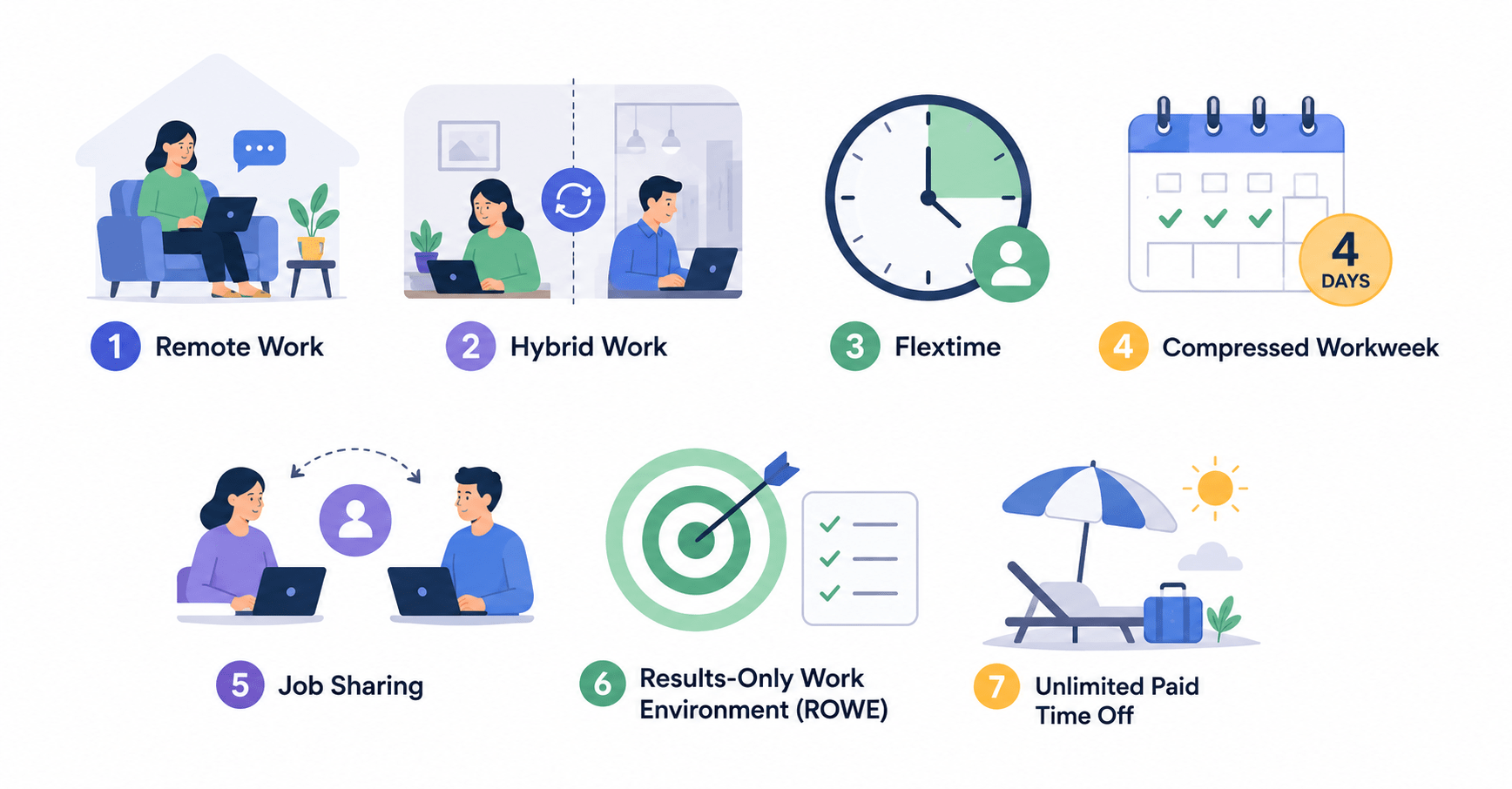
Flexible working arrangements are different ways employees can change when, where, or how they work. The right option depends on the team’s needs, job role, and work style.
|
Type |
Best For | Schedule Structure | Employee Autonomy | Common Challenges |
|
Remote Work |
Fully distributed teams | No fixed location | High |
Weaker in person bonding |
| Hybrid Work | Teams needing some in person time | Split between home and office | Medium to high |
Planning office days |
|
Flextime |
Staff who want flexible hours | Core hours plus flexible start and end times | Medium | Less real time overlap |
| Compressed Workweek | Teams that can work fewer, longer days | Same weekly hours in fewer days | Medium |
Longer daily shifts |
|
Job Sharing |
Two people splitting one role | Split hours, shared duties | Low to medium | Handoff gaps |
| Results Only Work | Output driven roles | No fixed hours or place | Very High |
Hard to apply to all roles |
|
Unlimited Paid Time Off |
Firms built on trust | No fixed leave limit | High |
Staff may take less time off |
1. Remote Work
Remote work allows employees to work from home or another location instead of a company office. It helps companies hire from a wider talent pool and can reduce office costs.
Remote teams need strong communication systems. Clear written updates, deadlines, and regular check-ins help avoid missed work.
2. Hybrid Work
Hybrid work combines office and remote work. Employees usually split their time between both locations, either on fixed office days or through flexible schedules.
The main challenge is coordination. Teams need planned office days and clear communication to make hybrid teams work effectively.
3. Flextime
Flextime allows employees to choose their start and finish times within agreed limits. For example, a company may require everyone to work core hours from 11 a.m. to 3 p.m., while employees choose the rest of their schedule.
This works well for employees with personal commitments or those who work better outside traditional hours.
4. Compressed Workweek
A compressed workweek lets employees complete their usual hours across fewer days. For example, someone may work four 10-hour days instead of five 8-hour days.
This works best for roles where daily coverage is not required. Teams need planning to manage workloads and days off.
5. Job Sharing
Job sharing allows two employees to split the responsibilities of one full-time role. They divide the working hours, tasks, and pay.
This arrangement needs clear handoffs, shared calendars, and regular updates to keep work moving smoothly.
6. Results-Only Work Environment (ROWE)
A results-only work environment focuses on completed work instead of hours worked. Employees are measured by their output rather than their schedule or location.
It works well for roles like sales, software development, and creative work. It may not suit jobs that require fixed working hours.
7. Unlimited Paid Time Off
Unlimited paid time off allows employees to take leave when needed instead of using a fixed number of vacation days.
This approach requires trust and clear expectations. Without proper support, some employees may take fewer breaks because there is no set leave limit.
Knowcraft’s team had flexibility but needed better visibility to stay on track.
Read the Case StudyWhat Are the Benefits Of Flexible Working Arrangements?
The benefits of flexible working arrangements helps improve employee retention, hiring, productivity, and work-life balance. Some research shows that both employees and employers benefit when work has more flexibility.
1. Lower employee turnover: Flexible work can help companies keep employees longer.
sc name=”fw_stat” link_url=”https://www.cipd.org/en/about/press-releases/over-million-changed-jobs-over-lack-of-flexibility-cipd-research/” stat_desc=”CIPD research found that over 1.1 million UK employees changed jobs due to a lack of flexible working options.” link_text=”CIPD research” ][/sc]
2. Easier hiring: Flexible work helps companies attract more candidates.
sc name=”fw_stat” link_url=”https://www.cipd.org/en/knowledge/reports/flexible-hybrid-working/” stat_desc=”According to CIPD’s 2025 report, 61% of UK employers say flexible working helps them hire talent.” link_text=”CIPD’s 2025 report” ][/sc]
3. Better work-life balance: Employees often value flexibility because it helps them manage work and personal responsibilities.
sc name=”fw_stat” link_url=”https://www.businesswire.com/news/home/20250922965079/en/Owl-Labs-2025-State-of-Hybrid-Work-Report-Finds-the-New-Frontier-of-Flexibility-is-When-Employees-Work-Not-Where” stat_desc=”Owl Labs’ 2025 State of Hybrid Work report found improved work-life balance was a key reason employees stayed in their roles.” link_text=”Owl Labs’ 2025 State of Hybrid Work report” ][/sc]
4. Access to more talent: Remote and hybrid options allow companies to hire beyond their local area.
sc name=”fw_stat” link_url=”https://www.gallup.com/workplace/694361/hybrid-work-retreat-barely.aspx” stat_desc=”Gallup reports that 51% of remote-capable US employees work on a hybrid schedule.” link_text=”Gallup” ][/sc]
5. Better employee wellbeing: Flexible work schedules can reduce stress by giving employees more control over when and where they work. Clear policies and realistic workloads are important to make this work.
What Are the Advantages and Disadvantages of Flexible Working Arrangements?
Flexible working arrangements offer clear benefits, but they also create new challenges. Companies need the right policies and expectations to make flexible work successful.
Advantages of Flexible Working Arrangements
- Wider talent pool: Companies can hire from more locations because employees do not always need to work from one office.
- Higher employee retention: Flexible work can help companies keep employees by supporting better work-life balance.
- Better focus: Employees may work more effectively when they can choose the hours or environment that suits them best.
- Lower office costs: Fully remote teams can reduce expenses related to office space and daily operations.
Disadvantages of Flexible Working Arrangements
- Harder teamwork: Teams may face communication challenges when employees work different hours or locations.
- Limited flexibility for some roles: Jobs that need physical presence or fixed schedules may not offer the same flexibility.
- Promotion bias risks: Employees who spend more time in the office may sometimes get more visibility than remote workers.
- Work-life boundaries can blur: Without clear working hours, employees may find it harder to switch off after work.
How To Manage Flexible Working Arrangements?
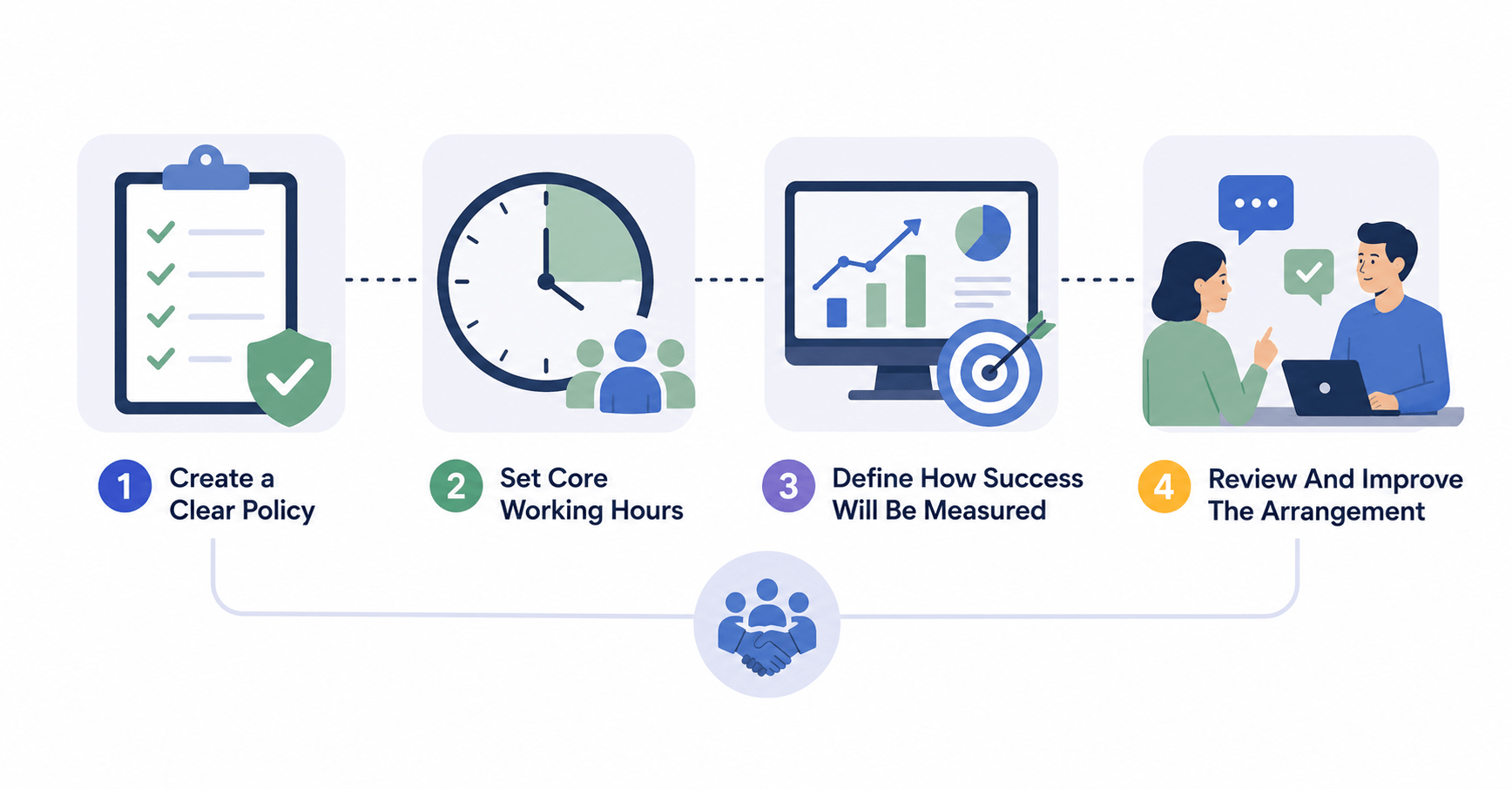
Managing flexible working arrangements requires clear rules, good communication, and a way to measure results. Flexibility works best when employees understand what is expected and how their work will be measured.
1. Create a Clear Policy
Define which roles can use flexible work, what options are available, and how employees can request them. Keep the policy simple so everyone can understand it.
2. Set Core Working Hours
Choose a few hours when the team should be available for meetings, quick discussions, and collaboration. This keeps teamwork smooth while allowing employees more flexibility.
3. Define How Success Will Be Measured
Focus on completed work, goals, and outcomes instead of only tracking time. Workforce analytics can help teams understand work patterns, identify problems, and improve productivity.
4. Review And Improve The Arrangement
Check the plan after a set period, such as 90 days. Ask employees what is working, what is not, and make changes where needed.
Flexible work works best with clear visibility and trust. Managers need to understand progress and challenges while giving employees the freedom to do their work.
How To Request Or Negotiate Flexible Working Arrangements?
To request flexible working arrangements, make a clear plan that explains what you need, how your work will continue, and how your team will stay connected.
1. Check Your Company’s Policy
Review your company’s flexible work policy first. Some options may already be available, and you may only need manager approval.
2. Make a Specific Request
Choose one clear arrangement, such as flexible hours, remote work, or a hybrid schedule. A specific request is easier to review than a general request for more flexibility.
3. Explain How It Will Work
Share how you will manage deadlines, stay available, and communicate with your team. Show how the arrangement can work for both you and your employer.
4. Suggest a Trial Period
A 30 or 60-day trial gives both sides time to understand what works. It also makes the decision easier because the arrangement can be reviewed later.
5. Put Your Request in Writing
Send your request through email or your company’s process. A written request keeps expectations clear and helps avoid confusion later.
Your team has flexibility. Do you have enough visibility?
Learn MoreFrequently Asked Questions About Flexible Working Arrangements
1. What are flexible working arrangements?
Flexible working arrangements allow employees to change when, where, or how they work instead of following a fixed schedule. Common types include remote work, hybrid work, flexible hours, compressed workweeks, and job sharing.
2. What are the benefits of flexible working arrangements?
The main benefits include better work-life balance, easier hiring, and higher employee retention. Flexible work can help companies keep employees by giving them more control over how they work.
3. What is the difference between flexible and hybrid working?
Hybrid working is one type of flexible working arrangement. It means employees split their time between working from home and the office. Flexible working is a broader term that also includes flexible hours, compressed workweeks, and job sharing.
4. How do I negotiate flexible working arrangements with my employer?
You can start with one clear request and explain how your work, deadlines, and team communication will stay on track. A trial period of 30 or 60 days can help both sides review what works.
5. What are the advantages and disadvantages of flexible working arrangements?
Advantages include a wider talent pool, better employee retention, and improved work-life balance. Challenges can include communication issues, limited flexibility for some roles, and unclear work boundaries.
6. How do I apply for a flexible working arrangement?
Check your company’s flexible work policy first. Then submit a written request explaining the arrangement you want, your schedule, and how you will manage your responsibilities.
7. Can an employer refuse a flexible working request?
Yes, an employer can refuse a request if there is a valid business reason, such as a role requiring fixed working hours or in-person coverage. Rules around flexible work requests depend on local employment laws.
8. What flexible working arrangements work best for parents?
Flexible hours and hybrid work are often useful for parents because they allow more control over schedules. Compressed workweeks can also help by creating longer breaks during the week.